


ITAMAR BOROCHOV QUARTET
More Posts: adventure,album,club,festival,genius,jazz,museum,music,preserving,restaurant,travel,trumpet
Requisites
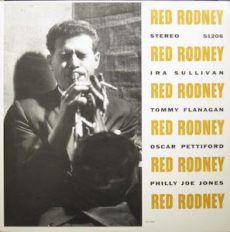
1957 ~ Red Rodney | By Eddie Carter
Red Rodney enters the spotlight to begin this morning’s discussion with 1957 (Signal S 1206), his second release as a leader. He was born in Philadelphia, Pennsylvania, and began playing the trumpet professionally at age fifteen, appearing in some of the best big bands during the Forties. Red later began playing Bebop after hearing Dizzy Gillespie and Charlie Parker. He played with Gillespie, Woody Herman, Gene Krupa, Ira Sullivan, and Claude Thornhill and was part of Parker’s quintet for two years. Ira Sullivan on tenor sax (A1 to A3, B2, B3) and trumpet (B1), Tommy Flanagan on piano, Oscar Pettiford on bass, ‘Philly’ Joe Jones (A1 to A3), and Elvin Jones (B1 to B3) on drums complete the ensemble. My copy is the 1997 Classic Records Stereo audiophile reissue sharing the original catalog number.
Star Eyes by Gene de Paul and Don Raye opens the album with Red taking the lead at a relaxing tempo in the melody and opening chorus. Ira gets his teeth into the second statement and swings comfortably, then Tommy strolls into the next reading with intuitive ease. Oscar has the last say and glows in a delightful performance before the quintet reassembles for the closing chorus and climax. Up next is a beautiful rendition of You Better Go Now by Robert Graham and Bickley Reichner. The rhythm section provides the perfect backdrop for Rodney’s elegantly tender opening chorus and lead solo. Sullivan follows with a sensuously warm statement, then Flanagan and Pettiford turn in two touching interpretations leading to a graceful ending.
The first side finale, Stella By Starlight by Victor Young and Ned Washington, begins with a brief introduction by Philly, leading to the quintet’s lively melody. Ira kicks off the solos with a spirited opening statement. Red makes his mark next with an aggressive interpretation. Tommy delivers the third reading with evident enjoyment, and Philly shines in a short solo ahead of the song’s conclusion. Side Two starts with Red Arrow, the first of two tunes by Red Rodney. Sullivan is featured on trumpet, and Elvin Jones takes over on drums. Rodney and Sullivan begin the melody briskly; then, Red opens with a vigorous first solo. Flanagan provides a brief break; then Ira gives a quick, pulse-raising reading. After Flanagan’s second break, the two trumpets share an invigorating exchange before a speedy closing chorus.
Red’s Box 2000 is a blues that Oscar introduces before the front line delivers the medium-tempo melody in unison. Ira launches into a well-constructed opening statement, and Red excels on the second interpretation; then Tommy and Oscar share a swinging conversation, and Jones engages in a short exchange with both horns ahead of the theme reprise and exit. The finale is Oscar Pettiford’s Ubas, dedicated to conga player Sabu Martinez. This song is festive from the opening chorus, and Sullivan kicks off the solos with a happy lead solo, and Rodney responds with a joyful spirit in the second statement. Flanagan has a jubilant moment next, and Elvin provides a bit of propulsive energy in the finale preceding the theme’s return and close.
Jules Colomby, the founder of Signal Records, supervised the initial session of 1957, and Rudy Van Gelder was the recording engineer. Bernie Grundman remastered this reissue, and the record was pressed on 180 grams of audiophile vinyl. The sound quality is superb, with a breathtaking soundstage that transports the musicians to the sweet spot in your listening room with stunning fidelity. Despite his struggles with drug addiction, Red recorded twenty-four albums as a leader and appeared on twelve releases as a sideman over a five-decade career. He died from lung cancer at age sixty-six on May 27, 1994. If you’ve not heard Red Rodney before and are a fan of jazz trumpet, I invite you to check out 1957 or its two reissues, Fiery (1973) and The Red Arrow (1972), on your next vinyl shopping trip. It’s an excellent album that’s a welcome introduction to his music and an addition to any jazz lover’s library!
~ Fiery (Savoy Records MG 12148), The Red Arrow (Onyx Records ORI 204) – Source: Discogs.com ~ Star Eyes, Stella By Starlight – Source: JazzStandards.com © 2023 by Edward Thomas Carter

More Posts: choice,classic,collectible,collector,history,instrumental,jazz,music,trumpet
EDDIE HENDERSON
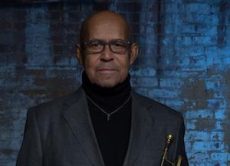
Eddie Henderson – trumpet
Donald Harrison – alto saxophone
Kevin Hays – piano
Gerald Cannon – bass
Mike Clark – drums
Trumpeter Eddie Henderson leads an inspired quintet of trusted collaborators featuring saxophonist Donald Harrison, pianist Kevin Hays, bassist Gerald Cannon, and drummer Mike Clark. Henderson’s “deft feel and plush sound made him a central figure in the worlds of jazz- funk and hard-bop in the 1970s” according to The New York Times. More recently, the eternally youthful Henderson, has made a series of recordings that have also been widely acclaimed and prove that he is still making some of the most important music of his career into his 80s. The Chicago Reader adds, “His progressive, assured, and imaginative improvisations roll out in a glorious sun-splashed tone… he seems to dance through his solos, balancing his quick clockwork technique with bursts of bluesy soul.”
LiveStream: $15.00 + fees
More Posts: adventure,album,club,festival,genius,jazz,museum,music,preserving,restaurant,travel,trumpet
TERENCE BLANCHARD
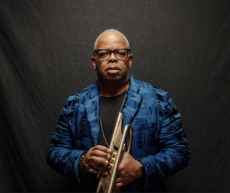
Featuring E~Collective & the Turtle Island Quartet
More Posts: adventure,album,club,festival,genius,jazz,museum,music,preserving,restaurant,travel,trumpet
Three Wishes
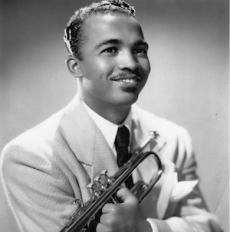
Nica asked Howard McGhee if he was given three wishes what would he want grated and he told her:
-
- “I wish, I wish, I wish.”
*Excerpt from Three Wishes: An Intimate Look at Jazz Greats ~ Compiled and Photographed by Pannonica de Koenigswarter

More Posts: baroness,history,instrumental,jazz,music,pannonica,three,trumpet,wishes