

Daily Dose Of Jazz…
Irving “Mouse” Randolph was born in St. Louis, Missouri on January 22, 1909 and started off playing on riverboats with Fate Marable’s ensemble. Following this he played in numerous territory bands, including those of Walt Farrington, Willie Austin, Art Sims, Norman Mason, Floyd Campbell, Alphonse Trent, and J. Frank Terry.
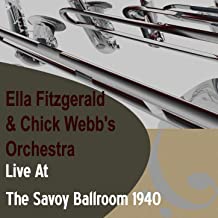
From 1931 to 1933 he was in Kansas City, Missouri playing in Andy Kirk’s Twelve Clouds of Joy, and then played briefly with Fletcher Henderson and Benny Carter in 1934. 1935 to 1939 saw Mouse playing in Cab Calloway’s orchestra, then departed to play with the Ella Fitzgerald Orchestra under the direction of Chick Webb for three years ending in 1942.
By 1943 he was playing with Don Redman and from 1944 to 1947 he did a stint with Edmond Hall. Randolph continued to play into the Seventies, including with the Chick Morrison Orchestra. He never recorded as a bandleader, though he recorded copiously with Henderson, Carter, and Calloway.
Trumpeter Mouse Randolph, who was prominent during the swing era, transitioned on December 12, 1997 in New York City, just six weeks shy of his 89th birthday.
More Posts: history,instrumental,jazz,music,trumpet
Daily Dose Of Jazz…
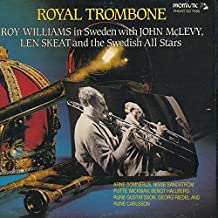
John McLevy was born on January 2, 1927 in Dundee, Scotland. He played in Europe with the Benny Goodman Orchestra in the 1970s, alongside George Masso, Hank Jones and Slam Stewart.
He performed with artists such as Max Bygraves, Roy Williams, accordionist Jack Emblow and later in a duo with veteran trumpeter Tommy McQuater.
Trumpeter John McLevy transitioned on November 27, 2002.
More Posts: flugelhorn,history,instrumental,jazz,music,trumpet
The Quarantined Jazz Voyager
History has proven that it took three plus years to eradicate the Spanish flu because people back in 1918 took the same stance of not wanting to abide by the wisdom of professionals to mask, social distance and quarantine. We are heading towards another tipping point as we see a rise in Delta and Omicron running rampant through the country. People are walking around unmasked like it’s 1999, and I remain vigilant in protecting myself. It’s a choice and a responsibility to self.
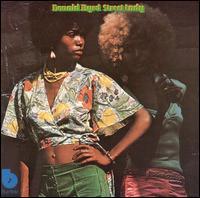
This week I’m reaching back to the Seventies for one of my favorites and pulling off the shelves the jazz~funk~fusion album Street Lady by trumpeter Donald Byrd. Recorded on June 13~15, 1973 at The Sound Factory in Hollywood, California, the album was released on the Blue Note label in July 1973. Once again Byrd steps away from his jazz purity and engages producer Larry Mizell on the heels of his successful production of its predecessor, Black Byrd.
The vocal arrangements were by Fonce Mizell, Fred Perren and Larry Mizell and George Butler executive produced this project.
Tracks | 42:12 All compositions by Larry Mizell/Byrd except as indicated
- Lansana’s Priestess ~ 7:39
- Miss Kane ~ 6:20
- Sister Love ~ 6:11
- Street Lady (Larry Mizell, Fonce Mizell) ~ 5:40
- Witch Hunt” – 9:42
- Woman of the World (Larry Gordon, Larry Mizell) ~ 6:51
- Donald Byrd – trumpet, flugelhorn, solo vocals
- Roger Glenn – flute
- Jerry Peters – piano, electric piano
- Fonce Mizell – clavinet, trumpet, vocals
- Fred Perren – synthesizer, vocals
- David T. Walker – guitar
- Chuck Rainey – electric bass
- Harvey Mason – drums
- King Errisson – congas and bongos
- Stephanie Spruill – percussion
- Larry Mizell – vocals, arranger, conductor
- Mike Salisbury ~ Art Direction, Cover
- Norman Seeff ~ Liner Photography
- Reggie Andrews ~ Electronic Consultant
- Chuck Davis ~ Technical Director
- Chuck Davis, John Arias ~ Engineer Assistant
- John Mills ~ Recording Engineer
- Chuck Davis, John Arias, John Mills ~ Remix Engineer

More Posts: adventure,album,club,genius,jazz,museum,music,preserving,restaurant,travel,trumpet
Daily Dose Of Jazz…
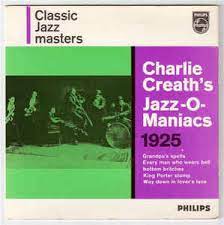
Charles Cyril Creath was born on December 30, 1890 in Ironton, Missouri and at an early age was playing in traveling circuses and in theater bands in the decade of the 1900s. He moved back to St. Louis, Missouri around 1919 and there he led bands playing on the Streckfus company’s riverboats traveling on the Mississippi River between New Orleans, Louisiana and St. Louis.
His ensembles became so popular that he had several bands under his own name at one time in the 1920s. A young Gene Sedric, later a mainstay of Fats Waller’s combo and orchestra, played with Creath on riverboats in the 1920s, and perhaps early 1930s. He co-led a group on the SS Capitol in 1927 with Fate Marable.
Late in the 1920s Charlie suffered from an extended illness, and primarily played saxophone and accordion instead of trumpet afterwards. He and Marable played together again from 1935 to 1938, and toward the end of the decade he opened a nightclub in Chicago, Illinois. He worked in an airplane manufacturing plant during World War II and retired in 1945. His last years were plagued with illness.
Aside from his brother-in-law, Zutty Singleton, members of Creath’s bands included Ed Allen, Pops Foster, Jerome Don Pasquall, Leonard Davis, and Lonnie Johnson. He recorded as a leader for Okeh Records between 1924 and 1927 billed as Chas. Creath’s Jazz-O-Maniacs, which were some of the hottest and most collectable jazz items recorded for OKeh’s race 8000 series.
Trumpeter, saxophonist, accordionist and bandleader Charlie Creath passed away on October 23, 1951, in Chicago.
More Posts: accordion,bandleader,history,instrumental,jazz,music,saxophone,trumpet
Daily Dose Of Jazz…
René Compère was born in Brussels, Belgium on December 28, 1906 in and by the time he was 17 he was working with the Billy Smith Brussels-based band. He then went on to found his own ensemble, the New Royal Dance Orchestra. However, as a member of Smith’s group, he met Charles Remue, with whom he worked for several years and Jean Omer who also played in Compère’s orchestra.
He recorded with Fernand Coppieters in 1929, then joined Josephine Baker’s backing band for several European tours in the first half of the 1930s. He was hired to play aboard the ship SS Normandie for transatlantic voyages. In 1937 he played at the Paris Exposition with Django Reinhardt, then worked in France with Joe Bouillon and in Belgium with Joe Heyne. During World War II he recorded with Eddie Tower.
Trumpeter René Compère, who never recorded as a leader, passed away on April 24, 1969 in his hometown.
More Posts: bandleader,history,instrumental,jazz,music,trumpet