Daily Dose Of Jazz…

Bill Chase was born William Edward Chiaiese in Squantum, Massachusetts on October 20, 1934 His parents changed their name to Chase because they thought Chiaiese was difficult to pronounce. His father played trumpet in the Gillette Marching Band and encouraged his son’s musical interests, which included violin and drums. In his mid-teens, he settled on trumpet and attended his first Stan Kenton concert, which included trumpeters Conte Candoli and Maynard Ferguson.

After high school, he studied classical trumpet at the New England Conservatory but switched to the Schillinger House of Music, now Berklee College of Music. His instructors included Herb Pomeroy and Armando Ghitalla. By 1958 he was playing lead trumpet with Maynard Ferguson, Stan Kenton in 1959, and Woody Herman’s Thundering Herd during the 1960s.

One of Chase’s charts from this period, Camel Walk, was published in the 1963 Downbeat magazine yearbook. From 1966 to 1970 he freelanced in Las Vegas, Nevada working with Vic Damone and Tommy Vig. 1967 saw him leading a six~piece band at the Dunes and Riviera Hotel where he was featured in the Frederick Apcar lounge production of Vive Les Girls, for which Chase arranged the music.

In 1971 he started a jazz~rock band that mixed pop, rock, blues, and four trumpets. The debut album Chase was released in 1971 where he was joined by Ted Piercefield, Alan Ware, and Jerry Van Blair, three jazz trumpeters who were adept at vocals and arranging. The album contains Chase’s most popular song, Get It On, which garnered them a Best New Artist Grammy nomination.

For the next three years, he released two more and was working on a fourth when Chase’s work on a fourth studio album when en route to a scheduled performance at the Jackson County Fair, trumpeter and bandleader Bill Chase passed away at the age of 39 on August 9, 1974 along with the pilot, co-pilot, keyboardist Wally Yohn, guitarist John Emma, and drummer Walter Clark in the crash of a chartered twin-engine Piper Twin Comanche in Jackson, Minnesota.

More Posts: ,,,,,,

Requisites

Relaxin’ With The Miles Davis Quintet | By Eddie Carter

It took only two days in 1956 for The Miles Davis Quintet to record four incredible jazz albums that have not only stood the test of time but are considered by many to be perfect examples of Hard-Bop at its best. All four LP’s the ensemble recorded completed Davis’ contractual obligation to Prestige before moving on to Columbia Records where he would make some of the most important music over the next thirty years. The albums are Cookin’, (1957), Workin’ (1959), Steamin’ (1961), and this morning’s title submitted for your approval, Relaxin’ With The Miles Davis Quintet (Prestige PRLP-7129), released in 1958. The personnel is Miles on muted trumpet (tracks: A1 to A3, B1, B2), trumpet (track: B3); John Coltrane on tenor sax; Red Garland on piano; Paul Chambers on bass and Philly Joe Jones on drums. The copy used in this report is the 2013 Mono audiophile reissue (APRJ 7129) by Analogue Productions.

The album opens with If I Were a Bell composed by Frank Loesser from the 1950 Broadway musical Guys and Dolls. It became a jazz standard after Miles’ rendition on Relaxin’ and would become a signature song during the quintet’s live performances. The trumpeter comments the band, then several snaps of his fingers bring the tune to life. The quintet begins the medium melody with Miles leading on the muted horn, then continuing on the first solo cruising along at an easy speed. John steps in next for some smooth sailing and Red ends with an exciting performance that swings masterfully ahead of the leader’s closing chorus into the subtle summation.

You’re My Everything is by Harry Warren, Mort Dixon, and Joe Young. This song debuted in the 1931 Broadway show, The Laugh Parade and after two false starts, the quintet opens with a delicately tender intro and melody by Davis moving into an exceptionally gentle presentation showing off Miles’ sentimental side. Coltrane follows, executing his thoughts intimately with refined grace secured by the tasteful richness of the trio into a pensive ending by the leader.

The tempo moves upward for I Could Write A Book by Richard Rodgers and Lorenz Hart. This show tune comes from the 1940 Broadway musical Pal Joey.  The trio makes a brief introduction before the quintet delivers the medium-fast melody collectively. Miles takes off on the lead solo with some fast blowing that sets the tone. John attacks the next reading with formidable energy and Red climaxes the performances with exhilarating agility before Davis’ theme reprise ends abruptly.

Sonny Rollins’ Oleo was written in 1954 and first recorded on the album, Miles Davis With Sonny Rollins. This jazz classic is one of Rollins’ most recorded compositions and the title comes from the butter substitute, Oleomargarine that was first made in France in 1869.

Side Two begins with two false starts and some studio small talk leading to the leader’s quick intro and fast-paced theme treatment with Trane finishing the melody. Miles rips into the lead solo with an expedient performance. John soars high into the sky on the second solo and Red provides a speedy resolution of the interpretations with sprightly notes ahead of the quintet’s reprise and brisk ending. Paul and Philly provide the propulsive power behind each soloist on Oleo, inspiring them to the next plateau.

Up next is the 1943 popular song, It Could Happen To You by Jimmy Van Heusen and Johnny Burke. This standard has been a favorite for musicians and vocalists for over seventy years. Jo Stafford made the first recording with The Paul Weston Orchestra. The group eases the throttle back for this rendition with Miles establishing the relaxing midtempo framework for the group on the melody.  He then goes to work with a sweet-toned delivery that’s pitch-perfect. John follows with a compelling statement as cool as the other side of the pillow and Red delivers a very happy melodic interpretation showing great interaction with Paul and Philly into the quiet coda.

The 1943 jazz standard, Woody‘n You aka Woody ‘n’ You by Dizzy Gillespie was written for bandleader and clarinetist Woody Herman ends the album at an uptempo beat. The song starts with a brief introduction by Garland ahead of the quintet’s lively theme. Miles fuels the lead solo with plenty of fire from his open horn, then Trane delivers an aggressively energized performance of strength and virility. The final statement of the album is split between Miles and Philly who deliver passionate phrases flowing into the reprise and soft fade into emptiness followed by a few final words by Miles.

Relaxin’ With The Miles Davis Quintet is part of Analogue Productions’ Prestige Mono Series and the sound quality is crystal clear demonstration class, and spectacular. The mastering is by Kevin Gray of Cohearent Audio and was cut from Rudy’s original analog masters using two-hundred-gram Virgin Vinyl, pressed by QRP (Quality Record Pressings) and features a deluxe high-gloss laminated album cover. The record is very quiet until the music starts, and what’s great about listening to this reissue are the false starts, and Miles’ comments while talking to Rudy. Their brief conversations transport the listener into the studio, making them part of the event. On a good mid-fi or high-end audio system, the tonal balance between the highs, midrange, and the low end will stand out. There’s inspired playing from each member of the group on every track and Relaxin’ With The Miles Davis Quintet is a great album of standards.  It’s also a perfect choice to sit back, listen, and enjoy any time of the day, evening, or night!

~ Cookin’ With The Miles Davis Quintet (Prestige PRLP 7094); It Could Happen To You (Capitol Records 158); Miles Davis With Sonny Rollins (Prestige PRLP 187); Steamin’ With The Miles Davis Quintet (Prestige PRLP 7200/PRST 7580); Workin’ With The Miles Davis Quintet (Prestige PRLP 7166/PRST 7166) – Source: Discogs.com

~ Oleo, It Could Happen To You, Woody’n You – Source: JazzStandards.com

~ If I Were A Bell, You’re My Everything, I Could Write A Book, Oleomargarine – Source: Wikipedia.org

© 2020 by Edward Thomas Carter

More Posts: ,,,,,,,,

Daily Dose Of Jazz…

George Girard was born on October 7, 1930 in Jefferson Parish, Louisiana. In high school, he studied music under Johnny Wiggs and became a professional musician immediately after graduating in 1946. He played and toured with the bands of Johnny Archer and Phil Zito before co-founding the band The Basin Street Six, made up mostly of friends he had grown up with, including clarinetist Pete Fountain. The band got a regular gig at L’Enfant’s Restaurant in New Orleans, as well as regular television broadcasts over WWL. The band started receiving favorable national attention, but Girard was dissatisfied with it and broke up the band in 1954.

He found his own band, George Girard & the New Orleans Five which included trombonist Bob Havens, drummer Paul Edwards, and bassist Bob Coquille. He landed a residency at the Famous Door in the French Quarter, recorded for several labels, and got a weekly broadcast on CBS. His ambitions to make a national name for himself and the musical ability to do so fell short of time as he became ill and in 1956 had to give up playing.

Trumpeter George Girard, a member of the Basin Street Six whose technical ability combined Dixieland and big band style trumpet, passed away from colon cancer in New Orleans, Louisiana on January 18, 1957.

More Posts: ,,,,,

Requisites

Big Blues ~ Art Farmer & Jim Hall | By Eddie Carter

This next choice from the library I acquired after hearing a selection on SiriusXM’s Real Jazz channel. The album is titled Big Blues (CTI Records CTI 7083), released in 1979 and the two men co-leading this enjoyable date are Art Farmer on flugelhorn and Jim Hall on guitar. Rounding out the ensemble are Mike Mainieri on vibes, Mike Moore on bass, and Steve Gadd on drums.  My copy used in this report is the 2017 ORG Music Stereo Audiophile reissue (ORGM-2019).  

The song that initially sparked my interest leads off the first side, Benny Golson’s 1956 contemporary jazz classic, Whisper Not! It’s one of his most recorded compositions and also became a beloved vocal after Leonard Feather added lyrics in 1962. The quintet jointly creates a mellow melody with a blues beat to begin the song. Jim makes his guitar sing first with a relaxed casualness and steady rhythm. Art gets into an infectious laid-back groove next moving upward with bright chops and impeccable prowess. Mike takes over for the finale with an astonishing drive and intensity preceding the reprise and gentle coda.

The 1969 jazz standard, A Child Is Born by Thad Jones closes the first side starting gently with a brief introduction and tender theme by the rhythm section.  Farmer starts the soloing with a ravishingly beautiful, muted performance, followed by Hall who delivers passionately elegant lines on the next interpretation. Mainieri gives a delicately gentle and evocative presentation recalling the spirit and imagination of the song’s composer into the serenely beautiful climax. Big Blues by Jim Hall starts the second side with a spirited midtempo opening chorus by the ensemble and the solo order is the same as on Whisper Not. Jim takes the lead here, showing us his versatility with charming articulation. Art follows, using the mute to deliver skillful assertion on the next reading. Mike’s closing statement is captivating from the moment it starts, expressing joy into the reprise and fadeout. Pavane For A Dead Princess by Maurice Ravel ends the album and was written as a solo piano piece in 1899.  The song’s original title is Pavane pour une infante défunte (Pavane for a Dead Infanta) and the ensemble begins the introduction and melody at a slow tempo fitting the original composition.  Farmer steps up first, back on the open horn, beginning as he did on the theme, then raises the temperature to midtempo before returning to a softer mood for the close.  Mainieri pulls out all the stops on the next reading with a sparkling presentation.  Hall takes the final bow with a gorgeous performance preceding the reprise and graceful fadeout.

Big Blues was originally produced by Creed Taylor and engineered by David Palmer who worked at Electric Lady Studios, and Joel Cohn who’s worked on many CTI albums. This reissue was mastered from the original analog tapes by Bernie Grundman and pressed on 180-gram Audiophile vinyl at Pallas Group in Germany. As was the case of many of the classic CTI Records, the sound quality is first-rate with an excellent soundstage across the highs, midrange, and low end that won’t disappoint the listener in their favorite spot to listen to music. Art Farmer and Jim Hall recorded together four other times, Interaction (1963), Live at The Half Note, To Sweden With Love (1964), and Panorama-Live at The Village Vanguard (1997).  Each is highly recommended, and I feel the same can be said for Big Blues.  I invite you to make time for this one on your next vinyl hunt, it’s an enjoyable album of Contemporary Jazz with extraordinary chemistry, and exceptional performances you won’t soon forget!

~ Interaction (Atlantic 1412/SD 1412); Live at The Half Note (Atlantic 1421/SD1421); Panorama-Live at The Village Vanguard (Telarc Jazz CD-83408); To Sweden With Love (Atlantic 1430/SD 1430) – Source: Discogs.com

~ Whisper Not, A Child Is Born ~ Source: JazzStandards.com

~ Pavane For A Dead Princess ~ Source: Wikipedia.org

© 2020 by Edward Thomas Carter

More Posts: ,,,,,,,,,

Daily Dose Of Jazz…Trumpet

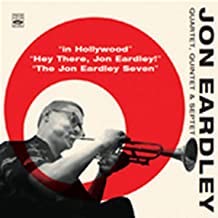
Jon Eardley was born on September 30, 1928 in Altoona, Pennsylvania and first started on trumpet at the age of 11. His father played in the Paul Whiteman Orchestra. From the age of eighteen, he played1946 to 1949 he played in the Air Force Band in Washington, D.C., then led with his own quartet in D.C. from 1950 to 1953.

A move to New York City in 1953 got him introduced to the jazz scene. The following year he played with Phil Woods, then left for Gerry Mulligan for three years, and during that time played with Hal McIntyre. Returning to his hometown, Jon played there until 1963, when he moved to Europe and settled for a time in Belgium.

1969 saw his next residency in Cologne, Germany where he played with Harald Banter and Chet Baker and working through the 1980s. The last years before death he played in the WDR Big Band Cologne, Germany. Trumpeter Jon Eardley passed away on April 1, 1991 in Lambermont, near Verviers, Belgium.

SUITE TABU 200

More Posts: ,,,,,

« Older Posts       Newer Posts »