


Daily Dose Of Jazz…
William Richard Berry was born on September 14, 1930 in Benton Harbor, Michigan. The son of a bass player in a touring dance band, he spent his early years traveling with his parents sleeping in the bass case under the bandstand when he was only a few months old. From the age of five, he took piano lessons at home in South Bend, Indiana. In high school in Cincinnati, Ohio he switched to trumpet, and played in a Midwest band led by Don Strickland, after which he served four years in the Air Force.
He studied at the Cincinnati College of Music and Berklee College of Music in Boston, Massachusetts then played trumpet with the Woody Herman and Maynard Ferguson orchestra. In 1961, he became one of the Duke Ellington orchestra’s first white members. After his working with Ellington, he played with the Thad Jones-Mel Lewis Jazz Orchestra and led his own big band in New York.
In 1965 he joined The Merv Griffin Show, where he remained for fifteen years, moving to Los Angeles, California with Griffin and reforming his group as the L.A. Big Band in 1971. Among the most successful of his own 1978 recording Shortcake, an album of jazz for small groups in the Ellington style. He appeared on many albums by other musicians, including Rosemary Clooney, Scott Hamilton, Jake Hanna, and Coleman Hawkins.
He recorded four albums as a leader and fifty-five as a sideman with Frank Capp, Duke Ellington, Maynard Ferguson, Thad Jones/Mel Lewis, Ruth Brown, Benny Carter, Ray Charles, Chris Connor, Randy Crawford, Bing Crosby, Dave Frishberg, Woody Herman, Earl Hines, Johnny Hodges, Milt Jackson, Irene Kral, Trini Lopez, Johnny Mathis, Gary McFarland, Dave Pell, Herb Pomeroy, Jimmy Rowles, Jack Sheldon, Patty Weaver, and Joe Williams.
Trumpeter Bill Berry passed away on November 13, 2002.
More Posts: bandleader,history,instrumental,jazz,music,trumpet
Daily Dose Of Jazz…
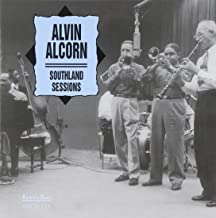
Alvin Elmore Alcorn was born in New Orleans, Louisiana on September 7, 1912. Learning music theory from his brother, in the early 1930s he was a member of the Sunny South Syncopators led by Armand J. Piron.
He worked in Texas as a member of Don Albert’s swing band, but he spent most of his career in New Orleans in the dixieland bands of Paul Barbarin, Sidney Desvigne, Oscar Celestin, and Octave Crosby.
During the 1950s, he moved to Los Angeles, California and joined Kid Ory’s band, then a couple years later returned home to New Orleans. After going on tour in Europe with Chris Barber in the late 1970s, he continued to perform into the 1980s.
Trumpeter Alvin Alcorn passed away on July 10, 2003.
More Posts: history,instrumental,jazz,music,trumpet
Daily Dose Of Jazz…
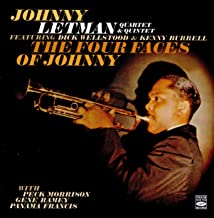
Johnny Letman was born September 6, 1917 in McCormick, South Carolina and early in his career played in midwest bands, including those of Jerry Valentine, Scatman Crothers, and Jimmy Raschelle. Moving to Chicago in the middle of the 1930s, he worked with Delbert Bright, Bob Tinsley, Johnny Lang, Nat King Cole, Horace Henderson, and Red Saunders in the late Thirties to early 1940s.
After spending a year or so in Detroit playing with Teddy Buckner and John Kirby, he moved to New York City in 1944. There he performed with Phil Moore, Lucky Millinder, Cab Calloway, Milt Buckner, and Count Basie.
Working extensively as a studio musician and in Broadway shows throughout the 1950s and 1960s worked both in and outside of jazz music, and his associations in these decades included Joe Thomas, Stuff Smith, Chubby Jackson, Panama Francis, Dick Wellstood, Hal Singer, Sam Taylor, Eddie Condon, Wilbur De Paris, and Claude Hopkins.
By 1968 he was playing with Milt Buckner and Tiny Grimes in Paris, France. In the 1970s, he played with Lionel Hampton, Cozy Cole, and Earl Hines. In the mid-Eighties he led the New Orleans Blues Serenaders, and toured Europe. Trumpeter Johnny Letman passed away on July 17, 1992.
More Posts: bandleader,history,instrumental,jazz,music,trumpet
Daily Dose Of Jazz…
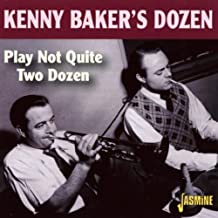
Thomas Mossie McQuater was born on September 4, 1914 in Maybole, Ayrshire, Scotland. Showing early signs of musical talent and largely self-taught, he began on the cornet but by the age of 11 was a regular member of the Maybole Burgh Band. The brass band won several competitions in the late 1920s and they played at local events and dances.
Turning professional in his teens, Tommy got a regular position with Louis Freeman’s Band, which played at Greens Playhouse in Glasgow. In 1934, at 20, he was offered a job with one of London, England’s most renowned bands, the Jack Payne Orchestra, playin in London and Paris, France. His next stint was with the Lew Stone Band and made the classic recording of Pardon Me, Pretty Baby.
In the 1940s, after joining The Squadronaires, he worked with the BBC Showband in 1945. He often performed with John McLevy in the 1970s and 1980s. In his later years, he concentrated his energy playing around the Ealing Jazz Festival. Trumpeter, flugelhornist and cornetist Tommy McQuater passed away on January 20, 2008 in London, England at the age of 93.
More Posts: cornet,flugelhorn,history,instrumental,music,trumpet
Daily Dose Of Jazz…
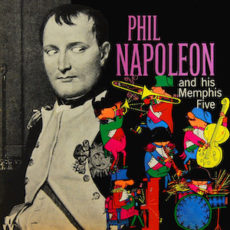
Phil Napoleon was born Filippo Napoli on September 2, 1901 in Boston, Massachusetts. He began with classical training and was performing publicly by age 5. In the 1910s, he was one of the first musicians in the northeastern United States to embrace the new jass style brought to that part of the country by musicians from New Orleans, Louisiana.
At 16 with pianist Frank Signorelli he formed the group The Original Memphis Five in 1917. He became one of the most sought after trumpeters of the 1920s and the group became one of the most prolific in New York City at the time. In 1922-1923 they made over a hundred recordings. Napoleon’s 1927 version of Clarinet Marmalade was a particular success. The group split up in 1928.
During the 1930s, Phil mainly worked as a session trumpeter, working in the RCA Radio Orchestra in the early 1930s, and in 1937 unsuccessfully tried to form his own orchestra. He recorded with the Cotton Pickers and the Charleston Chasers and also worked with blues singers Leona Williams and Alberta Hunter.
Napoleon joined Jimmy Dorsey’s then Los Angeles, California based group in the mid 1940s, and he appeared with the band in the film Four Jills in a Jeep. Parting with Dorsey in 1947, he moved back to New York City and worked as a studio musician at NBC until 1949-1950 when he reformed The Original Memphis Five. During the early 1950s the group became noted for their performances at Nick’s in New York City. He worked frequently with his nephew Marty Napoleon, a jazz pianist. In 1959, Napoleon and The Five performed at the Newport Jazz Festival, later released as an album.
In 1966 Phil opened up his own club named Napoleon’s Retreat in Miami, Florida and continued to perform Dixieland jazz in the club up until the 1980s. Trumpeter and bandleader Phil Napoleon passed away on October 1, 1990 in Miami.
More Posts: bandleader,history,instrumental,jazz,music,trumpet