

Requisites
To Duke With Love~Art Farmer | By Eddie Carter
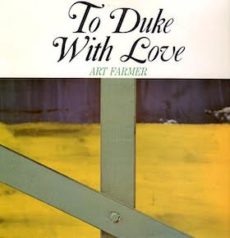
I was looking for something to play a few nights ago when I came across a 1976 album by one of my favorite trumpet players, Art Farmer. To Duke With Love (East-West EW-8012) is this morning’s choice from the library submitted for your consideration. I’d forgotten how much I enjoyed this record and after listening, began writing about it for this week’s column. This album was one of my Mom’s favorites and she loved the velvety softness of Art’s flugelhorn. It was because of her love of jazz and the joy of listening to the albums together that I became a fan also. Art plays the flugelhorn exclusively on this six-song letter to Duke Ellington and he’s working with a brilliant trio, Cedar Walton on piano, Sam Jones on bass, and Billy Higgins on drums. My copy used in this report is the 1978 Stereo reissue (Inner City Records IC 6014).
Arthur Stewart Farmer’s first album as a leader was Work of Art (1954). He co-led The Jazztet with Benny Golson from 1959 to 1962. After the group disbanded, he had a successful twenty-year solo career until the band reformed in 1982 to 1986. Art reunited with The Jazztet again during the nineties to perform live at various festivals. He was comfortable in any setting and could play anything, on an uptempo tune, Farmer played vigorously with a fiery passion. At midtempo, his gift of expression was precisely defined, and with slow-tempo ballads and standards, Art skillfully constructed them with innocence and romanticism.
Cedar Walton was an immensely gifted and prolific pianist who typically built perfect solos from simple ideas, proving himself an exemplary accompanist and versatile leader in large ensembles and small groups.
Sam Jones had a beautiful sound on bass with a splendid technique and a marvelous grasp of harmony, he’s best known as one-third of the rhythm section in The Cannonball Adderley Quintet and Sextet. Sam was among the first to make the cello sound plausible on a jazz album, and his bass lines always enhanced any record as the leader of the date or as a sideman. Billy Higgins was the drummer of choice on some of the most memorable Hard-Bop and Free Jazz recordings. He appeared on over seven hundred records including Funk and Rock albums. There was an unmistakable power in his playing, but when called upon, Billy’s drumming could also be considerate and thoughtful, and he brought his A-game every time he sat behind the drums.
Side One opens with the 1935 jazz standard, In a Sentimental Mood by Duke Ellington and Manny Kurtz. Art makes an enticingly delicate introduction to the melody, then takes the lead on a slow and sultry statement. Cedar follows with an impressively tender interpretation into the foursome’s luscious close. The 1931 Duke Ellington, Irving Mills standard, It Don’t Mean a Thing begins with an energetic introduction by Jones backed by just Higgins before Farmer and Walton come in to state the theme. Walton takes off first with a briskly stated opening chorus after a brief riff by Higgins. Farmer follows, adding some searing heat on the next performance. Jones gets the last word with an exuberant closing statement ahead of the quartet’s exit.
The Star-Crossed Lovers appeared on Such Sweet Thunder (1957) as part of a twelve-part suite based on the works of William Shakespeare. This Duke Ellington, Billy Strayhorn tune gives Farmer a showcase to emerge ever so gently on the theme after a luscious introduction by Cedar. Art gives a pretty presentation as sweet as Johnny Hodges achieved on the original song. Cedar also performs beautifully on a gorgeous finale before the coda. Duke Ellington’s The Brown Skin Girl In The Calico Gown was first recorded by Duke and Ella Fitzgerald on Ella at Duke’s Place (1965). It starts Side Two with a duet by Farmer and Jones, segueing into the ensemble’s touching theme. Farmer has the first spot with an attractive interpretation. Walton takes the reins next and is enchanting preceding the unison ending.
The standard Lush Life is afforded a slow, meditative treatment on the opening chorus. Billy Strayhorn wrote the song in 1933 but fine-tuned it until 1938 when he performed it for Ellington. The song’s lyrics describe the author’s weariness of the nightlife after a failed romance. Art paints from a seductive palette of delicacy and elegance on the first solo. Cedar infuses the next reading with a tender expression of love, culminating an exquisite rendition. The album wraps with Duke Ellington’s Love You Madly, written in 1950 and featured on Duke’s Big 4 (1974). After a short Walton introduction, the ensemble provides a happy aura led by Farmer who grooves at midtempo on the melody and lead solo. Walton eases into a medium groove on the final reading that’s an absolute joy.
To Duke With Love was recorded in 1975 by East-West Music in Japan, less than one year after Ellington passed away. The engineer is Ben Taylor and Stan Ricker mastered the album at JVC Cutting Center. It has an excellent soundstage, effectively capturing the essence of Art’s tastefully restrained tone. Farmer recorded over sixty albums as a leader, over seventy as a sideman, and an additional twelve as a member of The Jazztet. He passed away from a heart attack on October 4, 1999, at age seventy-one. If you’re a fan of Art Farmer and in the mood for some soothing jazz, To Duke With Love is a great session honoring one of the greatest composers of all time, Duke Ellington. It’ll repay its owner with many listens for years to come and I highly recommend it for a spot on your shelf! ~Duke’s Big 4 (Pablo 2310-703), Ella at Duke’s Place (Verve Records V-4070/V6-4070), Such Sweet Thunder (Columbia CL 1033) – Source: Discogs.com ~In a Sentimental Mood, It Don’t Mean A Thing, Lush Life – Source: JazzStandards.com ~Art Farmer, The Star-Crossed Lovers, The Brown Skin Girl In The Calico Gown, Lush Life, Love You Madly – Source: Wikipedia.org © 2021 by Edward Thomas Carter

More Posts: choice,classic,collectible,collector,history,instrumental,jazz,music,trumpet
The Quarantined Jazz Voyager
As cities begin to open back up I am remaining vigilant in my social distancing and trust you are doing the same. Wary of large groups or crowded public transportation, I am staying to my schedule of grocery, doctor visits, home.
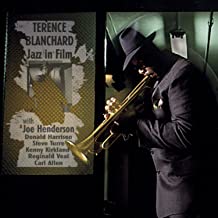
I’ve selected Jazz in Film, a studio album by trumpeter Terence Blanchard released on March 2, 1999 on Sony Records. The recording was split into two sessions, the first on March 17~18, 1998 at Signet Soundelux in Los Angeles, Californiaand the second on April 7, 1998 at Clinton Recording Studios, Studio B, New York City.
The album was meant to be a portrait of jazz in cinema history, a way to chronicle the evolution of jazz score from the late 1940s to present day. It featured highly influential themes from classics like Anatomy of a Murder, Taxi Driver and seminal noir The Man With the Golden Arm. Blanchard has carved out a little space for himself, revisiting one of his compositions written for Spike Lee’s Clockers.
The album features an all-star lineup backed by a string orchestra arranged by Blanchard. Steven Mercurio and J.A.C. Redford were the conductors for the sessions.
Track Listing | 68:19- A Streetcar Named Desire (Alex North) ~ 7:55
- Chinatown (Jerry Goldsmith) ~ 8:23
- The Subterraneans (André Previn) ~ 9:08
- Anatomy of a Murder (Duke Ellingtn) ~ 8:25
- The Pawnbroker (Quincy Jones) ~ 7:02
- Taxi Driver (Bernard Herrmann) ~ 7:12
- Degas’ Racing World (Ellington) ~ 7:57
- Man With The Golden Arm (Elmer Bernstein) ~ 4:13
- Clockers (Terence Blanchard) ~ 8:01
- Terence Blanchard – trumpet, arranger
- Joe Henderson – tenor saxophone (3, 6, 7, 8, 9)
- Steve Turre – trombone (1, 4, 8)
- Donald Harrison – alto sax (1, 4, 5)
- Kenny Kirkland – piano
- Reginald Veal – bass
- Carl Allen – drums

More Posts: adventure,album,club,genius,jazz,museum,music,preserving,restaurant,travel,trumpet
The Quaratined Jazz Voyager
Still not all that anxious to mingle as safeguards are being lifted and society is comfortable in bigger groups. I am staying to my schedule of grocery, doctor visits, home.
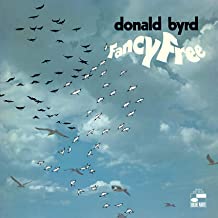
The album I’ve chosen for this week is the 1970 Blue Note album Fancy Free by trumpeter Donald Byrd. It was recorded May 9, and June 6, 1969 at Van Gelder Studio in Englewood Cliffs, New Jersey. The album was produced by Duke Pearson.
This album has Byrd leading a large ensemble that prominently featured Frank Foster on tenor, Lew Tabackin and Jerry Dodgion on flute, along with several percussionists. This date has Duke Pearson playing electric piano and marks the first time Byrd utilized the instrument. On this project the trumpeter concentrated more on grooves and beats, accompanying them on his trumpet rather than being driven by them.
Track Listing | 39:10- Fancy Free (Donald Byrd) ~ 12:06
- I Love the Girl (Donald Byrd) ~ 8:48
- The Uptowner (Mitch Farber) ~ 9:16
- Weasil (Charles Hendricks) ~ 9:00
- Donald Byrd – trumpet
- Julian Priester – trombone
- Frank Foster – tenor and soprano saxophone
- Jerry Dodgion (#1, 3) – flute
- Lew Tabackin (#2, 4) – flute
- Duke Pearson – electric piano
- Jimmy Ponder – guitar
- Roland Wilson – bass guitar
- Joe Chambers (#2, 4), Leo Morris (#1, 3) – drums
- Nat Bettis – percussion
- John H. Robinson Jr. – percussion
More Posts: adventure,album,club,genius,jazz,museum,music,preserving,restaurant,travel,trumpet
Daily Dose Of Jazz…
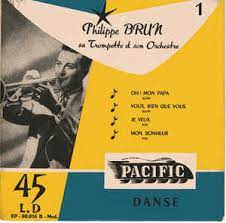
Philippe Brun was born on April 29, 1908 in Paris, France and first began playing professionally in the late 1920s with the bands of Gregor, Danny Polo, and Ray Ventura. In the early 1930s he spent time in London, England working with Bert Ambrose, Jack Hylton, and Fred Waring.
Returning to Paris around 1936, he performed with Jazz du Poste Parisien and with Ventura again, as well as with Django Reinhardt and Alix Combelle. He was recorded as a leader from 1937-1940. During World War II he worked in Switzerland, with Eddie Brunner, André Ekyan, Edmond Cohanier, and Teddy Stauffer.
Brun’s wife, Annie Fratellini, a vocalist and comedian, also performed with Raymond Fol and Kenny Clarke. Trumpeter Philippe Brun passed away on January 15, 1994 in Paris.
More Posts: bandleader,history,instrumental,music,trumpet
The Quarantined Jazz Voyager
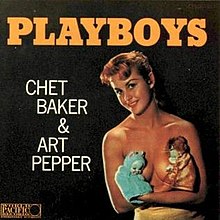
The pandemic has me comfortably relaxing in my listening room selecting my next choice which is the 1956 album Playboys by trumpeter Chet Baker and saxophonist Art Pepper. The album was their third collaboration between Pepper and Baker, following the successes of The Route and Chet Baker Big Band, all three recorded in 1956.
Playboys was reissued in 1961 under the name Picture of Heath after the fifth track (itself a reference to Jimmy Heath, composer of all but two of the tracks). The tracks themselves were presented in a slightly different order, starting with the new title track.
Hugh Hefner reportedly objected to the original album cover (clearly inspired by Playboy magazine with its near-identical wordmark and pinup photo) and threatened to sue. For Picture of Heath, the original cover was replaced with a photo of the artists in the recording studio.
The 1990 Blue Note/Pacific Jazz CD reissue of Playboys used the pin-up cover, but the same label’s 1998 CD reissue returned to the Picture of Health cover.
Track Listing | 40:07 All compositions by Jimmy Heath except as indicated- For Minors Only ~ 4:00
- Minor~Yours (Art Pepper) ~ 6:44
- Resonant Emotions ~ 5:41
- Tynan Tyme (Pepper) ~ 5:32
- Picture of Heath ~ 6:44
- For Miles and Miles ~ 6:25
- C.T.A. ~ 5:12
1998 CD Release
- Picture of Heath
- For Miles and Miles
- C.T.A.
- For Minors Only
- Minor Yours
- Resonant Emotions
- Tynan Tyme
- Chet Baker ~ trumpet
- Art Pepper ~ alto saxophone
- Phil Urso ~ tenor saxophone
- Carl Perkins ~ piano
- Curtis Counce ~ bass
- Larance Marable ~ drums
More Posts: adventure,album,club,genius,jazz,museum,music,preserving,restaurant,saxophone,travel,trumpet