

Daily Dose Of Jazz…
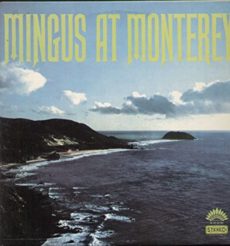
Melvin Moore was born on June 15, 1923 in Chicago, Illinois. In 1944 the trumpeter began his career playing with Lucky Millinder, then joined Duke Ellington’s Orchestra from 1948 to 1950. This he followed with performance in rhythm and blues bands. By 1951 he was recording with Dizzy Gillespie and singing on such titles as The Champ and Swing Low, Sweet Cadillac.
At the end of 1951 he was recording some vocal titles for King Records with Terry Gibbs, Billy Taylor, Mundell Lowe and Charles Mingus. In 1957 he was a member of Don Redman’s orchestra, the following year he recorded with John Pisano and with Billy Bean. Between 1964 and 1966 he worked with Gerald Wilson and he also accompanied Johnny Hartman. During the Sixties he performed on separate dates at the Monterey Jazz Festival with Mingus, Thelonious Monk and Dizzy Gillespie.
By 1967 he was playing in B.B. Kings band followed by the Seventies bands of Esther Phillips, T – Bone Walker, Don Sugarcane Harris, Johnny Otis, Jerry Garcia and Shuggie Otis and in the early 1980s with Ted Hawkins. Moore is not to be confused with the singer born in 1917, who sang with Jimmie Lunceford and Ernie Fields .
Trumpeter, violinist and singer of swing and bebop Mel Moore passed away on February 26, 1989 in New York City.
Sponsored By


#preserving genius
Daily Dose Of Jazz…
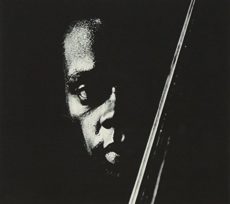
Henry Grimes was born November 3, 1935 in Philadelphia, Pennsylvania and took up the violin at the age of 12, then began playing tuba, English horn, percussion, and finally the double bass in high school. He went on to study at Juilliard, establishing a reputation as a versatile bassist by the mid-1950s.
At a time when bassist Charles Mingus was experimenting with a second bass player in his band, Grimes was the person he selected for the job. At twenty-two he was captured on film in the Bert Stern documentary of the 1958 Newport Jazz Festival’s Jazz on a Summer’s Day and as word spread among the musicians about his extraordinary playing, he ended up playing with six different groups in the festival that weekend: those of Benny Goodman, Lee Konitz, Thelonious Monk, Gerry Mulligan, Sonny Rollins, and Tony Scott.
Gradually growing interested in the burgeoning free jazz movement, Henry performed with most of the music’s important names, including Cecil Taylor, Don Cherry, Steve Lacy, Pharoah Sanders, Archie Shepp, and Albert Ayler. He released one album, The Call, as a trio leader on the ESP-Disk label in 1965 with clarinetist Perry Robinson and drummer Tom Price. By the late 1960s, he moved to California, his career came to a halt and after more than a decade of activity and performance, notably as a leading bassist in free jazz, completely disappeared from the music scene by 1970 and was often presumed dead.it was commonly assumed Grimes had died, having been listed as such in several jazz reference works.
Fortunately Henry was discovered him in 2002 alive but nearly destitute by Marshall Marrotte, a social worker and jazz fan. He was without a bass to play, renting a tiny apartment in Los Angeles, California, writing poetry and doing odd jobs to support himself. He had fallen so out of touch with the jazz world that he was unaware Albert Ayler had died in 1970.
Since his return in 2003 to a hero’s welcome at the free jazz Vision Festival, he has been performing at festivals, teaching lessons and workshops for bassists. William Parker donated a bass nicknamed “Olive Oil” for its distinctive greenish color and with David Gage’s help had it shipped from New York to Los Angeles, and others assisted with travel expenses and arranging performances.
Grimes has made up for lost time and over the course of his career, old and new, he has recorded over 90 sessions and performed with Anita O’Day, Mose Allison, Roy Burns, Andrew Cyrille, Paul Dunmall – Profound Sound Trio, , Walt Dickerson, Shafi Hadi, Roy Haynes, Rolf Kühn, Carmen Leggio, William Parker, Marc Ribot, Pharoah Sanders, Shirley Scott, Marilyn Crispell, Ted Curson, Archie Shepp, Billy Taylor, Cecil Taylor, Marshall Allen, Fred Anderson, Lennie Tristano, McCoy Tyner, Rashied Ali, Bill Dixon, Dave Douglas, Andrew Lamb, Joe Lovano, Roscoe Mitchell, William Parker, High Priest, Wadada Leo Smith, Cecil Taylor John Tchicai, and numerous others.
In the past few years, Grimes has also held a number of residencies and offered workshops and master classes at City College of New York, Berklee College of Music, Hamilton College, New England Conservatory, the University of Michigan at Ann Arbor, the University of Gloucestershire at Cheltenham, Humber College, and more. He has released or played on a dozen new recordings, made his professional debut on a second instrument, the violin, at Cecil Taylor’s side at Lincoln Center at the age of 70, and has been creating illustrations to accompany his new recordings and publications. He has received many honors in recent years, including four Meet the Composer grants and a Lifetime Achievement Award from Arts for Art / Vision Festival.
Bassist, violinist, composer and poet Henry Grimes is now a resident of New York City and has a busy schedule of performances, clinics, and international tours.
Sponsored By

Daily Dose Of Jazz…
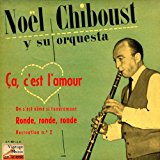
Noël Chiboust was born on October 14, 1909 in Thorigny-sur-Marne , Département Seine-et-Marne, France. He began his career as a violinist with Ray Ventura and during the early Thirties played trumpet in the Michel Warlop Orchestra. By 1936 he was involved in the concert series la semaine à Paris, by the Hot Club de France. At this time in his career he also joined the André Ekyan Orchestra until 1938, then played in the Swing Band of Philippe Brun followed by an early 1940s stint with Alix Combelle.
Around the mid 1930s he recorded with Django Reinhardt , Stéphane Grappelli , Bill Coleman and Coleman Hawkins, joined Eddie Brunner in 1938 at Cabaret Bagatelle. The late 1930s saw him giving up the trumpet and joining the tenor saxophone and clarinet sections when he joined the Marcel Bianchi Orchestra.
From 1940 he recorded under his own name for the French label Swing releasing a few 78s. Starting in 1944 he performed with an orchestral cast including Hubert Rostaing, and with Jack Diéval and Lucien Simoen at Club Schubert. From 1947 to 1950 he had an engagement at Cabaret le Drap d’Or.
He turned his attention to popular music as well as the rock and roll to and by 1959 released several EPs and singles for Polydor Records with songs like Telstar, Dynamite Charleston and Yes Sir That’s My Baby.
Trumpeter, tenor saxophonist, clarinetist, arranger, composer and band leader in the field the swing and popular music era Noël Chiboust passed away on January 17, 1994.

Miami
Daily Dose Of Jazz…
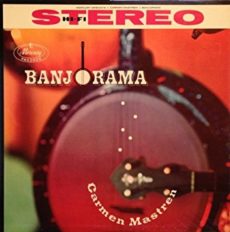
Carmen Mastren was born Carmine Mastrandrea on October 6, 1913 in Cohoes, New York. By 1934 he was playing professionally as a musician when he joined the Wingy Manone and Joe Marsala band. Mastren worked with a variety of musicians during his career, including Raymond Scott, Ray McKinley and Mel Powell.
In the 1940s Mastren recorded with the Sidney Bechet and the Muggsy Spanier “Big Four”. During World War II he played with the Glenn Miller Air Force Band. It was during this period that he worked as musical director and conductor for Morton Downey, and from 1954–1970 he played for The Today Show, The Tonight Show and Say When!! on the NBC television network.
Recording as a sideman, Carmen worked with Dick Hyman And His Orchestra, Bobby Hackett, Quincy Jones, Frank Sinatra, Bud Freeman and the Wolverine Orchestra on such labels as Mercury, Decca, Atlantic, Epic, Universal/MCA, Victor, RCA, Allegro Elite and Gennett.
Guitarist, banjoist and violinist Carmen Mastren passed away at age 68 from a heart attack on March 31, 1981 at his home in Valley Stream on Long Island, New York. He is best remembered for his work from 1936–1941 with the Tommy Dorsey orchestra as a guitarist.
Sponsored By
Daily Dose Of Jazz…
Enoch Henry Light was born August 18, 1905, in Canton, Ohio and became a classically trained violinist. The leader of various dance bands that recorded as early as 1927 and continued to 1940. For a time in 1928 he also led a band in Paris and in the 1930s studied conducting in Paris with French conductor Maurice Frigara.
Throughout the 1930s, Light was steadily employed in the generally more upscale hotel restaurants and ballrooms in New York mixing current popular songs with jazz. At some point his band was tagged “The Light Brigade”, often broadcasting over radio live from the Hotel Taft in New York where they had a long residency.
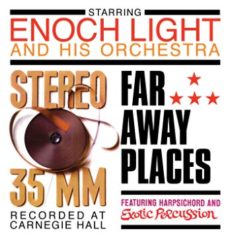
The 1940s saw Enoch recording for Brunswick, ARC, Vocalion and Bluebird, going on to become A&R (Artists and Repertoire) chief and vice-president of Grand Award Records, and then founded his own label Command Records in 1959. His name was prominent on many albums both as musician and producer. He revolutionized the creation of high-quality recordings in the late 1950s and early 1960s, particularly stereo effects that bounced the sounds between the right and left channels, often described as ping-pong recording. This technique had huge influence on the whole concept of multi-track recording that would become commonplace in the ensuing years.
The first of the albums produced on his record label was Persuasive Percussion, that became one of the first big-hit LP discs based solely on retail sales with little or no radio airplay because AM radio was monaural and had very poor fidelity. He did however,record several successful big band albums with an ace-group of New York studio musicians of the Swing Era.
His album covers were generally designed with abstract, minimalist artwork that stood out boldly from other album covers. Light developed the “gatefold” sleeve to fit his lengthy descriptions of the sleeve, enabling it to fold like a book, thus popularizing the gatefold packaging format. The gatefold sleeve became extremely popular in later decades, and was used on albums produced by CTI.
He would go on to work with The Free Design, The Critters, Rain, Doc Severinsen, Tony Mottola, Dick Hyman, organist Virgil Fox and arranger, Lew Davies, was one of the label’s most important contributors.
Violinist, bandleader and recording engineer Enoch Light retired from music entirely in 1974 and passed away four years later on July 31, 1978 in Redding, Connecticut.

Take A Dose On The Road

More Posts: violin