

Daily Dose Of Jazz…
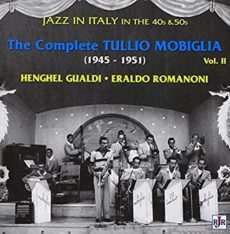
Tullio Mobiglia was born in Carezzano, Italy on April 12, 1911. In the early 1930s, after his studies at the conservatory in Genova and his first local engagements, he made several trips to the United States as a member of an on-board ship’s orchestra. Once in America, he made the acquaintance of the leading tenor saxophonists, including Coleman Hawkins.
In 1940 he visited Berlin, Germany as a member of the Italian Orchestra Mirador and in 1941 Tullio was with the Heinz Wehner Orchestra, and from April to November, he formed his own sextet played in the Patria Bar and was also in the Komiker Cafe’s musical revue Dreams About Me.
In the early Forties, Mobiglia’s orchestra played in the Rosita Bar and he also did some Film and Recordings during this period. Kramer combined musicians from two different generations to form his orchestra utilizing trumpeter Alfredo Marzaroli and saxophonist and clarinetist Francesco Paolo Ricci from the Twenties along with the younger members, Tullio Mobiglia, Eraldo Romanoni, Carlo Pecori, and the Triestino Angelo Bartole that performed during the Second World War II in Berlin.
After the war, he operated mainly in Italy, but also performed in Dortmund and Frankfurt Germany. From 1967 into the ’80s, he was active as a violin teacher at the Sibelius Conservatory in Helsinki, Finland.
Tullio directed a band without interruption in Berlin between 1941 and 1943, along with the Kramer’s Orchestra during the second half of the Thirties, the only stable group in the history of Italian Jazz between the years 1935 and ’43. He enlisted the brilliant and inventive guitarist Alfio Grasso to take part in the recordings.
Tenor saxophonist, violinist and bandleader Tullio Mobiglia passed away on July 24, 1991, aged 80, in Helsinki, Finland.

More Posts: bandleader,history,instrumental,jazz,music,saxophone,violin
Daily Dose Of Jazz…
Michel Maurice Armand Warlop came into the world in Douai, France on January 23, 1911. A child prodigy, he won every award and prize that existed for the violin in France before attaining the age of 18. he started his musical studies with his mother, a music professor, and entered the Conservatory of Douai, the second oldest in France, at age six.
There he studied with Victor Gallois who had won the Prize of Rome for composition in 1905. At age seven, he played his first public concert accompanied by his mother on the piano and by age eight in 1919 he played his first concert in Paris, to benefit victims of WW1. He transferred to the Conservatory of Lille around the age of 10 and started his studies on the university level at the Conservatory of Paris at age 13.
By mid-1939 Warlop began working permanently with the Raymond Legrand Orchestra, then got called up for military service in September 1939 and left Paris. Soon after hostilities started between Germany and France and he became a German prisoner of war but later released because of his tuberculosis. He returned to France late in February 1941.
Back in Paris, he took up his old chair in Legrand’s orchestra, recorded with the Jazz Dixit and his own string septet Septuor a Cordes from time to time. Both of these units were made up of other musicians in the Legrand organization. Warlop wrote and arranged almost all of the Septour’s music which was in a style that blended a classical string setting with Warlop’s jazz abilities. By 1942 he recorded his own Swing Concerto, however, Disques Swing did not issue it and it sat in the vaults until it was finally released on a CD in 1989.
After the war many French musicians, singers and film stars were accused of supporting the enemy for appearing on German-controlled radio, playing for German troops or touring in Germany. Many were banned from working for various periods of time. Warlop had to sit out for two months and Legrand for one year. He never played again in Paris or recorded after this incident in 1945.
His tuberculosis had finally caught up with him along with his heavy consumption of alcohol and cocaine and violinist Michel Warlop, who preferred to tour as a jazz soloist and in small groups in the south of France, passed away at 36 on March 6, 1947 in Bagnères-de-Luchon, France. His last engagement was with Jimmy Réna’s small group at the Grand Hotel Superbagnières above Luchon, France in the Pyrenees Mountains near the border with Spain.

More Posts: bandleader,history,instrumental,jazz,violin
Requisites
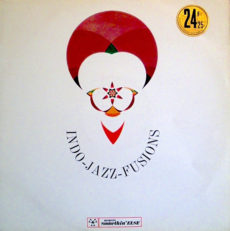
Indo-Jazz-Fusions was recorded in France on the Disques Somethin’ Else label in 1969 and was distributed by Société Phonographique Philips. It is a fusion of jazz, country, world and folk music and was produced by the Directeur De L’Enregistrement Robert Carnford.
The album elicited only five tracks, two of which are on Side A and three on Side B. They Intro And Rondo, Capriccio, Serenade, Toccata and Sarband.
The personnel at the recording session were alto saxophonist Joe Harriott, double bassist Coleridge Goode, drummer Allan Ganley, flautist Chris Taylor (5), pianist Pat Smythe, Diwan Motihar on sitar, Keshav Sathe on tabla, Chandrahas Paigankar on tambura, trumpeter/flugelhornist Kenny Wheeler, and on violin and harpsichord John Mayer, who also composed track 2.

More Posts: choice,classic,collectible,collector,harpsichord,history,instrumental,jazz,music,violin
Daily Dose Of Jazz…
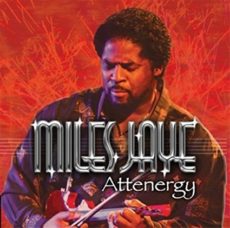
Miles Jaye Davis was born on November 12, 1957 in Yonkers, New York and is known professionally as Miles Jaye. He studied music theory and classical violin for more than a decade at the Brooklyn Conservatory of Music, Saratoga School of Orchestral Studies, Indian Hill and Brooklyn College.
While in the Air Force Jaye played flute, keyboards and bass and launched his singing career while stationed at Clarke Air Force Base in the Philippines. He toured Europe with jazz guitarist Eric Gale and singers Phyllis Hyman and Jon Lucien before taking over as “Cop” in the Village People in the mid 1980s. He stayed with the band for two years before launching his solo career and signing to Teddy Pendergrass’ production company Top Priority Records.
Releasing his debut album, Miles, on Island Records, he continued on the soul course with his music, contributing as musician, songwriter and co-producer on the Pendergrass 1988 hit album, Joy.
In 1991 he formed his own company, Black Tree Records, and recorded and released a string of increasingly jazz-influenced albums. Never straying completely from jazz he has also worked with George Duke, Roy Ayers, Grover Washington, Jr. and Branford Marsalis. Violinist, singer, producer and songwriter Miles Jaye continues to pursue new horizons in jazz.

Daily Dose Of Jazz…
Ray Biondi was born Remo Biondi on July 5, 1905 in Cicero, Illinois. As a child he started with violin and his early training was classical under the supervision of several teachers from the American Conservatory of Chicago. Mandolin followed at age 12 and it became his gateway into the world of string bands, and added guitar and then trumpet into his musical arsenal.
In 1926 he began playing professionally with the Blanche Jaros Orchestra, based out of Cicero, and the next year he started an eight-year period of heavy freelancing in Chicago, enjoying new contacts such as trumpeter Wingy Manone, reedman Bud Freeman, and Earl Burtnett put Biondi in his lineup as a violin and trumpet double. This band took him on a series of tours Kansas City, Cincinnati and New York. this led to a gig with clarinetist and saxophonist Joe Marsala and playing guitar whenever Eddie Condon double booked himself.
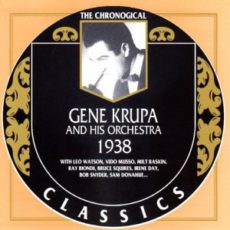
In 1938, Gene Krupa hired Ray solely as a guitarist except on an orchestra project where he double as a violinist. A year later he left the band and formed a series of small groups as a leader and one band had a long residency at Chicago’s 606 Club. He then opened a short-lived club himself, and Krupa took him back on the road in the early ’50s. He then began to get session guitar and mandolin work in some genres outside of straight jazz. With Pat Boone and the Crew Cuts as doo wop became a new musical style.
By 1961, he had begun a serious shift to teaching all of his instruments except the trumpet, but continued gigging with groups both large and small, including the orchestra of Dick Schory in the former case and stride pianist Art Hodes in the latter. Violinist Ray Biondi passed away on January 28, 1981 in Chicago, Illinois.
Sponsored By


#preserving genius