

Review: The Pugilist ~ Bernie Dresel
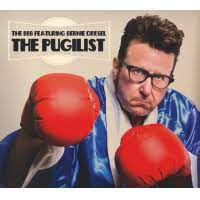
I wasn’t sure where this album was going when I looked at the cover art. It took me to the boxing rings before they became Vegas events, reminiscent of the radio era of my parents with Joe Louis, Rocky Marciano, Sugar Ray Robinson and Jack Dempsey. This is what big band should sound like. Bernie has brought the heat to this aptly titled recording. He is truly a pugilist as each song makes you feel the punch and excitement of the music. Listening I envisioned people pouring into the arena dressed to kill with all the swagger and sway that a championship fight brings. He definitely does not disappoint with his arrangements of classic tunes and new compositions. Closing out with a vocal is a unique approach and definitely wasn’t expected, but nicely done. It’s a refreshing approach to big band!
carl anthony | notorious jazz | january 10, 2022
Give A Gift Of Jazz ~ Share 
#preserving genius
More Posts: bandleader,history,instrumental,jazz,music,review,vocal
Daily Dose Of Jazz…
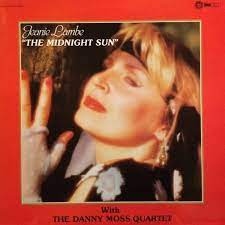
Jeanie Lambe was born on December 23, 1940 in Glasgow, Scotland. Her mother was a singer and her father played the accordion in the musical act Douglas, Nicol & Lamb. Her first public performances were with her parents and when she was seventeen, she became a member of the Clyde Valley Stompers.
She was the vocalist with the Alex Sutherland Sextet at Elgin’s Two Red Shoes Ballroom, where she kicked off the Two Red Shoes dances at age 19. Moving to London, England in 1960 Jeanie worked with a variety of jazz bands in the area, including those led by Alex Welsh, Kenny Ball and Charlie Galbraith. In 1964 she married tenor saxophonist Danny Moss and became more well known through her extensive performances at international jazz festivals.
Lambe has performed with modern and mainstream jazz musicians including Cliff Hardie and the UK All Stars Orchestra, Bobby Rosengarden, Monty Alexander, Ben Webster, Budd Johnson, Oscar Peterson, Wild Bill Davison, Kenny Davern, Joe Pass and Buddy Tate.
Suffering ill health, vocalist Jeanie Lambe, who recorded seven albums as a leader, passed away on May 29, 2020 in Perth, Australia at the age of 79.

More Posts: bandleader,history,instrumental,jazz,music,vocal
Hollywood On 52nd Street
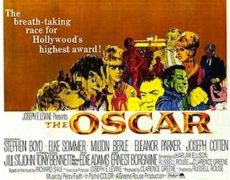
Maybe September is a 1965 song composed by Jay Livingston, Ray Evans and Percy Faith that was debuted by Tony Bennett in the 1966 drama The Oscar, a film written by Harlan Ellison, Clarence Greene, Russell Rouse and Richard Sale for Paramount Pictures.
The film was directed by Rouse and starred Stephen Boyd, singer Tony Bennett in his film debut, comedian Milton Berle in a dramatic role, Elke Sommer, Ernest Borgnine, Jill St. John, Eleanor Parker, Joseph Cotten, Edie Adams, Peter Lawford, Broderick Crawford, Ed Begley, Walter Brennan and Jack Soo. Appearing as themselves are Bob Hope, Hedda Hopper, Merle Oberon, Frank Sinatra and Nancy Sinatra.
Despite the film’s impressive cast and crew, the film did not win any Oscars, though Bennett did pick up the Golden Turkey Award for Wrost Performance By A Popular Singer. Jay Livingston, Ray Evans and Percy Faith
The StoryRising movie star Frankie Fane finds himself in Hollywood but has used and abused everyone around him, especially the two women who have loved him. Becoming box office poison, at his lowest point he unexpectedly receives an Oscar nomination, which his agent Kappy believes is the result of Fane’s portrayal of a man without morals, therefore portraying himself. To help insure a win, he hires a detective to spread sympathy rumors to influence the voters. The moment of truth comes at the Academy Awards, as the presenter announces the winner, stating the name Frank, whereupon Fane rises instantaneously to head to the stage, but then hears Sinatra, leaving him stunned and crestfallen. Clapping his hands weakly, everyone in the assemblage whom he has wronged enjoys the comeuppance for this wholly self-absorbed, unfeeling individual.
Requisites
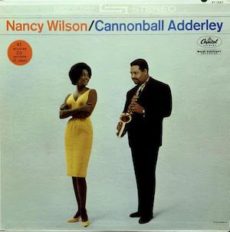
Nancy Wilson/Cannonball Adderley | By Eddie Carter
I’ve been a fan of Nancy Wilson and Cannonball Adderley since I was a kid, and the album up for discussion to begin December is one of my absolute favorites. It features one of the most beautiful voices in jazz coupled with a dynamic quintet that was becoming one of the best small ensembles and very popular with the public. This morning’s choice from the library is a 1961 album, Nancy Wilson/Cannonball Adderley (Capitol Records T-1657/ST-1657). Backing the duo are Nat Adderley on cornet, Joe Zawinul on piano, Sam Jones on bass, and Louis Hayes on drums. My copy used in this report is the 1962 US Stereo reissue (the Capitol Records logo is at the noon position on the label). This record holds a special place in my heart because it was the first album, I ever owned that was autographed by everyone in the group.
The quintet came to Leo’s Casino (Cleveland Ohio’s premier jazz club for many years) for a weekend performance, and my uncle Ben went to see them. After their first set had concluded and during the break, he let Cannonball know I was a big fan of his album, Somethin’ Else (1958). As a result, everyone signed it and he gave it to me for Christmas; once I opened the package, I forgot all about the toys. When Nancy came to the club a year later, he got her to sign it also. I had that autographed copy from 1962 to 1996 and it was my most prized possession until a fire destroyed my Mom’s home. Though a devastating loss, her and my Stepdad’s lives were spared, and that became a significant blessing to both my sister and me. Also, the memory is still a treasured one that always makes me smile whenever I play my current copy. That’s enough about me, gang, let’s get to the report.
Side One starts with Save Your Love For Me by Buddy Johnson. The rhythm section introduces the song delicately, then Nancy entices the listener with a seductive opening chorus tastefully trailed by Nat on muted cornet. Cannonball comes in on the next verse with a perfect example of soft and silken tenderness. The rhythm section’s reflective accompaniment is quite beautiful behind Nancy’s vocals leading to a gentle ending. Teaneck by Nat Adderley was initially known as A Little Taste and first heard on Portrait of Cannonball (1958). The ensemble takes off at a fast gallop on the spirited introduction and theme. Cannonball is a bundle of energy on the lead solo. Nat is as resourceful on the second reading with radiant intensity and Zawinul says plenty on an assertive, hard-driving solo preceding the group’s vigorous exit.
Never Will I Marry by Frank Loesser made its debut in the Broadway musical fantasy, Greenwillow (1960). Nancy and the quintet present a lighthearted rendition with her voice as an additional horn to the agile beat of the front line. In between her blissful vocals on the opening and closing chorus, Cannonball makes quick work of a concise, lively contribution in an equally effective fashion. I Can’t Get Started by Ira Gershwin and Vernon Duke first appeared in the musical, Ziegfeld Follies of 1936. This jazz standard is one of the most beautiful songs from The Great American Songbook. Adderley unfolds the attractive melody slowly, accompanied by the trio’s soft support, then continues with a daintily polite opening statement. Zawinul responds with a delicately pretty touch on the finale ahead of the altoist’s elegant reprise and ending.
The Old Country by Nat Adderley and Curtis Lewis is the story of a sad, lonely individual in the twilight of his life. Nancy is the narrator whose lyrics recall all he had and lost because of his choice to remain isolated and alone. This tune begins at midtempo by Nancy and Nat who equals her lyrics with meticulous skill on the muted cornet. Cannonball kicks off the solos with a chorus of uncluttered swinging. Joe adds a concise performance that flows smoothly into the climax. One Man’s Dream by Charles Wright and Joe Zawinul begins at a brisk pace with a zesty melody in unison. Cannonball is out of the gate first with an invigorating opening statement, succeeded by Nat who delivers the second solo with sheer vitality. Zawinul takes a short reading, then the front line shares a final conversation ahead of the reprise and ending.
Happy Talk by Richard Rodgers and Oscar Hammerstein II comes from South Pacific (1949). It starts Side Two with an upbeat treatment by Nancy and the ensemble. Nat’s muted cornet leads the quartet on the introduction into her jubilant lyrics. Cannonball also shines on a short comment. Never Say Yes by Nat Adderley starts with a muted introduction and opening solo that’s handled with finesse. Cannonball comes next with a lively presentation that adds to the exhilaration. Zawinul wraps up the conversation with youthful exuberance, ahead of Nat’s graceful finale. Nancy sings one of the prettiest jazz standards next, The Masquerade Is Over by Herbert Magidson and Allie Wrubel. She’s the dominant presence here and presides with an intimate sincerity in a tender expression of love lost. Zawinul, Jones, and Hayes follow her into a soft summation.
Sam Jones’ Unit 7 became the closing theme for Cannonball’s groups during their live performances, and the bassist recorded another version on Down Home (1962). The quintet opens with a bluesy beat by both horns leading the group on the theme. Cannonball builds the first solo with melodic inventiveness. Nat follows with a sweet tone and impeccable intonation. Joe struts through the closing statement with a joyfulness that’s extremely revealing. The finale is A Sleepin’ Bee by Harold Arlen and Truman Capote. It premiered in the musical House of Flowers (1954) and starts innocently with a brief piano introduction by Zawinul. Nancy shares the spotlight with Jones for the first verse before the ensemble joins in for the melody. Nancy’s voice is in superb form on this midtempo gem and Cannonball turns in a brief solo of incredible emotion and feeling. She closes the song as she began, in a duet with Jones that ends softly.
Nancy Wilson/Cannonball Adderley is exactly as stated on the cover; forty-one minutes, and fifty-nine seconds of some of the best jazz you’ll hear. It was produced by Andy Wiswell and Tom Morgan who were the men behind many great Capitol albums during the sixties. This reissue has an excellent soundstage that still stands up well sixty years later. Nancy’s vocals are splendidly interpreted, and she holds your attention on every song. She made thirty-seven albums over a two-decade career at Capitol Records. Cannonball also flourished at Capitol after leaving Riverside, recording seventeen albums from 1964 to 1970. Here, they demonstrate their vibrant improvising in a swinging, straight-ahead set that’s right on target. If you’re a fan of Hard-Bop and great vocals, Nancy Wilson/Cannonball Adderley is a happy session that’s sure to thrill old and young fans and one of the best things you can do for your turntable!
~ Down Home (Riverside RLP 432/RLP 9432), Portrait of Cannonball (Riverside RLP 12-269), Somethin’ Else (Blue Note BLP 1595/BST 81595) – Source: Discogs.com ~ A Sleeping Bee, Happy Talk, I Can’t Get Started, Never Will I Marry – Source: Wikipedia.org © 2021 by Edward Thomas Carter

More Posts: choice,classic,collectible,collector,history,instrumental,jazz,music,saxophone,vocal
Daily Dose Of Jazz…
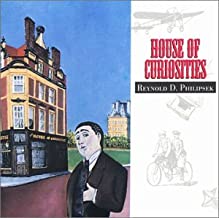
Reynold David Philipsek was born December 8, 1952 in Richmond, Minnesota and at the age nine began playing guitar and by 14 joined the American Federation of Musicians labor union. At sixteen, he wrote and recorded the single Oval Portrait with the band Cure of Ares. At 18, he was exposed, through a radio broadcast, to gypsy jazz through Django Reinhardt.
In 1975, he took a lesson and two workshops from jazz guitarist Joe Pass, studied jazz guitar and The Complete Johnny Smith Approach to Guitar with Mike Elliott.. Post Cure of Ares, he played in bands in the midwest and in 1989, Philipsek became primarily a solo act recording albums in pop, rock, jazz, and gypsy jazz on his label, Rephi Records.
He began to concentrate on gypsy jazz with All the Things You Are and Tales from the North Woods, that includes elements of gypsy jazz, bebop, Latin folk, modal jazz, and Slavic folk music informed by his burgeoning interest in his Czech and Polish heritage. Along with appearing at gypsy jazz festivals, jazz clubs, and concert venues, he composed the score for the children’s short film. St. Cloud Sleep, wrote a book of poetry Journey to the Middle Ages, and released Three Piece Suite/Munsinger Gardens on DVD.
He went on to produce Live at The Times recorded with the Twin Cities Hot Club and the documentary A Life Well Played in 2016. Guitarist, singer, songwriter, and poet Reynold Philipsek continues to explore his music.
More Posts: bandleader,guitar,history,instrumental,jazz,music,vocal