

Daily Dose Of Jazz…
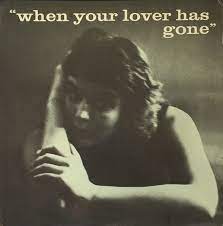
Claire Austin was born Augusta Marie on November 21, 1918 to Swedish-American parents in Yakima, Washington. She played in nightclubs throughout the northwest in the 1930s and toured with the Chuck Austin Band in the 1940s.
Retiring from professional singing by the early 1950s, Claire began working as an accountant in Sacramento, California. After singing with Turk Murphy, she frequently performed in San Francisco, California for two years. She remained active through the 1970s.
Vocalist and pianist Claire Austin, whose singing style has been compared to Peggy Lee, passed away on June 19, 1994.

More Posts: bandleader,history,instrumental,jazz,music,piano,vocal

The Quarantined Jazz Voyager
As a nation of thinkers trepidly venture out to events, not out of fear but in caution, we continue to perform the safe practices of mask wearing and social distancing, this quarantined jazz voyager remains steadfast in protecting himself. Today I am playing one of my favorite genres, the big band, and this one is being led by a most wonderful woman. In 2020 Lenora Zenzalai Helm produced a fabulous record For The Love Of Big Band bringing to the fore the Tribe Jazz Orchestra and new arrangements to some of jazz’s classic compositions. There is something wonderful about listening to music that was created with love.
Track Listing | 1:16:00
- Blues For Mama (Nina Simone) ~ 4:42
- Bebop (Dizzy Gillespie, Deborah Brown) ~ 6:22
- Chega De Saudade (Antonio Carlos Jobim, Jessie Cavanuagh, Vinicius de Moraes, Jon Hendricks) ~ 6:39
- It Could Happen To You (Jimmy Van Heusen, Johnny Burke) ~ 5:26
- Soul Eyes (Mal Waldron) ~ 5:24
- Everything But You (Duke Ellington, Harry James) ~ 4:30
- I Didn’t Know About You (Duke Ellington, Bob Russell) ~ 5:50
- Sandu (Clifford Brown, Dupresha L. Townsend) ~ 9:00
- But Not For Me (George & Ira Gershwin) ~ 5:26
- A Conversation With God (Dear Lord) (John Coltrane, Lenora Zenzalai Helm) ~ 7:25
- Mississippi Goddam (Nina Simone) ~ 6:06
- Stella By Starlight (Victor Young,Ned Washington) ~ 8:23

More Posts: adventure,album,club,genius,jazz,museum,music,preserving,restaurant,travel,vocal
Daily Dose Of Jazz…
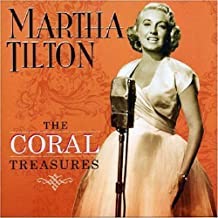
Martha Tilton was born November 14, 1915 in Corpus Christi, Texas however, her family moved to Edna, Kansas when she was three months old. They relocated to Los Angeles, California when she was seven years old. While attending Fairfax High School she was singing on a small radio station when she was heard by an agent who signed her and began booking her with larger stations.
Dropping out of school in the eleventh grade she joined Hal Grayson’s band. After singing with the quartet Three Hits and a Miss, she joined the Myer Alexander Chorus on Benny Goodman’s radio show, Camel Caravan. Goodman hired Tilton as a vocalist with his band in 1937. She continued to appear as Goodman’s star vocalist until the end of 1939 and had a No. 1 hit with the Goodman recording of And the Angels Sing.
Her major success happened from 1942 to 1949 as one of the first artists to record for Capitol Records. Her first recording for the label was Moon Dreams with Orchestra and The Mellowaires. Among her biggest hits as a solo artist were I’ll Walk Alone, I Should Care, A Stranger in Town, How Are Things in Glocca Morra, That’s My Desire, and I Wonder, I Wonder, I Wonder.
After she left Capitol, she recorded for other labels, including Coral and Tops. Martha sang on Fibber McGee and Molly and starred on Campana Serenade, a program of popular music on first NBC and then CBS in 1942–1944. She would go to sing and appear on further radio and television shows into the Fifties. She also appeared in several films from 1941 to 1975 including the Benny Goodman Story. Her singing voice was used for other actresses including Barbara Stanwyck, Martha O’Driscoll, and Anne Gwynne.
On December 8, 2006 vocalist Martha Tilton, who appeared in several Soundies musical films of the 1940s, passed away of natural causes at her Brentwood home.
More Posts: history,instrumental,jazz,music,vocal
Daily Dose Of Jazz…
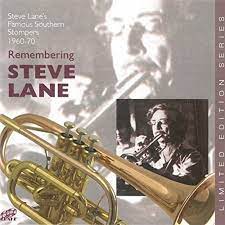
Steve Lane was born on November 7, 1921 in London, England where his father was a concertina player who recorded with the Rio Grande Tango Orchestra in the 1920s. Having heard his first jazz in the Rhythm Clubs of the late 1930s, his first choice of instrument was guitar, but, following wartime service, he switched to the cornet on which he soon developed a jazz style based on the hot trumpeters of the 1920s he so much admired, with particular emphasis on his role leading the collective ensemble.
A gifted composer of vocal and instrumental pieces, he deftly incorporated female vocalists as an integral part of the band, thus presenting a range of songs carefully chosen to showcase the singer, and the supporting musicians strictly trained in the art of accompaniment. A taskmaster offering little compensation and weekly rehearsals, his personnel changed often but allowed him the ability to discover young talent such as pianists Martin Litton and Bruce Boardman and trombonist Bob Hunt.
Steve led his own Southern Stompers jazz band in the early 1950, and also led and recorded with his Red Hot Peppers and the VJM Washboard Band for over 50 years. In 1952 he established the Ealing Jazz Club, and in the Sixties establishe the West End Jazz Club and was a founding partner of VJM Records.
Cornetist, guitarist, composer, arranger and bandleader Steve Lane, who was a traditional jazz player, passed awya on August 22, 2015 at age 93.
More Posts: arranger,bandleader,composer,cornet,guitar,history,instrumental,jazz,music,vocal
Daily Dose Of Jazz…
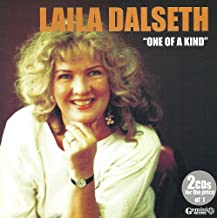
Laila Dalseth was born November 6, 1940 in Bergen, Norway. After an early debut in her hometown she became active on the Oslo, Norway jazz scene, recording with Kjell Karlsen, Egil Kapstad and Helge Hurum’s big band. Her first recording was Metropol Jazz in 1963, then she was a part of Stokstad/Jensen Trad Band from 1973 to 1975. This she followed with a stint in a band with Per Borthen, then at Teatret Vårt in the play Havhesten in 1976.
>With her own band, Laila recorded Listen Here! (1999), 1960’s album One of a Kind (2000) and then Everything I Love (2003), all on the Gemini label. Her L. D. Quintet consisted of her husband Totti Bergh on saxophone, pianist Per Husby, bassist Kåre Garnes and Tom Olstad on drums.
Dalseth was awarded Buddyprisen in 1976, the Spellemannprisen i klassen jazz on three occasions, for Just Friends in 1975, Glad There is You in 1978 and in 1984 for Daydreams. International recognition came in the Eighties with her release of for the record Time for Love with Red Mitchell, Travelling Light with Al Cohn, and into the 1990s with The Judge and I with Milt Hinton, A Woman’s Intuition, her own sextet featuring guitarist Philip Catherine, and into the new century with We Remember You with Al Cohn, and Everything I Love.
At 80, vocalist Laila Dalseth has recorded thirteen albums, received eight awards and remains active on the jazz scene.
More Posts: bandleader,history,instrumental,jazz,music,vocal