

Daily Dose Of Jazz…
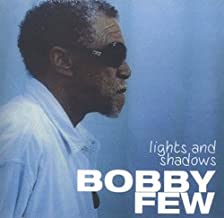
Bobby Few was born October 21, 1935 in Cleveland, Ohio and grew up in the Fairfax neighborhood of the city’s East Side. His mother encouraged him to study classical piano, later discovering jazz listening to his father’s Jazz at the Philharmonic records. His father became his first booking agent and soon he was gigging around the greater Cleveland area with other local musicians including Bill Hardman, Bob Cunningham, Cevera Jefferies, and Frank Wright.
Exposed to Tadd Dameron and Benny Bailey as a youth and knew Albert Ayler, with whom he played in high school. As a young man, Bobby gigged with local tenor legend Tony “Big T” Lovano, Joe Lovano’s father. The late 1950s had him relocating to New York City, where he led a trio from 1958 to 1964; there, he met and began working with Brook Benton, Rahsaan Roland Kirk, Jackie McLean, Joe Henderson and Ayler. Playing on several of Ayler’s albums, he also recorded with Alan Silva, Noah Howard, Muhammad Ali, Booker Ervin, and Kali Fasteau.
In 1969 he moved to France and rapidly integrated the expatriate jazz community, working frequently with Archie Shepp, Sunny Murray, Steve Lacy, and Rasul Siddik. Since 2001, he has toured internationally with American saxophonist Avram Fefer, with whom he recorded four critically acclaimed CDs. He plays extensively around Europe and continues to make regular trips back to the United States. Recently, Few has played with saxophonist Charles Gayle and leads his own trio in Paris. He is currently working on a Booker Ervin tribute project called Few’s Blues that features tenor player Tony Lakatos, bassist Reggie Johnson and drummer Doug Sides.
As a leader and co~leader, he recorded eighteen albums and fifty as a sideman. Pianist and vocalist Bobby Few, whose playing style has been described as delicate single-note melodies, roll out lush romantic chords, and rap out explicitly Monkish close-interval clanks, continued to perform and record until he passed away on January 6, 2021 at age 85.

More Posts: bandleader,history,instrumental,jazz,music,piano,vocal
Daily Dose Of Jazz…
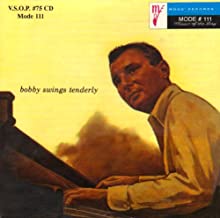
Robert William Troup Jr. was born on October 18, 1918 in Harrisburg, Pennsylvania. Graduating from The Hill School in 1937, he went on to graduate Phi Beta Kappa from the Wharton School at the University of Pennsylvania with a degree in economics. His earliest musical success came in 1941 with the song Daddy and Sammy Kaye and His Orchestra recorded it sending it to #1 for eight weeks on the Billboard chart and #5 record of 1941.
After graduating from college in 1941, he enlisted in the United States Marine Corps, completed officer training, and was assigned to recruit the first Black Marines at Montford Point. While there, he organized the first Negro band of U.S. Marines. During this time he composed Take Me Away From Jacksonville, which became an anthem of sorts for the Marines at Montford Point and other areas of Camp Lejeune. In 1942, his song Snootie Little Cutie was recorded by Frank Sinatra and Connie Haines with the Tommy Dorsey Orchestra and the Pied Pipers.
In 1946, Nat King Cole had a hit with Troup’s most popular song, Route 66. Troup’s fifteen albums in the 1950s and 1960s were not commercially successful, recording for Liberty and Capitol. He composed the music for the instrumental version of his song The Meaning of the Blues that appeared on the Miles Davis album Miles Ahead.
While relying on songwriting royalties, Bobby worked as an actor, appearing in Bop Girl Goes Calypso, The High Cost of Loving, The Five Pennies, and playing musician Tommy Dorsey in the film The Gene Krupa Story. He also appeared on several television shows in the Sixties. It was during this time that he met Julie London, encouraged her to pursue her singing career, and in 1955 produced her million-selling hit record Cry Me a River. Four years later, London married Troup. On February 7, 1999, pianist, singer, songwriter and actor Bobby Troup passed away of a heart attack in the Los Angeles, California neighborhood of Sherman Oaks.
More Posts: actor,history,instrumental,jazz,music,piano,songwriter,vocal

The Quarantined Jazz Voyager
We have not yet recognized when or how we will emerge from this pandemic, but as we collectively continue to navigate our way maintaining social distancing it is the perfect time to put on some headphones, earbuds, or just turn up the volume and listen to some big band. So today, this Quarantined Jazz Voyager is not going to the big band standards of yesteryear, nor is he choosing to feature one of the many led by men but is selecting the perfect album released this year by vocalist Lenora Zenzalai Helm & Tribe Jazz Orchestra. It is titled For The Love Of Big Band.
The album was recorded over a two day period in March 26th ~ 27th in front of a live audience and employed 20 musicians, a dozen music and music business professionals, four generations of renowned veteran musicians, as well as emerging and student musicians. It has been released under the Zenzalai Music label.
Track Listing | 76:00- Blues For Mama (N. Simone) ~ 4:42
- Bebop (d. Gillespie/D. Brown) ~ 6:22
- Chega de Saudade/No More Blues (A. Jobim, J. Cavanaugh, V. de Moraes, J. Hendricks) ~ 6:39
- It Could Happen To You (J. Van Huesen, J. Burke) ~ 5:26
- Soul Eyes (M. Waldron) ~ 5:24
- Everything But You (D. Ellington, H. James) ~ 4:30
- I Didn’t Know About You (D. Ellington, B. Russell) ~ 5:50
- Sandu (C. Brown, D. Townsend) – 9:00
- But Not For Me (G. Gershwin, I. Gershwin) ~ 5:26
- A Conversation With God (Dear Lord) (J. Coltrane, L. Helm, M. Myers) ~ 7:25
- Mississippi Goddam (N. Simone) ~ 6:06
- Stella By Starlight (V. Young, N. Washington) ~ 8:23
- Lenora Zenzalai Helm ~ Voice
- Ernest Turner, Lydia Salett Dudley, Ed Paolantonio ~ Piano
- Baron Tymas ~ Guitar
- Ginnae Koon ~ Bass
- Thoma Taylor, Dorien Dotson, ~ Drums
- James “Saxmo” Gates, Sam King, Brian Miller, Matt York, Ariel Kopelove, Shaena Ryan Martin ~ Reeds
- Lynn Grissett, Al Strong, Zoe Smith, Tyler Perske ~ Trumpets
- Robert Trowers, Isrea Butler, Tenay Harrell, Reggie Greenlee, Cameron MacManus ~ Trombones
- Brian Horton ~ Conductor, Composer, Arranger, Saxophone
- Lenora Zenzalai Helm ~ Conductor, Voice
- Ed Paolantonio ~ Piano
- Baron Tymas ~ Guitar
- Timothy Holley ~ Cello
- Salome Serena Wiley ~ Tenor Saxophone
- Lance E. Scott, Jr. ~ Acoustic Bass
- Thoma Taylor ~ Drums
- NCCU Vocal Jazz Ensemble ~ Guest Artist
- Joey Calderazzo ~ Piano
- Ameen Saleem ~ Acoustic Bass
- Maurice Myers ~ Special Guest Vocal Soloist | A Conversation With God
As you listen and enjoy this wonderful addition to the jazz catalog, continue to social distance and stay healthy. During this sabbatical from flying and investigating jazz around the globe, enjoy the listen and know that the world and I will be back.

More Posts: adventure,club,conductor,genius,jazz,museum,music,preserving,restaurant,travel,vocal,voyager
Daily Dose Of Jazz…
Fred Norman was born on October 5, 1910 in Leesburg, Florida and started out playing trombone when he was 14. After working with local bands in Florida, until moving to Washington, D.C. in 1930. There he worked with Duke Eglin’s Bell Hops, Booker Coleman, and Elmer Calloway (Cab’s younger brother). When he joined Claude Hopkins’ Orchestra in 1932, he doubled as a singer and contributed many arrangements.
Norman was with the Hopkins Big Band during its key years (1932-37), and when he departed, gave up the trombone and stuck exclusively to writing. Norman wrote arrangements for many big bands including those of Benny Goodman (1938), Bunny Berigan, Gene Krupa, Lionel Hampton, Jack Teagarden, Glenn Miller, Harry James, Artie Shaw, and Tommy Dorsey.
Landing the position of staff arranger for Krupa from 1940 to 1943, he spent periods writing exclusively for Dorsey and Charlie Spivak. In the 1950s, Fred started working closely with MGM and Carlton record labels, among others, and often as a musical director for singers such as Dinah Washington, Sarah Vaughan, and Brook Benton.
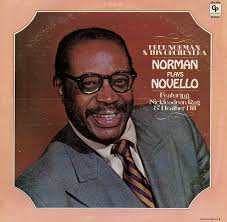
Although his orchestra backed numerous singers, he led his own orchestra record date, producing Norman Plays Novello. Trombonist, vocalist, and arranger Fred Norman, who spent most of the swing era as a busy arranger, passed away on February 19, 1993 in New York City, New York.
More Posts: arranger,bandleader,history,instrumental,jazz,music,trombone,vocal
Daily Dose Of Jazz…
Ford Leary was born on September 5, 1908 in Lockport, New York. He married early, had a son, and left both wife and child for a music career. During the thirties he performed as part of the Frank Trumbaur band and with the Bunny Berigan band, the latter being one of his better positions while scuffling to make ends meet freelancing in New York City.
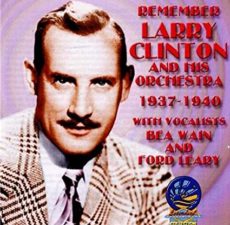
Ford would go on to work with Larry Clinton in the late Thirties and in the early 1940s with Charlie Barnet, Mike Riley, and Muggsy Spanier. As he was readying to begin a new career path as a replacement performer in the Broadway show Follow The Girls, he suffered a back injury from which he never fully recovered.
His short career ended in the late ‘40s when trombonist and vocalist Ford Leary, the only trombonist of note to die institutionalized at Bellevue Hospital, passed away on June 4, 1949 at age 40.
