

Three Wishes
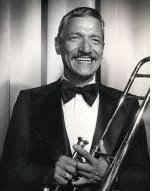
Upon receiving the question of three wishes from the Baroness, Frank Rehak responded with:
“Improvement of the caliber of recorded music. In general, the public has been exposed – via radio, TV, disc-jockeys, etc. – to bad sounds for many years, which in turn has caused a yardstick of poor music to measure by. If, on the other hand, good music had been given the same exploitation, the taste of John Q. Public would have been made vastly more musical, if by nothing more than the repeated playing and hearing of music worthwhile. I.e.: If any person is exposed to any sound continuously, and for a long period of enough time, it will begin to sound musical to him.
Classic example: The audience hisses, booed, and left the auditorium when Bach first used the sixth in addition to a triad-which of course is now one of the most common sounds used in any type of music. Ditto the dominant seventh which, when first employed, was considered completely distasteful, dissonant, and disgusting to the uneducated ear.
To sum this rambling up, I wish that more good music could be brought across to the general public via any medium. It would make we musicians’ jobs so much more fun and educational.”
*Excerpt from Three Wishes: An Intimate Look at Jazz Greats ~ Compiled and Photographed by Pannonica de Koenigswarter

More Posts: baroness,history,instrumental,jazz,music,pannonica,three,trombone,wishes
Daily Dose Of Jazz…
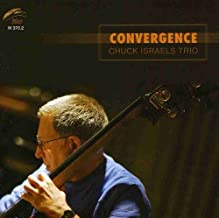
Chuck Israels was born Charles H. Israels on August 10, 1936 in New York City, New York. He was raised in a musical family which moved to Cleveland, Ohio when he was 10 and his stepfather Mordecai Bauman was a singer who performed extensively with composer Hanns Eisler. With music a part of normal daily activity, folks like Paul Robeson, Pete Seeger, and The Weavers were regular visitors. In 1948, the appearance of Louis Armstrong’s All Stars in a concert series produced by his parents gave him his first opportunity to meet and hear jazz musicians.
In college, Israels had the opportunity to perform with Billie Holiday. His first professional job after college was working with pianist Bud Powell in Paris, France. His first professional recording was Stereo Drive a.k.a. Coltrane Time with John Coltrane, Cecil Taylor, Kenny Dorham, and Louis Hayes.
>Israels is known for the Jazz Repertory as Director of the National Jazz Ensemble from 1973 to 1981. He made recordings with the Kronos Quartet and Rosemary Clooney in 1985. He was the Director of Jazz Studies at Western Washington University in Bellingham, Washington until 2010. In 2011, he created the Chuck Israels Jazz Orchestra and recorded Second Wind: A Tribute to the Music of Bill Evans in 2013.
He has worked with Billie Holiday, Benny Goodman, Coleman Hawkins, Stan Getz, Herbie Hancock, J. J. Johnson, John Coltrane, and Judy Collins. Bassist, composer, arranger and bandleader Chuck Israels, who is best known for his work with the Bill Evans Trio, continues to perform.

More Posts: arranger,bandleader,bass,composer,history,instrumental,music
Daily Dose Of Jazz…
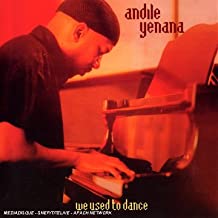
Andile Yenana was born on August 9, 1968 in King William’s Town, South Africa. His love of music was triggered at an early age and he grew up in a household where music was really loved. His father, Felix Thamsanqa Yenana, had a huge collection of music, ranging from jazz to Motown, and other forms of urban black music and this had a huge influence in his life.
Andile began music studies under Darius Brubeck at the University of Natal’s School of Jazz and Popular Music It was here that he became friends with saxophonist Zim Ngqawana and trumpeter Feya Faku.
Joining the Zim Ngqawana Quartet and worked with Zim on all five of his albums, including San Song recorded with Bjorn Ole Solburg and his Norwegian San Ensemble. He also worked on the Pan-African music project Mahube with saxophonist Steve Dyer and others. He has also worked as arranger for Sibongile Khumalo, Gloria Bosman and Suthukazi Arosi. In 2005 he was selected as the 2005 Standard Bank Young Artist for Jazz.
Pianist Andile Yenana, who made an indelible mark on the industry by switching from teaching to studying jazz, continues to perform and record.
More Posts: history,instrumental,music,piano

Requisites
London Calling: A Toast To Julie London ~ Lyn Stanley | By Eddie Carter
One of the best things I love about jazz is the discovery of old and new songs, classic and new artists, and bands with which I am not familiar. On one occasion, I visited Evolution Home Theater in Buckhead for the Atlanta Audio Club meeting and had the pleasure to meet and hear jazz vocalist Lyn Stanley. She treated the members to selections from her sixth LP, London Calling: A Toast To Julie London (A.T. Music, LLC – ATM 3107), and discussed how the album was recorded. This 2019 two-record release pays homage to the talented actress, jazz, and pop vocalist with other surprises. My copy used in this report is the limited edition, numbered 33 1/3 Stereo audiophile release.
She’s heard here with nine exceptional musicians; Mike Garson (tracks: A1, A2, A4, B1, B4 to C3, D2 to D4), Christian Jacob (tracks: B3, D1) on piano, John Chiodini (tracks: A1, A2, A4, D3) on guitar, Chuck Berghofer (tracks: A3 to B3, C3 to D1, D3), Mike Valerio (tracks: A1, A2, B1, B5 to C4, D2) on double bass, Paul Kreibich (tracks: A1, A2, B1, B4, C1 to C3, D2) on drums, Aaron Serfaty (A1, A2, A4, B1, B3 to D2) on drums, percussion, Luis Conte (track: C1), Brad Dutz (tracks: A1, A2, B1, B3, B4, C1 to C3, D1, D2) on percussion. What is unique about the album is that each song was recorded only once without any formal arrangements whatsoever, only chord charts with the musical roadmap created by Lyn and the band during the working demo sessions.
Ms. Stanley opens the album with an upbeat rendition of the 1936 song, Goody Goody by Matty Malneck and Johnny Mercer. The lyrics depict a woman getting her revenge on the man who hurt and left her and has now had the tables turned on him. It first appeared on Julie Is Her Name, Volume 2 (1958). Lyn beautifully expresses the song’s lyrics with a lively rendition of the opening and closing melody. Chiodini, Garson, and Valerio also add three spirited concise comments that swing freely. Call Me Irresponsible by Jimmy Van Heusen and Sammy Cahn is from Julie’s LP, The End of The World (1963). This tune shows Lyn is an inspired stylist as she cruises smoothly through the melody with artful simplicity. Chiodini and percussionist Brad Dutz appear at the introduction and finale with Garson, Valerio, and Serfaty providing a solid foundation throughout her presentation.
Bye Bye Blackbird was composed in 1926 by Ray Henderson and Mort Dixon. This song appeared on Julie (1958) and is a slow-tempo duet by Lyn and Chuck. Both vocalist and bassist complement each other in one of the most beautiful renditions I have ever heard. Lyn’s voice is soft and sweet matching Chuck’s bass walking tenderly on a short statement with his sensitive support to her vocals into a tranquil finale. I Heard It Through The Grapevine by Barrett Strong and Norman Whitfield is a Soul classic. It was a hit for Gladys Knight & The Pips on Everybody Needs Love (1967), Smokey Robinson & The Miracles on Special Occasion, and Marvin Gaye on In The Groove (1968). Lyn’s sultry interpretation about hearing a lover’s plan to leave their significant other from someone else is an excellent illustration of how she transforms this straightforward melody into a chillingly unique performance. Chiodini, Garson, Berghofer, and Serfaty provide the slowly rocking beat for her to tell the story.
Side Two starts with a 1928 song from the pen of Irving Berlin, How About Me? Ms. London introduced it on Around Midnight (1960) and the lyrics describe a display of regret and sadness for the loss of someone loved. The tempo moves to a medium beat for Lyn who kicks off the solo sequence with flawless enunciation, followed by Garson and Chiodini who split a perfectly constructed chorus. Cry Me A River by Arthur Hamilton was Julie’s first and biggest hit, making its debut on Julie Is Her Name (1955). It remained her signature song throughout her singing career. Like Ms. London’s version, a trio release featuring Barney Kessel on guitar and Ray Leatherwood on bass, Lyn is accompanied by John and Chuck who are the lush foundation behind her deeply affecting vocals. Chiodini also gives a passionately poignant reading before the trio’s tender climax.
As Time Goes By is songwriter Herman Hupfield’s most well-known composition. It premiered in the Broadway musical, Everybody’s Welcome (1931), but is best known as the song featured in the romantic drama, Casablanca (1942). Julie’s rendition first appeared on Our Fair Lady (1965). The ensemble’s version possesses a Bossa Nova flavor by the musicians and Lyn infuses the lyrics with a cheerfully happy tone, resulting in a delightful vocal interpretation. Christian and John match Ms. Stanley with two mellow statements that move along sprightly off the easy-going drive of Chuck’s bass, Aaron’s drums, and Brad’s percussion.
The first of two vocals of the timeless classic Summertime (1934) by George and Ira Gershwin and DuBose Heyward concludes both records. The song first appeared in the opera, Porgy & Bess (1935). Heyward wrote the lyrics based on his 1925 novel Porgy and it is sung as a mother’s lullaby to her baby. To date, the standard has over twenty-five thousand recordings. It is beloved by jazz musicians and vocalists worldwide and considered one of the greatest songs ever written. Julie sang it on Feelin’ Good (1965). Lyn and the quintet preserve the spirit of the song as a seductive slow tempo southern styled blues and her delivery of the lyrics are alluringly tender and expressive. John and Chuck take the spotlight, leading the quintet through one enchanting chorus preceding the bewitchingly beautiful ending.
Side Three starts with the Latin pop song It’s Impossible by Mexican songwriter Armando Manzanero who recorded it under the original title Somos Novios for his album, Somos Novios…Siempre Novios (1968). It was composed as an instrumental ballad. American composer and songwriter Sid Wayne added English lyrics two years later and it became a huge hit for Perry Como as the title tune of his album (1970). Lyn presents the lyrics with tender beauty and warmth while serenaded by Chiodini who plays a Spanish guitar and has a gentle solo as well. Berghofer and percussionists Conte and Serfaty provide the lush background behind Ms. Stanley’s delicate delivery.
Richard Rodgers and Lorenz Hart’s popular song Blue Moon (1934) was composed as The Bad In Every Man for the crime film, Manhattan Melodrama with different lyrics. After the film’s premiere, Hart eventually wrote more romantic lyrics for the song, and it has been a successful standard since two 1949 hit records by Billy Eckstine and Mel Tormé. Blue Moon opens Julie’s album, Julie Is Her Name, Volume 2 and in the version presented here, Lyn sings the lyrics sensuously at a slower tempo than Ms. London, blending superbly with John who provides a marvelous interpretation enhancing one of the prettiest tunes on the album.
George and Ira Gershwin contribute another jazz classic with Lyn’s version of I’ve Got A Crush On You. This song appeared in two different Broadway musicals, Treasure Girl (1928) and Strike Up The Band (1930). The vocal became a standard after renditions by Ella Fitzgerald, Frank Sinatra, and Sarah Vaughan. Ms. London featured it on Nice Girls Don’t Stay For Breakfast (1967). Lyn captures the melody perfectly with a warm, sincere interpretation and the song is perfect for couples to slow dance to. Chiodini answers her vocals with an impressive chorus backed by Garson, Berghofer, Kreitbich, and Serfaty preceding an intimately romantic conclusion.
Light My Fire was the first huge hit for the American Rock band, The Doors, first appearing on their debut release (1967). The song was a collaborative effort by Jim Morrison, Ray Manzarek, Robby Kreiger, and John Densmore. It appeared on Julie’s final studio album of Pop and Rock songs, Yummy, Yummy, Yummy (1969)! Lyn’s sultry voice caresses each word of the lyric with sensuous pleasure to John’s Flamenco flavored guitar playing, Aaron’s incredibly perfect percussion work, and Mike’s passionately powerful piano cascades that speak voluptuously.
Sway by Norman Gimbel and Pablo Beltran Ruiz appeared on Julie London Sings Latin In a Satin Mood (1963). The rhythm section’s gentle beat serves as a backdrop through the seductively, poignant introduction. Lyn’s tender, expressive opening, and closing vocals are immensely touching as Chiodini’s thoughtfully constructed reading of velvety-soft phrases. Lyn treats us to two beautiful melodies next; Go Slow by Debbie Kronck and Russell Garcia which appeared on Julie’s album, Make Love To Me (1957) and Nice Girls Don’t Stay For Breakfast by Bobby Troup and Jerome Leshay!
On the first tune, her bewitchingly lusty lyrics are the spark for a romantic evening ahead with the assistance of Chiodini, Serfaty, and Dutz who provide the gentle rhythm as she sings. Mike Valerio’s bass sets the mood perfectly for Lyn’s swinging interpretation of the second song’s lyrics illustrating her skillful phrasing into a subtle climax. You, The Night and The Music by Arthur Schwartz and Howard Dietz, premiered in the Broadway musical comedy, Revenge With Music (1934). Julie sang this timeless standard on her album, Around Midnight (1960). Lyn paints a compelling portrait of the lyrics as a Tango, making it her own with a unique delivery to a superbly done danceable beat. Garson matches the vocalist with an exquisite contribution sustained by the rhythm section’s rich accompaniment.
Ev’ry Time We Say Goodbye (1944) is one of Cole Porter’s most beautiful compositions from The Great American Songbook. It first appeared in Billy Rose’s musical revue Seven Lively Acts. This is a trio number with Lyn opening with an enchantingly vocal presentation possessing a deep romantic affection for the lyrics. Her bandmates Chiodini has a voluptuously gorgeous guitar solo and Berghofer matches the delicate softness of her tone with a tender bass beat, resulting in a stunningly perfect rendition. The finale is the second version of Summertime, this time a duet with Lyn and Mike. This tune opens with the pianist’s very pretty introduction capturing the beauty and sensitivity of the song into Lyn’s vocals which weaves a spell of love and intimacy in a style distinctively her own, completing the stories she and her colleagues tell so convincingly.
Lyn and John Chiodini produced the album and the men responsible for the excellent engineering on all the songs except It’s Impossible are Rouble Kapoor and Steve Genewick. Spencer Garcia was the engineer on It’s Impossible. The mastering is by Bernie Grundman of Bernie Grundman Mastering. Allen Sides of Ocean Way Recording is the mixing engineer, and the record was pressed at RTI (Record Technology Incorporated). The sound quality is stunning with a very realistic soundstage of Lyn’s vocals and the musicians’ instruments. If you have a mid-fi or high-end audio system, the music emerges from your speakers vibrantly transporting you into the studio alongside Lyn and the musicians.
Now that I have had the pleasure of hearing Lyn Stanley, I look forward to picking up the other albums in her discography. London Calling: A Toast To Julie London is a record that has it all, superb vocals, engaging compositions, excellent musicians, and a great sound that should be heard in its entirety to be fully appreciated. For those in search of fine jazz singing, I offer for your consideration London Calling: A Toast To Julie London by Lyn Stanley. A great collection of standards and abundant music for the money that once heard should earn her lots of new fans!
~ Around Midnight (Liberty LRP 3164/LST-7164), Everybody Needs Love (Tamla SM-706/SS-706), Feelin’ Good (Liberty LRP-3416/LST-7416), In The Groove (Tamla T-285/TS-285), Julie (Liberty LRP 3096/LST 7004), Julie Is Her Name (Liberty LRP 3066/LST 7027), Julie Is Her Name, Volume 2 (Liberty LRP 3100/LST 7100), Julie London Sings Latin In a Satin Mood (Liberty LRP-3278/LST-7278), Make Love To Me (Liberty LRP 3060/LST-7060), Nice Girls Don’t Stay For Breakfast (Liberty LRP-3493/LST-7493), Our Fair Lady (Liberty LRP 3392/LST-7392), Special Occasion (Tamla S-290/TS-290), Somos Novios…Siempre Novios (RCA Victor MKL-1785/MKS-1785), The Doors (Elektra EKL-4007/EKS-74007), The End of The World (Liberty LRP-3100/LST-7300), Yummy, Yummy, Yummy (Liberty LST-7609) – Source: Discogs.com
~ As Time Goes By, Blue Moon, Bye Bye Blackbird, Ev’ry Time We Say Goodbye, Summertime, You, The Night and The Music – Source: JazzStandards.com ~ Call Me Irresponsible, Cry Me a River, Goody Goody, How About Me, I Heard It Through The Grapevine, It’s Impossible, I’ve Got a Crush on You, Light My Fire, Sway – Source: Wikipedia.org
© 2021 by Edward Thomas Carter

More Posts: choice,classic,collectible,collector,history,instrumental,jazz,music,vocal
Daily Dose Of Jazz…
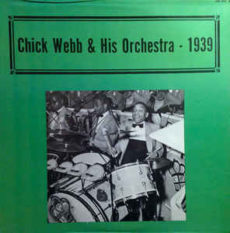
Nathaniel Edward Story was born on August 8, 1904 in Oak Station, Kentucky. He played on riverboats on the Mississippi River with Fate Marable and Floyd Campbell in the 1920s, and played with the Jones & Collins Astoria Hot Eight in 1928.
Moving to New York City in the 1930s, he worked with Luis Russell, Sam Wooding, and Chick Webb. After Webb’s death he remained in the orchestra under the direction of Ella Fitzgerald, but left in 1940.
Early in the 1940s he played with Andy Kirk and Lucky Millinder, but went into semi-retirement after this, though he performed occasionally into the 1960s. Trombonist Nat Story passed away on November 21, 1968 in Evansville, Indiana.
More Posts: history,instrumental,jazz,music