

Daily Dose Of Jazz…
Pete Clark was born on March 10, 1911 in Birmingham, Alabama. His brothers Richard and Arthur “Babe” were trumpeter and saxophonist respectively. Like his brothers he studied music at the Fess Whatley School. He would learn to play both alto and baritone saxophone as well as clarinet.
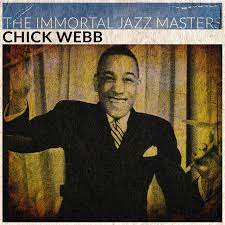
He began his career playing with Montgomery’s Collegiate Ramblers, followed by a stint with Wayman Carver. He would go on to find membership in the orchestras of Chick Webb, Duke Ellington, Ella Fitzgerald, Louis Armstrong, Teddy Wilson, Rex Stewart, Don Redman, John Kirby, Happy Caldwell, Jimmy Jones, Teddy Wilson and others.
Alto and baritone saxophonist and clarinetist Pete Clark, also known as Pete Clarke, transitioned in New York City on March 27, 1975.
More Posts: clarinet,history,instrumental,jazz,music,saxophone

The Jazz Voyager
The Jazz Voyager is off to Canada for a first time experience at Frankie’s Jazz Club in British Columbia. Located in Vancouver at 755 Beatty Street V6B 2M4. This week I’m going to witness three young up and coming musicians, guitarist Alvin Brendan, keyboardist Benjamin Millman, and drummer Trent Otter.
A home to live jazz and blues, Frankie’s features local, national and international world class musicians. They offer an evening of casual intimacy with a selection of spirits and wine coupled with an Italian menu to enjoy music to.
Frankie’s Jazz Club phone number is +1 604-688-6368. For more information on showtimes and tickets visit https://www.frankiesjazzclub.ca/
More Posts: adventure,album,club,drums,festival,genius,guitar,jazz,keys,museum,music,preserving,restaurant,travel
Daily Dose Of Jazz…
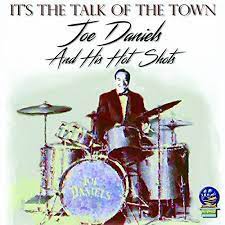
Joe Daniels was born in Zeerust, South Africa on March 9, 1909 and left his native South Africa for England as a young boy. In 1922 at 14 years of age he was already part of the 1920s London club scene, playing in bands led by Harry and Burton Lester, Billy Mason and Fred Elizade.
Daniels went on to play with Sid Roy before forming his own band with trumpeter Max Goldberg in 1926. Around 1930, he started recording as Joe Daniel’s Hot Shots, and they became a popular recording band. The band, with Bobby King as the vocalist, performed on early BBC radio shows many times, and recorded on Parlophone.
At the outbreak of the Second World War, Joe joined the Royal Air Force, where he organized an air force band, and produced shows for the troops. After the war and throughout the 1950s, 1960s and 1970s, he played in both small and in big bands, including recording under the name Washboard Joe and His Scrubbers. Their recording of I Love Onions / Paper Kisses was released on Parlophone in 1955.
In 1957, he toured as the Big DixieLand Group, while Joe Daniels and the Hot Shots were his ballroom band for Butlin’s Holiday Camp during the mid 1960s. He often played to a full house and was in tune with the campers’ frivolity: one of the most popular dances that got everyone on the floor was the March of the Mods.
Among his more popular numbers was Experiments with Mice. Drummer Joe Daniels, who continued to play Dixieland until 1990, transitioned on July 2, 1993, in Northwood, Middlesex, England, at the age of 84.
More Posts: bandleader,drums,history,instrumental,jazz,music
Daily Dose Of Jazz…
Will Hudson was born Arthur Murray Hainer on March 8, 1908 in Grimsby, Ontario, Canada. His parents immigrated to the United States when he was nearly two years old. Growing up in Detroit, Michigan he graduated from Southeastern High School in 1926. He changed his name sometime between 1931 and 1933 and put together his first big band in Detroit in the early 1930s. Hudson became a United States citizen on April 14, 1941.
In 1934 Hudson joined ASCAP in 1934. At some point during the early 1930s, he became a staff arranger for Irving Mills, writing stock arrangements. Mills was notable in various roles in the development of swing and jazz — was as much a promoter of songwriters, arrangers, and big bands as he was a publisher.
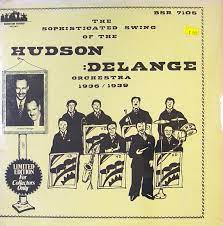
Hudson was a dance-band arranger, and co-leader with Eddie DeLange of the Hudson-DeLange Orchestra. Singers with the orchestra included Ruth Gaylor, Mitchell Ayres, Georgia Gibbs, and Nan Wynn. When the orchestra was at the height of its popularity, around 1940, Hudson had to withdraw for health reasons.
Hudson also led his own band, the Will Hudson Orchestra, from 1939 to about 1941. His vocalists included Kay Kenny, Elisse Cooper, Jayne Dover and Ruth Gaylor.
DeLange and Hudson wrote the lyrics to several songs composed by Hudson and in 1941 he began focusing on arranging, full-time. Enlisting in the U.S. Army in 1943, serving in the U.S. Army Air Force. He became the arranger for the Glenn Miller Army Air Force Band until his discharge in 1945.
1948 saw Will enrolled at Juilliard where he studied orchestration and composition, earning a diploma in 1952 and post-grad diploma the following year. He also studied composition privately. His compositions include Moonglow, Tormented, Sophisticated Swing, Mr. Ghost Goes to Town, Devil’s Kitchen, You’re Not the Kind and Witch Doctor.
Composer, arranger, and big band leader Will Hudson, active from the mid-1930s through the mid-Fifties, transitioned on July 16, 1981.
More Posts: arranger,bandleader,composer,history,instrumental,jazz,music
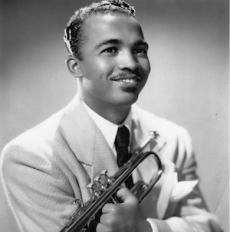
Three Wishes
Nica asked Howard McGhee if he was given three wishes what would he want grated and he told her:
-
- “I wish, I wish, I wish.”
*Excerpt from Three Wishes: An Intimate Look at Jazz Greats ~ Compiled and Photographed by Pannonica de Koenigswarter

More Posts: baroness,history,instrumental,jazz,music,pannonica,three,trumpet,wishes