

On The Bookshelf
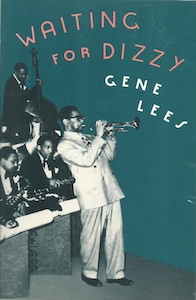
WAITING FOR DIZZY | GENE LEES
The story of jazz is a story of individuals–enormously gifted, dedicated, sometimes driven, yet often gentle people.
In this volume, Gene Lees, continues his richly entertaining and informative chronicle of the lives and times of jazz with a new collection of fourteen memorable essays drawn from his renowned Jazzletter. Waiting for Dizzy adds to the insights of his two previous collections, where the lyricist, essayist, and music historian draws on a lifetime of experience, and in many cases friendships in the jazz world to bring fresh insights to the lives and work of these magnificent artists, whether he is discussing why any guitarists have unsteady time or the complex role of race in jazz history.
The heart of Waiting for Dizzy is its exquisitely crafted character studies, warm pictures of the men and women who created and continue to create this music. Beginning in the era of its first great flowering, the 1920s, he weaves a story of discrimination against Black Americans to the tragic, determined, gifted guitarist Emily Remler who sought to break the sex barrier and her own drug habit, only to die all too young in a far-away place.
The stories continue through the final essay: a day spent in the recording studio with Dizzy Gillespie, surrounded by brilliant younger musicians who are his spiritual children, among them Art Farmer and Phil Woods. It is a lyrical, affectionate, and affecting portrait of one of the three or four most important figures–and the most loved– in jazz history.
Waiting For Dizzy: 1991 | Gene Lees
Oxford University Press

Daily Dose Of Jazz…
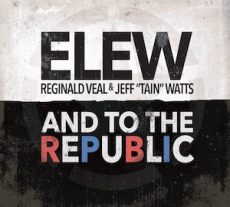
ELEW was born Eric Robert Lewis on May 13, 1973 in Camden, New Jersey where he studied piano as a child. Graduating from Overbrook High School in 1991, he received a full merit scholarship to the Manhattan School of Music. He graduated on the Dean’s List in 1995, then began touring.
Lewis began his career as a jazz purist, playing as a sideman for jazz artists like Wynton Marsalis, Cassandra Wilson, Elvin Jones, Jon Hendricks, and Roy Hargrove as well as performing as a member of the Lincoln Center Jazz Orchestra. Eventually becoming interested in rock music he embarked on a solo career as a crossover musician, quickly gaining recognition for his instrumental Rockjazz piano covers of mainstream rock hits like The Rolling Stones’ Paint It, Black and The Killers’ Mr. Brightside. He released his debut album of instrumental covers, titled ELEW Rockjazz Vol. 1, on his own label, Ninjazz Entertainment, in 2010.
Lewis became disillusioned with the jazz world after a solo record deal failed to materialize and struck out on his own to find success. It was around this time that he heard his first rock album, Linkin Park’s Meteora, which made a profound impression on his musical sensibilities. Taking the stage name ELEW, he adjusted his stage presence accordingly, growing an afro and adopting a distinctive style of dress, wearing armored vambraces over tailored suits. Discarding his piano bench for standing, he reached inside to grab the strings and beat on its wooden case like a percussion instrument.
Mainstream recognition came when he played a cover of Evanescence’s Going Under and an original composition, and was a featured speaker at the Long Beach TED Conference in 2009. He drew the interest of fashion designer Donna Karan, for whom he composed an original piece inspired by her fall 2009 collection and at her next New York City fashion show. That led to an invite by White House Social Secretary Desiree Rogers to play in the East Room for President Obama and the First Lady.
Pianist Eric Lewis, popularley known as ELEW, continues his journey of performing, composing, recording and touring.
More Posts: bandleader,history,instrumental,jazz,music,piano
Daily Dose Of Jazz…
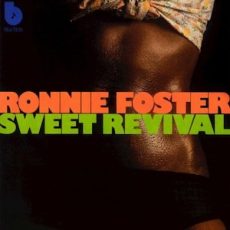
Ronnie Foster was born in Buffalo, New York on May 12, 1950. Attracted to music at the age of four, he attended Public School 8, Woodlawn Jr. High for a year, McKinley Vocational High School for two years, and then spent his final year at Lafayette High School. The only formal musical instruction he received was a month of accordion lessons. Taking music more seriously from his early teens, he had his first professional gig aged fifteen, playing in a strip club.
He initially performed with other local musicians. Moving to New York City with his own band, he acquired a publishing company. Foster performed as a sideman with a wide range of musicians, frequently working with guitarist George Benson, including playing on the guitarist’s album Breezin’.
Ronnie has played organ with Grant Green, Grover Washington, Jr., Stanley Turrentine, Roberta Flack, Earl Klugh, Harvey Mason, Jimmy Smith, and Stevie Wonder.
He is also a record producer and his song Mystic Brew was sampled in Electric Relaxation by A Tribe Called Quest and in J. Cole’s song Forbidden Fruit, where it was reversed, pitched, and slowed down in the song Neighbors as well as the instrumental of Forbidden Fruit.
Funk and soul jazz organist Ronnie Foster continues to perform, record, tour and produce.
Requisites
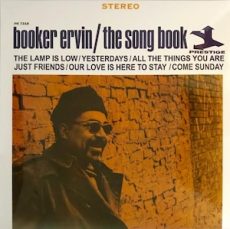
The Song Book ~ Booker Ervin | By Eddie Carter
In February 1964, tenor saxophonist Booker Ervin recorded an album of standards. The Song Book (Prestige PRLP7318/PRST 7318) is a quartet session featuring Tommy Flanagan on piano, Richard Davis on bass, and Alan Dawson on drums. My copy is the 2023 Analogue Productions stereo audiophile reissue matching the original catalog number. The album opener, The Lamp Is Low by Peter de Rose, Mitchell Parish, Maurice Ravel, and Bert Shefter, kicks off the quartet’s melody at a fast gallop. Booker wails with remarkable energy, then Tommy rips down the road next. Richard follows suit with a brisk walk, and Alan goes to work last, preceding the ending theme and fadeout.
The quartet brings a profound emotional depth to Duke Ellington’s Come Sunday. Tommy’s gentle introduction sets the mood for Ervin’s warm tone, tenderly embracing the theme. Flanagan shines as the song’s lone soloist, delivering sweet moments of beauty matched by the rhythm section’s serene accompaniment, leading up to the leader’s soft conclusion. All The Things You Are by Oscar Hammerstein II and Jerome Kern picks up the beat for the quartet’s lively melody. Booker goes right to work on the opening statement and is consistently inventive and entertaining. Tommy swings effortlessly into the spotlight next with a spirited solo before the theme’s restatement dissolves gradually.
Just Friends by John Klenner and Sam M. Lewis begins the second side on an upbeat note, with Flanagan’s introduction leading to the quartet’s opening theme. Ervin blazes the trail with a commanding performance, then Flanagan delivers the song’s second message with authority. Davis completes the proceedings with a concise comment leading to a charming conclusion. Yesterdays by Otto Harbach and Jerome Kern opens with a tender piano introduction ahead of the saxophonist’s beautiful melody. Tommy takes the first turn with an emotionally rich, heartfelt interpretation, then Booker blends nostalgia and sentiment flawlessly until the theme’s gentle reprise and serene ending.
Our Love Is Here To Stay by George and Ira Gershwin picks up the pace one final time for the foursome’s lively melody. Ervin takes hold of the first spot swiftly, then Flanagan swings effortlessly into the following reading. Davis provides the exclamation point propelled by the rhythm section’s brisk supplement, ahead of the group’s upbeat exit.
Don Schlitten produced The Song Book, and Rudy Van Gelder was the recording engineer. Kevin Gray mastered the audiophile reissue, and the album’s sound quality is mesmerizing, placing the musicians in front of the sweet spot. The record was pressed on 180 grams of audiophile vinyl and is quiet as a church mouse until the music starts.
Booker and the rhythm section bring each track to life with genuine emotion, and approach each song with heartfelt affection, showcasing a profound admiration for the melodies of these cherished standards. If you’re a fan of hard bop and haven’t acquired an earlier pressing yet, please make a note to add The Song Book by Booker Ervin to your list on your next record hunt. This Analogue Productions reissue beautifully celebrates the timeless treasures of The Great American Songbook and undoubtedly deserves a place in every jazz fan’s library!
~ All The Things You Are, Come Sunday, Just Friends, Love Is Here To Stay – Source: JazzStandards.com
~ The Lamp Is Low, Yesterdays – Source: Wikipedia.org
© 2025 by Edward Thomas Carter

More Posts: choice,classic,collectible,collector,history,instrumental,jazz,music,saxophone
Daily Dose Of Jazz…
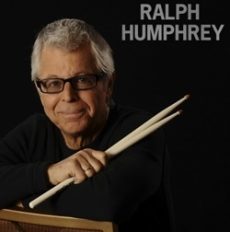
Ralph Humphrey was born on May 11, 1944 in Berkeley California. While still a student at California State College Northridge he recorded with the Don Ellis Big Band in 1968, and stayed with the band until 1973.
Leaving Don Ellis and jazz he joined Frank Zappa’s band in 1973 and his drumming can be heard on at least a dozen albums. Humphrey, never far from jazz, played drums for Wayne Shorter, Al Jarreau, and Manhattan Transfer, as well aas pop stars Barbra Streisand, José Feliciano, Bette Midler, Captain and Tenille, Richard Carpenter. His music has been heard in television series such as American Idol, Charmed, The Simpsons, Family Guy, and more.
As an educator he has taught the drum curriculum at the Los Angeles Music Academy. He and Joe Porcaro created the drum program for the Percussion Institute of Technology, a part of the Musicians Institute in Hollywood, California. Between 1980 and 1996 he taught the program and headed the department.
Drummer Ralph Humphrey, whose name has been spelled differently in some credits as Humphry or Humphries, continues to perform, record, tour and educate.
More Posts: bandleader,drums,history,instrumental,jazz,music