

Daily Dose Of Jazz…
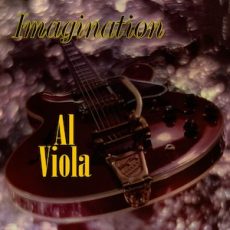
Alfred Viola was born on June 16, 1919 in Brooklyn, New York and grew up in an Italian family. He learned to play the guitar and mandolin as a teenager. Enlisting in the Army during World War II and played in an Army jazz band from 1942 to 1945.
He started a trio with pianist Page Cavanaugh and bassist Lloyd Pratt. The band appeared in several films, including Romance on the High Seas with Doris Day, and played a few dates in 1946 and 1947 with Frank Sinatra. Viola continued to work with Sinatra regularly, accompanying him on several hundred studio recordings and concert dates between 1956 and 1980.
Viola was a session musician in Los Angeles, California performing in films and television. His mandolin playing can be heard on the soundtrack of The Godfather. Other credits include West Side Story and Who’s Afraid of Virginia Woolf? He continued playing jazz as well, with Bobby Troup, Ray Anthony, Harry James, Buddy Collette, Stan Kenton, Gerald Wilson and Terry Gibbs.
He worked as a session musician on over 500 albums, including releases by Natalie Cole, Neil Diamond, Marvin Gaye, Julie London, Steve Lawrence, Linda Ronstadt, Jimmy Witherspoon, Helen Humes, June Christy, Ella Fitzgerald, Anita O’Day, Nelson Riddle, and Joe Williams.
Viola and Cavanaugh reunited in the 1980s with Phil Mallory and continued to play regularly in Los Angeles until the late 1990s.
Guitarist Al Viola, recorded ten albums as a leader, died of cancer on February 21, 2007 at the age of 87 in Los Angeles.

More Posts: bandleader,guitar,history,instrumental,music
Requisites
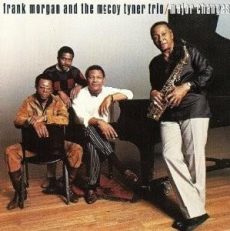
Major Changes ~ Frank Morgan and The McCoy Tyner Trio | By Eddie Carter 6.15.25
During the five years I lived in Cincinnati, Ohio, Everybody’s Records was a favorite shop I regularly visited. It was there that I heard Major Changes (Contemporary Records C-14039) by Frank Morgan and the McCoy Tyner Trio spinning on the turntable. As I listened, memories of when I first became a jazz fan came rushing back, and I picked it up immediately. Frank was born in Minneapolis, Minnesota, and began playing the guitar at a young age. His father introduced him to Charlie Parker, who inspired him to play the clarinet at age seven. Morgan later graduated to the soprano sax, then the alto sax, which became his primary instrument. Rounding out the ensemble are McCoy Tyner on piano, Avery Sharpe on bass, and Louis Hayes on drums. My copy of the album is the 1988 U.S. stereo release.
The quartet kicks off the first side with Changes by McCoy Tyner. The pianist’s brisk introduction sets the tone for their feisty melody. McCoy takes the first bite of this jazzy apple with a high-spirited solo. Frank follows with a vigorous statement, then Avery’s vivacious interpretation guides the group back to the theme’s reprise and fadeout. Irving Berlin’s How Deep Is The Ocean starts on a deceptively slow note, with the alto sax and piano sharing a private conversation ahead of the foursome’s sprightly theme. Tyner leads the charge with a swinging opening statement. Morgan builds on this momentum with a feisty reading. Sharpe rounds out the solos with a brief presentation leading to the out-chorus and exit.
Emily is a lovely composition by Johnny Mandel and Johnny Mercer. Frank begins delicately expressing each note of the melody with heartfelt sensitivity. McCoy’s opening solo is delivered with tenderness and warmth. Frank concludes with a gentle presentation, leading to a serene and graceful finish. Search For Peace by McCoy Tyner begins with Hayes’s introduction, leading into the quartet’s theme, which moves at a bright and brisk clip. The pianist starts the opening solo with remarkable precision and vibrant enthusiasm. Sharpe and Hayes share a brief interlude, then Morgan effortlessly glides over the rhythm section, perfectly attuned to Hayes’s flawless timing, until the closing chorus fades into nothingness.
McCoy Tyner announces Frank’s Back with a smooth lead-in, segueing into the opening ensemble at medium-tempo to begin the second side. Frank sets a stellar example for the group in the first solo. McCoy follows with a charismatic interpretation, then Frank and Louis share an exchange of notes, leading back to the reprise and conclusion. Oscar Hammerstein II and Jerome Kern’s All The Things You Are opens with the saxophonist’s soothing introduction ahead of the group’s mellow theme. Morgan’s opening statement starts strong and doesn’t let go until Tyner takes his turn. The pianist launches into a taut second reading that holds the listener’s attention until Morgan returns briefly, leading to the theme’s reprise and a graceful exit.
Theme From Love Story by Francis Lai and Carl Sigman comes from the 1970 romantic drama. The rhythm section’s introduction is simultaneously delicate and inviting, leading Frank to explore the intricately beautiful melody. McCoy captures the song’s essence with lively exuberance in the opening statement. Frank then weaves a tapestryof grace and elegance before the theme resurfaces, and the quartet fades into a poignant stillness. Richard Bock produced Major Changes. Ed Rak was the engineer behind the direct-to-digital recording, and George Horn mastered this release. The album boasts a superb soundstage that envelops the listener’s sweet spot, as if they’re seated in the studio alongside the musicians.
Frank Morgan battled heroin addiction for much of his life, mirroring the path of Charlie Parker. This struggle led him to spend a significant portion of his adult years in and out of prison. However, by the mid-1980s, he managed to overcome his dependency, remaining clean for the final two decades of his life, though he continued taking methadone daily. Morgan recorded twenty-one albums as a leader and contributed to twelve more as a sideman. Despite suffering a stroke in 1998, he made a remarkable recovery and continued to perform and record music during the last nine years of his life. Toward the end of his career, Morgan successfully completed his first European tour. He passed away from complications of colorectal cancer on December 14, 2007, just nine days before his seventy-fourth birthday.
The album’s title reflects the significant shifts in Morgan’s life and music, while highlighting the extraordinary chemistry between the musicians. Whether you're a seasoned jazz aficionado or a newcomer to Morgan’s music, Major Changes by Frank Morgan and the McCoy Tyner Trio is a treasure trove of captivating tracks and stunning solos. It also serves as a delightful showcase of his talent, and I wholeheartedly recommend checking it outthe next time you’re out record-shopping!
~ All The Things You Are – Source: JazzStandards.com
~ Theme From “Love Story” – Source: Wikipedia.org
© 2025 by Edward Thomas Carter
More Posts: choice,classic,collectible,collector,history,instrumental,jazz,music,piano,saxophone
Daily Dose Of Jazz…
Vince Wallace was born on June 15, 1939 in Port Townsend, Washington. At just two months shy of his second birthday his mother moved him to San Joaquin Valley, California. After spending a little time there, they ended up settling and growing up in the Bay area of Oakland, California.
His earliest recordings were on the Black Jack Wayne label in 1953 with Screamin Mel Dorsey and Chuck Wayne and the Heartbeats. These sessions were along with his original instrumental, Funky. He performed regularly at this time at the Country and Western halls and go go bars of Niles, California alongside Rose Maddox, Johnny Cash, and the Black Brothers.
As he developed, he became more sought after at all hours jazz joints where he sat in with Eric Dolphy, Paul Chambers, Charles Mingus, Pony Poindexter, Art Blakey and Smiley Winters. Jimbo’s Bop City in San Francisco was the best place around, where every night after 2 a.m. another legend of the jazz would come through the door.
In 1958 Vince moved to Southern California where he picked up work with Paul Bley and Marvin Rainwater. His Sunday jam session at The Cascades Club in Belmont Shores, helped the emergence of Kent Glenn, Mark Proctor, Gene Stone, and Warren Gale. By 1966 was back in the Bay Area working with alto saxophonist Norman Williams at the JukeBox in San Francisco. Through 1970 Wallace recorded three albums with Little John, a fusion rock band on Epic records.
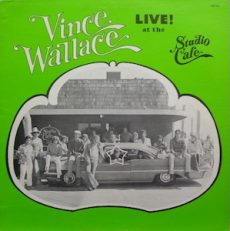
Drawn back to southern California he experienced some of his widest recognition as his featured performances were reviewed favorably by Gerald Wilson.. This led to an eventual run at the Studio Cafe, and the release of two of Vince’s solo albums on Amp Records. Returning to San Francisco he led a Sunday night jam session through the Nineties, receiving the San Francisco Bay Guardian Award for Best Jam Session in 1995.
With a surge of interest in his music in the new millenium, he started working at the Bulldog Coffee Shop in Oakland and reuniting with Bishop Norman Williams, Prince Lasha, Jim Grantham, Steve Heckman, Fred Randolph, Chuck Thomposon, Chris Amberger, Terry Rodriguez, and John Gilmore, just to name a few. He began working on his memoirs, created a website, took a Friday residency at Cafe Van Kleef, appeared on KCSM 91.1 FM, and recorded a new album with Larry Vuckovich.
Tenor saxophonist Vince Wallace has reestablished himself as one of the most sought after saxophonists around and his music will undoubtably be spread throughout the world via his website www.vincewallace.com.
More Posts: bandleader,history,instrumental,jazz,music,saxophone
Daily Dose Of Jazz…
Louisa West was born in Thomasville, Georgia on June 14, 1979 and began playing flute at the age of ten. She went on to receive a Bachelor of Music Performance from the University of Georgia and while studying there she performed in numerous ensembles including an orchestra conducted by Sammy Nestico. She studied privately with classical flutists Angela Jones-Reus, William Bennett, Mary Karen Clardy, and Mimi Stillman, as well as jazz flutists Nestor Torres and Holly Hofmann.
A winner of numerous competitions, after graduating from college in 2001, she relocated to southern California where she has been performing in the musical genres of world music, jazz, Latin jazz, and classical music. Playing extensively in the U.S, Canada and Mexico, Louisa has appeared onstage with touring acts such as Persian pop star Shakila, flutist Nestor Torres, and Brazilian singer Diogo Nogueira.
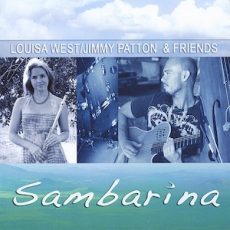
West recently attended California Brazil Camp, where she delved into the history and music of Brazil through workshops and performances by Brazilian jazz artists. This experience inspired her 2010 debut release with Jimmy Patton titled Sambarina.
Flutist Louisa West continues to perform, tour and record.
More Posts: bandleader,flute,history,instrumental,jazz
Daily Dose Of Jazz…
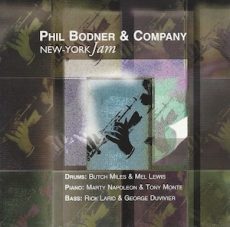
Philip L. Bodner was born in Waterbury, Connecticut on June 13, 1917 and worked as a studio musician in the 1940s and 1950s in New York City. He recorded with Benny Goodman and with Miles Davis and Gil Evans in 1958. The 1960s saw him playing with Oliver Nelson and J.J. Johnson.
During the Sixties he organized The Brass Ring, a group modeled after Herb Alpert and the Tijuana Brass. The group released nine albums between 1966 and 1972 and associations in the 1970s included Oscar Peterson, Yusef Lateef, Peanuts Hucko, Wild Bill Davison, and Ralph Sutton.
Bodner played the signature piccolo part on Van McCoy’s disco hit song The Hustle. During that period he also played with Ralph Sutton and Johnny Varro, worked with Mingus Epitaph, and arranged Louie Bellson’s tribute to Duke Ellington’s Black, Brown and Beige.
He worked in a swing style with Marty Napoleon, Mel Lewis, and George Duvivier in the 1980s and played with Maxine Sullivan and Barbara Carroll. Over the course of his career he recorded five albums as a leader, and eleven as a sideman with Coleman Hawkins, Cootie Williams, Miles Davis, Joe Wilder, Paul Desmond, Wes Montgomery, Cal Tjader, Mel Davis, George Benson, Freddie Hubbard, and Joey DeFrancesco.
Clarinetist and studio musician Phil Bodner, who also played flute, oboe, saxophone, and English horn, died in New York City on February 24, 2008, at age 90.