

Daily Dose Of Jazz…
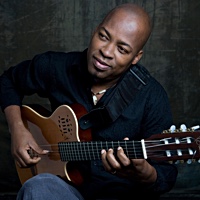
Celso Vernon was born on July 28, 1958, in Valencia, Spain, he began his studies in music theory and harmony at the Metropolitan Seminary of Moncada in Valencia and completed his training years later in the private sector. When he turned 16 he became interested in the guitar and contemporary music. For two years, between 1974 and 1976, he began his first steps on the guitar as a self-taught artist. He listened to as much music as he could and found inspiration, especially progressive rock guitarists. He gave his first performances in educational centers and festivals.
He moved to Getxo in the Basque Country of Spain where he began playing guitar with musicians and bands from the municipality and province. During those years, he discovered that the guitar was his greatest weakness and decided to further his studies. Celso delved into progressive rockand by the end of the Seventies he discovered jazz appealed to him, sinking in a few years later. It was through jazz and began his evolution as a usician, guitarist, and composer.
Vernon has trained in modern music and jazz using methods imported from the United States and gained experience performng with various groups and ensembles. Listening to a lot of music, as a self-taught guitarist he learned what musicians in other countries havebeen taught by maestros, universities and specialized schools. He went on to attend Berklee College of Music in Boston, Massachusetts. He studied and analyzed the styles of guitarists Steve Howe, Carlos Santana, Wes Montgomery, Joe Pass, Larry Coryell, George Benson, Pat Metheny, and others.
Returning to Valencia throughout the Eighties he worked as a producer with bands and groups of various musical styles which gave him a wealth of experience as a teacher, guitarist, and composer. In 1993, he joined the Sedaví Jazz Workshop Combos, where he remained for some time. 1995 saw him moving to Ayora, Spain where he founded the Guitar School & Contemporary Music Workshop, working as a teacher of music, guitar and modern harmony.
His study and teaching methods are built on a solid foundation of knowledge and experience acquired over more than 30 years. All students learn through a fun, engaging approach, understanding that the guitar is a simple instrument if practiced consistently and disciplined. His teaching experience dates back to 1991, and he has continued to teach ever since. He doesn’t believe there are bad students, just bad teachers. Under this maxim, he leads classes with simplicity and consistency, placing vital importance on the fact that practice makes perfect.
Self-taught musician, guitarist, composer, and guitar and modern harmony teacher, continues to perform, record and produce.

More Posts: bandleader,composer,educator,history,instrumental,jazz,music,piano
Requisites
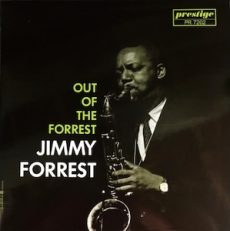
Out Of The Forrest ~ Jimmy Forrest | By Eddie Carter
This morning’s spotlight shines on Jimmy Forrest, whom I first heard on the 1960 release, “Soul Battle,” with King Curtis and Oliver Nelson. Out of the Forrest (Prestige PRLP 7202) was his fifth outing as a bandleader and hit the stores in 1961. Jimmy was born in St. Louis, Missouri and built his reputation with the Count Basie, Duke Ellington, Andy Kirk, Fate Marable, and Jay McShann bands. Forrest demonstrated impressive versatility on the tenor sax, delivering energetic solos at brisk tempos. He also infused the lively pulse of bop at a medium beat, and he poured deep emotion into every ballad or standard. On this date, he’s supported by Joe Zawinul on piano, Tommy Potter on bass, and Clarence Johnston on drums.
My copy of the album is the 2023 Analogue Productions U.S. stereo audiophile reissue, matching the original catalog number. Side One opens with Bolo Blues, an original by Jimmy Forrest, which was one of his biggest hits. His relaxing introduction sets the melody off to a comfortable groove. The saxophonist has the solo spotlight to himself and delivers a thoughtfully crafted, laid-back interpretation, leading to the theme’s reprise and climax. The beat moves upward for the jazz and pop standard, I Cried For You, by Gus Arnheim, Arthur Freed, and Abe Lyman. Forrest’s brief introduction quickly segues to the ensemble’s medium theme. Jimmy goes to work first with a sparkling solo. Zawinul responds with a performance as refreshing as a cold drink on a hot day until the melody’s restatement and close.
I’ve Got a Right to Cry by Joe Liggins is a beautiful ballad beginning with a delicately expressive introduction by the quartet that continues as the melody unfolds. Jimmy, again, is the lone soloist and awakens poignant memories in a tenderly passionate interpretation before the theme’s return leads to a soft ending. This Can’t Be Love by Richard Rodgers and Lorenz Hart has long been a favorite of jazz musicians and vocalists. The trio’s introduction develops nicely into the ensemble’s lively theme. Forrest takes the first solo with stunning precision and enthusiasm on each note. Zawinul gets the last word and gives an excellent account before the theme is restated.
Side Two gets underway with By the River Sainte Marie by Edgar Leslie and Harry Warren. The rhythm section’s introduction segues into the quartet’s medium melody. Jimmy’s opening statement swings with a joyful spirit. Tommy takes a short, satisfying walk in his first solo next, then the leader makes his return for a concise comment leading to the finale. The quartet takes a nostalgic trip back in time with Yesterdays by Otto Harbach and Jerome Kern. Forrest’s gentle introduction sets things in motion for the foursome’s melody. Jimmy is the song’s only soloist, and his reading is very intimate, complemented by the rhythm section’s tender accompaniment ahead of a soft summation.
Crash Program by Jimmy Forrest and Clarence Johnston is off and running from the outset of the ensemble’s rapid theme. The saxophonist flies out of the gate with a flawlessly executed burst of speed. Joe continues soaring with infectious energy in the following solo. Johnston rounds things out with a swift finale, before the quartet returns to the theme and a quick exit. The album ends with a gorgeous rendition of That’s All by Alan Brandt and Bob Haymes. The pianist’s concise introduction sets the mood for Forrest’s sultry theme and elegantly phrased opening solo. Zawinul has a lovely interlude of tenderness preceding the leader’s return to take the song out softly.
Esmond Edwards supervised the initial session, and Rudy Van Gelder expertly managed the recording dials. Kevin Gray mastered this audiophile reissue from the original tapes at Cohearant Audio. The record was pressed on 180-gram vinyl and is dead silent until the music begins. The album’s sound quality is sensational, with an outstanding soundstage placing your sweet spot in the studio with the musicians. Out of the Forrest impresses not only from the music itself but also from the exceptional support of the ensemble. If you’re in the mood for a top-tier quartet and enjoy the tenor sax, I highly recommend Out of the Forrest by Jimmy Forrest for a spot in your library. If you’re a newcomer to his music, this album is a fine place to start your journey!
~ Soul Battle (Prestige PRLP 7223/PRST 7223) – Source: Discogs.com
~ I Cried For You, That’s All, This Can’t Be Love, Yesterdays – Source: JazzStandards.com
>© 2025 by Edward Thomas Carter

More Posts: choice,classic,collectible,collector,history,instrumental,jazz,music,saxophone
Daily Dose Of Jazz…
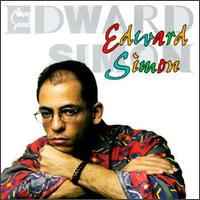
Edward Simon was born July 27, 1969 in Punta Cardón, Venezuela and when he was ten years old came to the United States to study at the Performing Arts School in Philadelphia, Pennsylvania. After graduating, he attended the University of the Arts in Philadelphia, where he studied classical piano, then the Manhattan School of Music, where he studied jazz piano.
In 1988, he recorded as a sideman with Greg Osby, then worked as a member of the band Horizon led by Bobby Watson. For the next eight years he was a member of Terence Blanchard’s band. He has also worked with Herbie Mann, Paquito D’Rivera, Bobby Hutcherson, Jerry Gonzalez, John Patitucci, Arturo Sandoval, Manny Oquendo, and Don Byron.
Simon recorded Beauty Within in 1994), his debut album as a bandleader, with Horacio Hernández and bass guitarist Anthony Jackson. That same year, he was a finalist in the Thelonious Monk International Jazz Piano Competition. Then the following year he composed Rumba Neurotica for the Relache Ensemble.
In 2003 Simon formed Ensemble Venezuela to combine jazz with the music of Venezuela. Given a commission by Chamber Music America to write Venezuelan Suite and recorded the album in 2012 with musicians from Venezuela, Colombia, and the U.S. He has played on several Grammy-nominated jazz albums. Besides his trio he leads the Sexteto Venezuela, the Afinidad Quartet, and the group Simon, Simon, & Simon with his brothers.
Wearing his educator hat he has taught at the New School for Jazz and Contemporary Music in New York City and has been artist in residence at Western Michigan University.
Pianist and composer Edward Simon continues to perform, compose and record.
More Posts: bandleader,compose,educator,history,instrumental,jazz,music,piano

Daily Dose Of Jazz…
Gary Tole was born on July 26, 1951 and raised in Pittsburgh, Pennsylvania and began playing the trombone at the age of twelve. By the age of sixteen, he was working with all the shows that came into the Pittsburgh area. After attending Duquesne University School of Music, he was offered the first trombone position with the world renowned Glenn Miller Orchestra. After four years of world tour he then toured with Harry James, Tex Beneke, Les Brown and Jimmy Dorsey, the latter he served as road manager and featured trombonist.
By 1978 he relocated and made his permanent residence in Southern California. Whether on stage or in the recording studio, Gary’s smooth, dynamic style has him in constant demand having performed with Ray Charles, Frank Sinatra, Johnny Mathis, Bernadette Peters, Kenny Rogers, Rita Moreno, Melissa Manchester, James Ingram, and Phil Collins. He has backed television appearances of Diana Ross, Sammy Davis Jr., Bob Hope, Pia Zadora, Sheena Easton, Peabo Bryson, The Pointer Sisters, and many more.
As an active clinician for Yamaha, he finds time to participate in music education programs as a judge for jazz festivals, band and orchestra festivals, private teaching of the low brass instruments and traveling throughout the country conducting various clinics.
Trombonist Gary Tole, who also plays bass trombone and euphonium, continues to perform, compose, tour and record.
More Posts: educator,history,instrumental,jazz,music,trombone
Daily Dose Of Jazz…
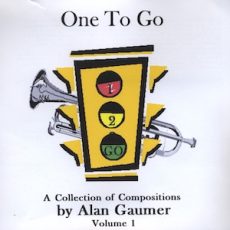
Alan Gaumer was born on July 25, 1951 in Bethelehem, Pennsylvania. He began playing the trumpet when he was eight and was a member of Kal’s Kid’s that appeared on the Ted Mack Original Amateur Hour as well as numerous other television shows. Throughout elementary, junior and high school he participated in band, orchestra, and stage bands and graduated from Freedom High School in 1969.
He studied with John Nero and Willard Schissler and performed with the Allentown Band before attending the U.S. Navy School of Music. Upon graduation he spent the next three years living in Gaeta, Italy touring Europe, Africa and Asia with the Navy Show Band. Offered the jazz trumpet position at the U.S. Naval Academy in Annapolis before his discharge, from 1973-75 he toured first as trumpeter and later as drummer with the well known group KATO.
Settling back in the Lehigh Valley, Pennsylvania he was an integral part of a popular group P.F. & the Flyers and his own A.G.Q. After attending Rutgers University, Alan spent two years touring South America and West Africa with the U.S. Navy Show Band. When he got out in 1982, he worked for several years at well known hotels and resorts.
He has performed with a long list of jazz musicians which include Randy Brecker, Phil Woods, Al Cohn, George Young, Bob Dorough, Tom Harrell, Bill Watrous, Urbie Green, Kim Parker, Vic Jurris, Charles Fambrough, Bill Washer, John Swanna, David Leonhardt, Steve Gilmore, Bill Goodwin, Bobby Routch, Tom Schuman of Spyro Gyra and others.
As an educator Gaumer has been the jazz trumpet Artist/Lecturer at Moravian College since 1994 and served as Fusion ensemble director in 1998-99, 2003-04 and 2005-06. He is Artistic Director of the Pennsylvania Jazz Collective, a Lehigh Valley based non-profit jazz organization.
Trumpeter and educator Alan Gaumer continues to perform, teach and produce jazz events.
More Posts: bandleader,educator,history,instrumental,jazz,music,trumpet