

Resquisites
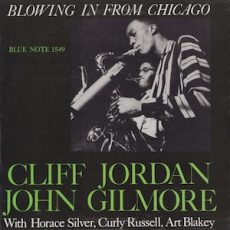
Blowing In From Chicago ~ Cliff Jordan & John Gilmore | By Eddie Carter
As a youngster discovering this music, I was always captivated by jazz’s unique and spontaneous nature, particularly the ‘blowing session’ or ‘jam session.’ These impromptu performances, where musicians control the flow of musical ideas from moment to moment, are a testament to the music’s excitement and unpredictability. Whether in a live setting at a club, concert, or jazz festival or captured in a studio session, jazz’s enthusiasm, vitality, and freedom are always present.
This morning’s choice from my library is an excellent LP from 1957 by two tenor saxophonists who made significant impressions in jazz, Clifford Jordan and John Gilmore. Their only album as co-leaders is titled Blowing In From Chicago (Blue Note BLP 1549), which signifies their roots in the vibrant jazz scene of Chicago. The quintet has an excellent rhythm section consisting of Horace Silver on piano, Curly Russell on bass, and Art Blakey on drums. My copy is the 1983 Pathé Marconi-EMI French Mono reissue, sharing the original catalog number. Before I proceed, let me state that this is not a DMM (Digital Metal Mastering) pressing.
The album opener, Status Quo, is a lively tune by John Neely, with both horns leading the charge through the uptempo melody. John rips into the opening solo, aggressively slicing through each verse like a sharp blade. Clifford joins him next in a short exchange, then takes off with a supercharged reading. Horace shifts into high gear on the third statement with a blazing swiftness that’s equally inspired and scintillating. Art engages in a brief conversation with both horns, then brings the solos to a close with an electric performance illustrating his incomparable artistry before the ensemble returns to the theme and quick stop. The first of two originals by Jordan follows.
Bo-Till slows the tempo to a laid-back pace with a Latin flavor. After a short introduction by the trio, the quintet states the theme collectively, stepping aside for Jordan, who makes a profound impression with a beautifully conceived statement displaying a great tone throughout. Silver gets into the groove next with an incredible, smooth reading, one of his best on the album. Gilmore delivers the closing choruses of the song proficiently with meticulous execution. Blakey constructs a concise comment during the ensemble’s end theme and close.
Blue Lights by Gigi Gryce is a catchy tune that opens with the quintet laying down a gorgeous medium beat on the theme and gives everyone a solo opportunity. John steps into the spotlight with a spirited performance. Horace follows with notes of undeniable pleasure in one of his most robust solos. Clifford weaves his way through the next musical improvisation with astounding skill. Curly puts together a condensed reading that walks for one chorus with solid bass lines. Art breezes into a straightforward interpretation that culminates into a splendid summation of the first side.
The second side gets underway with Charlie Parker’s Billie’s Bounce, which gives everyone except Russell a lengthy solo canvas on which to work. Blakey begins with a high-voltage introduction that sets the pace for the following fiery quintet theme. Clifford packs a mighty punch on the opening statement with a fire-breathing showcase, preceding John, who exhibits a robust attack on the subsequent interpretation with extremely hot choruses. Horace takes over next for a scintillating performance, taking his piano on a sizzling uptempo ride. Both horns exchange a few riffs with Art before the drummer gives an unaccompanied propulsive exhibition into the ending theme.
Clifford’s second original is a blues titled Evil Eye, which eases the throttle back from the previous burner to a medium pace with a collective melody by the quintet. Jordan opens the solos with a series of choruses that are smooth and well-structured. In the following presentation, Gilmore shows that he can also interpret blues with plenty of soul, which develops nicely. Silver delivers a lightly swinging performance that expresses pleasure as he moves masterfully through each chorus. Both horns return to share a few more thoughts. Blakey makes a short statement preceding the theme’s reprise and finish.
The album’s final track is Everywhere, a mid-tempo original by Horace Silver, which I believe made its debut on this album. It opens with a simple opening melody by the ensemble in unison, and the solo order is Gilmore, Jordan, Silver, and Blakey. John takes the stage first with a bewitchingly delightful opening statement. Clifford makes his case with a captivating contribution that moves sprightly alongside the rhythm section’s groundwork drive. Horace takes over next, communicating his points well with a pronounced beat. Art puts the joyous exclamation point on the song and album with a compelling statement that leads the group back to the ending theme and close.
Clifford Jordan recorded three albums for Blue Note; the other two LPs are Cliff Jordan and Cliff Craft. He played and recorded with many elite jazz musicians, including Charles Mingus and Max Roach. Clifford also enjoyed success recording as a leader and sideman, and in my opinion, his discography is well worth investigating. He remained in demand over the next three decades and toured worldwide. His final album was a 1992 live recording at Condon’s in New York City for Milestone, where he performed with his big band, Down Through The Years. He lost his battle against lung cancer on March 27, 1993, at age sixty-one.
Blowing In From Chicago was the first of three appearances on Blue Note by John Gilmore. The other two were as a sideman on two of Andrew Hill’s LPs, Andrew and Compulsion. He began playing the clarinet at fourteen, then pursued a musical career after a four-year stint in the United States Air Force, where he took up and played the tenor saxophone. He began a forty-year term with Sun Ra in 1953 and recorded for various labels with his group, Sun Ra Arkestra. During this time, Gilmore also toured with The Jazz Messengers and recorded with Paul Bley, Andrew Hill, Pete LaRoca, McCoy Tyner, and Dizzy Reece. After Sun Ra’s death on May 30, 1993, Gilmore led the Arkestra for two years before his death from emphysema on August 20, 1995, at age sixty-three.
As for the music on Blowing In From Chicago, it’s fantastic, as are the solos on each track, and the sound quality of this reissue is exemplary. The instruments deliver an excellent soundstage throughout the treble, midrange, and bass that places your sweet spot in the studio with the musicians. It’s a cut above the average debut album and a title I recommend as a terrific addition to any jazzophile’s library, particularly if you’re a hard-bop fan or love a good “blowing session” or “jam session.”
~ Andrew (Blue Note BLP 4203/BST 84203), Cliff Jordan (Blue Note BLP 1565), Cliff Craft (Blue Note BLP 1582/BST 81582), Compulsion (Blue Note BLP 4217/BST 84217), Down Through The Years (Milestone MCD-9197-2) – Source: Discogs.com
~ Billie’s Bounce – Source: JazzStandards.com
~ John Gilmore, Andrew Hill, Clifford Jordan – Source: Wikipedia.org
© 2024 by Edward Thomas Carter

More Posts: bandleader,choice,classic,collectible,collector,history,instrumental,jazz,music,saxophone

Daily Dose Of Jazz…
Joni Janak was born August 24 in 1944 in Amarillo, Texas and raised in a musical family. He was taught singing, dancing and piano at the Amarillo College of Music. She gave public recitals from the age of eight and had her first professional singing job at thirteen. Receiving a vocal scholarship to Texas Tech University in Lubbock, he eventually returned to Amarillo and sang with many different bands and with the Amarillo Symphony Orchestra when he was 22.
Heading to Houston, Texas she sang in the Carriage Club at the Sheraton Lincoln Hotel until 1969 when she moved to Denver, Colorado, furthering her career. While there she sang with local and visiting jazz musicians, among them Dale Bruning, Ellyn Rucker, Phil Urso, Peanuts Hucko, Bobby Greene, Todd Reid, the Hot Tomatoes Jazz Band, Howard Davis and Jim Riley.
Meeting Carl Fontana while she worked the El Chapultepec he invited her to Las Vegas, Nevada to work with him. In Vegas she worked with Carson Smith, Tom Montgomery, Vinnie Tano, Bill Berry, Herbie Phillips and Bill Watrous. She also sang on a jazz cruise with the Johnny Carson Tonight Show Allstars, played jazz festivals and concerts
Vocalist Joni Janak continues to perform and record.

More Posts: bandleader,history,instrumental,jazz,music,vocal
Daily Dose Of Jazz…
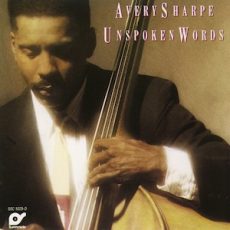
Avery George Sharpe was born on August 23, 1954 in Valdosta, Georgia. His first instrument was the piano, which he started playing at eight years old. His mother was a pianist and church choir director and gave him lessons. In his youth he studied the accordion, electric bass, then double bass at the University of Massachusetts, Amherst. He studied double bass with Reggie Workman, and also studied with Max Roach, Archie Shepp, Horace Boyer and Fred Tillis.
He came to prominence under the tutelage of Archie Shepp and Art Blakey, played as a sideman with Yusef Lateef, Ricky Ford, and Joe Ford, among others. As an educator he is Artist Associate and Jazz Coach at Williams College. In addition he serves as Faculty Advisor for the Williams Gospel Choir, and has an affiliation with the Africana Studies department.
In 2004, he wrote a musical portrait for the stage for Chamber Music, and was featured with Jasmine Guy in the stage production of Raisin’ Cane. His composition January in Brazil is on McCoy Tyner’s Grammy winning big band album Journey.
Double and electric bassist, composer, educator and founder of the artist-owned record label, JKNM Records Avery Sharpe, who has released 14 albums as a leader and 40 as a sideman, continues to utilize all of his talents.
More Posts: bandleader,bass,composer,educator,history,instrumental,jazz,music
Daily Dose Of Jazz…
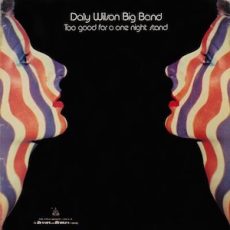
Warren Daly was born on August 22, 1943 in Sydney, Australia. Early in his career, he visited the United States where he worked with distinguished artists, among them Buddy De Franco.
He co-founder of the Daly-Wilson Big Band with trombonist/arranger Ed Wilson in 1968. In 1975 with corporate sponsorship, the band toured internationally including the Soviet Union. With the band splitting up, Warren formed the Warren Daly Big Band.
In the 1991 Queen’s Birthday Honours, Daly was awarded the Medal of the Order of Australia (OAM) “for service to music as band leader and drummer”.
Drummer Warren Daly continues to perform and record.
More Posts: bandleader,drums,history,instrumental,jazz,music

The Jazz Voyager
Hitting the jetway to board yet another plane, this Jazz Voyager is going to be on a fourteen hour flight to Tokyo, Japan. The destination is Blue Note Tokyo and again will stay in the same hotel with the same walk to the club. More exploration of this wonderful city until it is the appointed hour to become part of the audience.
The night promises to be electric as three-time Grammy-winning and six time nominated vocalist Cécile McLorin Salvant who takes the Billboard Critics Poll often will take the mic. The French-American singer has released seven albums and brings her unique style and a band featuring pianist Sullivan Fortner, bassist Yasushi Nakamura and drummer Kyle Poole for a three day residency from Wednesday to Friday.
With a cover of ¥ 8,800 | $59.24, the evening is eagerly anticipated. The Blue Note Tokyo is located at 6 Chome-3-16 Minamiaoyama Minato City 107-0062. For more information contact the venue at https://www.bluenote.co.jp/jp.

More Posts: adventure,club,drums,genius,jazz,museum,music,preserving,travel,vocal