


The Jazz Voyager
Feel the soul of New Orleans come alive as Grammy winner Adonis Rose and the New Orleans Jazz Orchestra present Sacred Spaces, a powerful ballet that blends music and dance in a celebration of resilience, community, and hope. Created in collaboration with the renowned Cleo Parker Robinson Dance Company, the piece was inspired by the burning of three historic Black churches in Louisiana.
With gospel, funeral dirges, and second lines woven throughout, this unforgettable performance transforms tragedy into a stirring tribute to healing and strength and features vocalist Andromeda Turre.
Performance Lineup: Adonis Rose, drums / Artistic Director Andromeda Turre, vocals David Navarro, trumpet Miles Berry, tenor saxophone itch Butler, trombone Brandon McCune, piano
Tickets: $25.00 ~ $50.00

More Posts: adventure,club,drums,ensembles,genius,jazz,music,preserving,travel,vocal
Daily Dose Of Jazz…
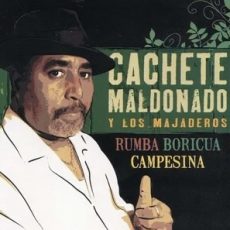
Angel ‘Cachete’ Maldonado was born in Santurce, Puerto Rico on Oct. 16, 1951 to a father who was a respected orchestra bassist. He began his musical studies with formal piano lessons, but had an early inclination to percussion and went under the tutelage of drummer Julio ‘Maco’ Rivera. His curiosity of Afro-Cuban music led him to the batá drums, and their religious and spiritual connotations, then to conga and bongo.
While on the island, he joined the popular band of Johnny El Bravo, then relocated to New York in the early 1970s. Once there he played with Carlos “Patato’ Valdés and Julito Collazo. This led him to become the featured bongo player with La Conspiración, then teamed up with pianist Larry Harlow. He remained for extensive tours of North and South America, and established his standing as a top tier percussionist. He performed with Eddie Palmieri, Louie Ramirez, Conjunto Libre, and Tipica 73, and recorded with Machito and Dizzy Gillespie.
Maldonado went on to play with Gato Barbieri, Weather Report, Freddie Hubbard, Jorge Dalto, Airto Moreira among others. In 1980 he started his seminal group Batacumbele, blending the Cuban songo beat with bomba and plena. Batacumbele had a compact but highly regarded recording output of five albums including a compilation disc. The release of the self-titled record was an instant hit and solidified his standing as a percussionist and bandleader.
Suffering a debilitating stroke in 2005, Cachete curtailed his performances which led to further complications. However, he regained much of his vibrancy and in 2010 Cachete Maldonado y Los Majaderos released Rumba Boricua Campesina to much acclaim on the island and in New York.
Percussionist Cachete Maldonado continues to lead his band at the local gigs and advance Afro-Caribbean music.

More Posts: bandleader,history,instrumental,jazz,music,percussion
Daily Dose Of Jazz…
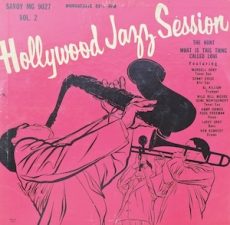
Albert Killian was born in Birmingham, Alabama, on October 15, 1916 and got his start playing with Charlie Turner’s Arcadians in the mid-1930s. He went on to play with big bands led by Baron Lee, Teddy Hill, Don Redman, and Claude Hopkins. The early to mid-1940s saw him swapping between bands led by Count Basie and Charlie Barnet, as well as being with Lionel Hampton for a period in 1945.
He appeared on film several times, played with Norman Granz’s Jazz at the Philharmonic concert series, and his interest in bebop led to Albert forming his own band to play the new music in 1947, but this was short-lived. Following this he briefly toured with bands led by Earle Spencer and Boyd Raeburn, before landing a the year residency in Duke Ellington’s band.
Trumpeter and bandleader Al Killian who was prominent during the big band era, died, murdered in his home at the hands of a psychopathic landlord on September 5, 1950 in Los Angeles, California.
More Posts: bandleader,history,instrumental,jazz,music,trumpet
On The Bookshelf
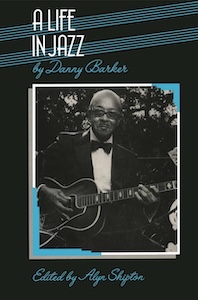
A Life In Jazz | Danny Barker
Since the 1950s, when Nat Hentoff and Nat Shapiro published Heah Me Talkin’ to Ya, an oral history of jazz which drew heavily on Danny Barker’s reminiscences, jazz buffs have waited impatiently for Barker’s full account of his life in jazz.
Danny Barker was born January 13, 1909 when jazz was still in its infancy, and by the time of his death he was known as both a master of the idiom and a guardian of its history. Storyteller, researcher, songwriter, performer, and mentor, Barker was a true griot – an elder statesman of jazz and an international representative of New Orleans and African American culture.
In more than 60 years as a working musician, he followed the evolution of jazz from its New Orleans roots to mainstream success during the swing era to canonization as America’s first wholly original art form. In his career as a songwriter, which yielded the hit Don’t You Feel My Leg, Barker combined traditional song forms with sly humor about sex and human nature.
More than any other jazz artist, he worked to document the music’s history and to tell the stories of its people. A Life in Jazz, first published in 1986 and edited by British jazz scholar Alyn Shipton, captures the breadth of Barker’s knowledge and the scope of his vision as a storyteller.
His carefully crafted set pieces range from hilarious to harrowing, and he shares memories of jazz greats such as Jelly Roll Morton, Cab Calloway, and Dizzy Gillespie. Barker’s prose reflects the freedom and creativity of jazz while capturing the many injustices, both casual and grand, of life as a Black man in mid-century America.
This illustrated edition of A Life in Jazz brings Barker’s autobiography back into print by the Macmillan Press Ltd., accompanied by more than 100 images that bring his story to life. Gwen Thompkins, host of public radio’s Music Inside Out, reflects on Barker’s legacy in her introduction, and the complete discography and song catalog showcase the breadth of Barker’s work.
Danny Barker died on March 13, 1994. Through his struggles, triumphs, escapades, and musings, A Life in Jazz reflects the freedom, complexity, and beauty of this thoroughly American, Black music tradition.
Daily Dose Of Jazz…
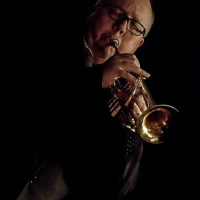
Martin Jones was born in Hull, England on October 14, 1955. He gained his experience playing trumpet first in school bands, and then Hull school bands with many concerts with orchestra’s, concert bands and a jazz swing band.
Leaving those to form his own bands he started working with his own band commercially in the jazz field in the late Seventies. By 1982 Martin was working professionally on the club and theatre circuits in cabaret. He started a residency at two clubs in the Latin Quarter in Paris. Returning to the UK he was trumpeter, front-man and vocalist at the City of London Tavern. He worked between London and Paris over the next two years, eventually joining the international cabaret group, The English Eccentric Ragtime Four.
He became a session trumpet player and vocalist in the London area. then spent some time working for New York Network Television while he was with this band. In 1987 Jones left the band to tour Europe, worked doing broadcasts on several TV shows and eventually left London and returned to his roots back in Hull.
He soon got work with a regional band called The Casablanca Boys, led six of his own bands and taught trumpet and vocal at The Keech School of Music. He developed a new Jazz Course at Access to Music in partnership with East Riding College as well as Jazz Summer Schools.
Trumpeter Martin Jones has currently published eleven books and continues performing, recording and teaching.
More Posts: educator,history,instrumental,jazz,music,trumpet