

Daily Dose Of Jazz…
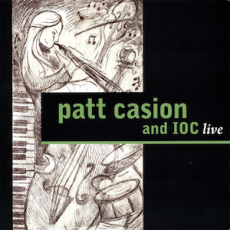
Patt Casion was born Patt Spears on December 31, 1963 in the Monterey Peninsula, California and grew up in Marina where she learned to play music while at church. It was there she started building her musical chops that led to her attending Berklee College of Music in Boston, Massachusetts, where one of her classmates was Lalah Hathaway, daughter of Donny Hathaway.
Opportunity gave way to her playing local gigs and recording two albums and took her to many places around the world, one was as a member of the Church of God Christ International Orchestra based in Memphis, Tennessee.
Soprano saxophonist Patt Casion, who after a two year battle with cancer, died on December 31, 2017 at Community Hospital of the Monterey Peninsula at the age of 55.

More Posts: bandleader,history,instrumental,jazz,music,saxophone
On The Bookshelf
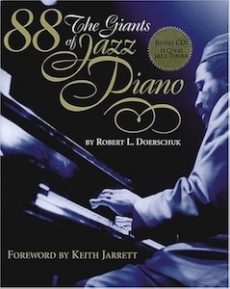
88: The Giants Of Jazz Piano
Ever wondered what made the piano gods of jazz so extraordinary? This captivating hardcover opens the door to 88 legendary artists who didn’t just play the piano—they transformed it into an instrument of revolution, soul, and pure genius.
Get ready to discover the fascinating stories behind the music. Each profile reveals not just what these pianists played, but who they were—their quirks, their breakthroughs, and the unmistakable fingerprints they left on jazz history.
The book takes you on an intimate journey with seven towering figures: Jelly Roll Morton, Earl Hines, Art Tatum, Thelonious Monk, Bud Powell, Keith Jarrett, and Cecil Taylor. But that’s just the beginning. You’ll also meet Mary Lou Williams, James P. Johnson, Count Basie, Duke Ellington, Nat “King” Cole, Dorothy Donegan, Oscar Peterson, Les McCann, Herbie Hancock, Dave Brubeck, Billy Taylor, McCoy Tyner, Chick Corea, Geri Allen, and 67 more innovators who pushed boundaries across every style imaginable—from stride’s joyful bounce to swing’s sophistication, bebop’s lightning-fast complexity to the fearless explorations of the avant garde.
At 344 pages packed with 100 stunning photos, plus a bonus CD featuring 11 essential jazz tracks, this is more than a book—it’s an experience. And with a foreword by Keith Jarrett himself, you know you’re in for something special.
Whether you’re a devoted jazz lover or just beginning your journey into this incredible art form, these stories will inspire, surprise, and maybe even change how you hear music.
88: The Giants Of Jazz Piano | Robert L. Doerschuk | Backbeat Books

Daily Dose Of Jazz…
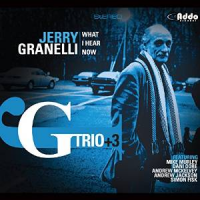
Jerry Granelli was born Gerald John Granelli on December 30, 1940 in the Mission District of San Francisco, California. Both his father and uncle played the drums and were passionate about jazz. He initially learned the violin for a year, before switching to drums. He spent a day with drummer Gene Krupa in 1948 and hanging out at the Blackhawk and Jimbo’s Bop City soaking in Ellington, Miles, Monk and Max Roach eventually led to him studying with Dave Brubeck drummer Joe Morello.
After two years with Morello he became a highly sought-after session player, Jerry eventually started playing, recording and touring with the Vince Guaraldi Band. He provides the unmistakable steady swing beats for the classic Charlie Brown “Peanuts” theme song.
In the Sixties he moved on to the Denny Zeitlin Trio with bassist Charlie Haden. A hugely successful recording and touring band, they tied with Miles Davis for Group of the Year in Downbeat magazine’s Critics and Readers Poll in 1965. Throughout the decade he performed with Jimmy Witherspoon, Mose Allison, Lou Rawls, John Handy, Sonny Stitt, Sly Stone, Ornette Coleman and Dewey Redman. His free-form improvisational trio held down the opening slot for comedian Lenny Bruce for three months in 1963, and shared bills with Jefferson Airplane, Big Brother and the Holding Company and the Grateful Dead.
From the mid-70s through the 90s he focused on teaching, first at the Naropa Institute in Boulder, Colorado and then Seattle Washington’s Cornish Institute, the Conservatory in Halifax, Nova Scotia and the Hochschule der Kunst in Berlin, Germany.
During the 80s he toured and recorded in a trio with Ralph Towner and Gary Peacock, and began recording his own projects. From the Nineties until his death, Granelli lived in Halifax and became a Canadian citizen in 1999. In 2010, he released his first solo album, 1313, toured jazz festivals and theaters with his show Tales of a Charlie Brown Christmas, which retold how the Charlie Brown Christmas TV special almost never came to be.
Suffering from a fall in December 2020 that resulted in internal bleeding, he spent three months recuperating in an intensive care unit before being discharged. He died seven months later at the age of 89 on the morning of July 20, 2021, at his home in Halifax.
More Posts: drums,history,instrumental,jazz,music
Daily Dose Of Jazz…
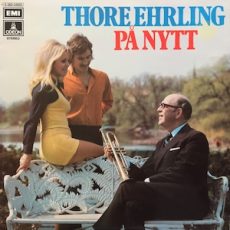
Thore Ehrling was born December 29, 1912 in Stockholm, Sweden and played with the Frank Vernon Ensemble from 1930 to 1934. At the same time he studied at the Royal Swedish Academy of Music.
From 1935 to 1938 he played under Håkan von Eichwald and did arrangement and composition work on the side. He started his own ensemble in 1938, which grew into a big band in the nineteen years it was active. This group played popular music and jazz, recorded frequently, and played often on Swedish radio.
The group featured many sidemen who went on to become prominent on the Swedish jazz scene, such as Uffe Baadh and Carl-Henrik Norin, and accompanied popular Swedish singers such as Inger Berggren and Lily Berglund.
Trumpeter, composer and bandleader Thore Ehrling, who led jazz and popular music ensembles, died in Stockholm, Sweden on October 21, 1994.
More Posts: bandleader,composer,history,instrumental,jazz,music,trumpet
Requisites
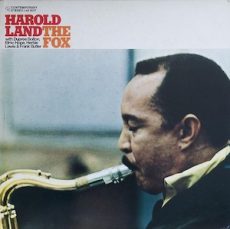
The Fox ~ Harold Land | By Eddie Carter
>This morning’s selection from the library features one of my favorite tenor saxophonists, Harold Land, who, alongside his band members, is in pursuit of a cunning opponent: The Fox (HiFi Jazz J 612/SJ 612), which initially hit the stores in 1959. Harold was a leading West Coast tenor saxophonist who played with some of the best jazz groups, including those led by Clifford Brown and Max Roach. After leaving the Clifford Brown-Max Roach Quintet to prioritize his family life in California, he may have sacrificed the chance for even greater recognition. Still, his impressive discography continues to illuminate a career that lasted almost fifty years. Land receives exemplary support on this date from Dupree Bolton on trumpet, Elmo Hope on piano, Herbie Lewis on bass, and Frank Butler on drums. My copy is the 1975 U.S. Stereo reissue (Contemporary Records S7619).
Side One kicks off with the title track, The Fox, a high-energy opener by Harold Land that is fueled by the quintet’s theme. The tune takes its name from a nickname given to Harold by drummer Lawrence Marable. Land leads the way, delivering a solo bursting with fiery passion. Bolton steps in next and cooks hard. Hope surges ahead with an energetic touch in the following reading. Butler then engages in a lively and playful exchange with the front line, until the theme’s reprise brings the tune to an abrupt and thrilling end. Mirror-Mind Rose, the first of Elmo Hope’s four contributions, serves as a lyrical showcase for Land, whose opening solo after the ensemble’s touching theme paints an affectionate, mellow soundscape. Bolton’s turn is a dreamy, gorgeous presentation, and Hope wraps up the solos with elegance before the group gently ends the tune together.
Hope’s One Second, Please is a rocking groove with dynamic interaction between both horns and the trio on the melody. Harold lets his horn do the talking in the opening statement. Dupree responds by getting so many ideas into the second solo. Elmo glides efficiently over the rhythm section’s backdrop next. Frank collaborates with the front line in the closing segment preceding a satisfying finale. Sims-A-Plenty, Hope’s third original starts Side Two with the unfolding of a cheerful, mid-tempo theme by the quintet. The pianist steps up first, building the opening solo into a firm, solid groove. Land matches the momentum with a swinging statement next. Bolton impresses with inventive, nuanced lines in a remarkable interpretation. Butler moves toward the reprise with exciting agility on the closer preceding the ensemble’s cohesive finale.
The playful spirit of Little Chris radiates the joy and happiness Harold Land felt for his then nine-year-old son, and that feeling shines through in the quintet’s opening notes of the melody. Harold takes the lead with a captivating statement that draws thelistener in. Bolton brings a bright, assertive tone and confident energy to the second reading. Hope makes his entrance next and swings soulfully, then Butler adds a few lively thoughts before the quintet reassembles for the closing theme. One Down by Hope begins with Butler’s breezy, island-inspired introduction, ahead of the group’s medium-fast melody. Bolton opens the solos with seasoned flair, then Elmo responds with polished virtuosity. Harold takes up the next spot vigorously, and Frank adds the exclamation point in a brief but effective solo before the quintet returns to take the song out.
Bassist Herbie Lewis is the only member of the quintet who doesn’t take a solo on any track, but his presence is truly felt throughout. His controlled strength and engaging ensemble playing create a reliable, steady foundation that beautifully supports Land, Bolton, Hope and Butler at the forefront. This album was produced by David Axelrod and recorded by Art Becker and David Wiechman at Contemporary Records. The reissue’s sound quality is first-rate and offers its owner a marvelous stereo listening experience. For fans of West Coast Jazz, the incredible interaction among the musicians is captivating, and these performances are definitely worth exploring. The Fox by Harold Land may seem like an elusive adversary during your record-shopping hunt, but once you acquire it, it won’t bite or attack; instead, it could become a treasured addition to your jazz library!
~ Little Chris – Source: Album liner notes by Leonard Feather ~ Lawrence Marable was also known as Larance Marable – Source: Wikipedia.org. © 2025 by Edward Thomas Carter

More Posts: choice,classic,collectible,collector,history,instrumental,jazz,music,saxophone