

Daily Dose Of Jazz…
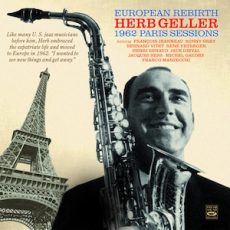
Michel Gaudry was born on September 23, 1928 in Eu, France on 23 September 1928. He learned clarinet and piano as a child before switching to bass. Following studies at the Geneva Conservatory, he played with Michel Hausser, beginning his professional career in 1955. In the latter half of the 1950s he worked with Billie Holiday, Quentin Jackson, Carmen McRae, and Art Simmons.
In the early 1960s he was very active playing with Elek Bacsik, Kenny Clarke, Sonny Criss, Stephane Grappelli, Bud Powell, Stuff Smith, and Billy Strayhorn, as well as continuing a long time slot as a member of Jack Diéval’s group.
The Seventies he played with Gérard Badini’s group, Swing Machine, and was a regular performer at the Grande Parade du Jazz in Nice, France. In the 1980s he played with Jimmy Owens and Irvin Stokes.
In his later life, he dedicated himself to the history of World War II occupation of Normandy, France. Double bassist Michel Gaudry died on May 29, 2019 in Saint-Lô, France at the age of 90.
 </p
</p
More Posts: bass,history,instrumental,jazz,music
Requisites
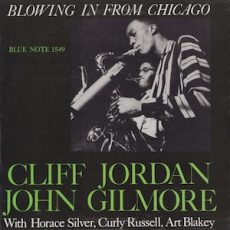
Blowing In From Chicago ~ Cliff Jordan & John Gilmore | By Eddie Carter
As a youngster discovering this music, I was always captivated by jazz’s unique and spontaneous nature, particularly the ‘blowing session’ or ‘jam session.’ These impromptu performances, where musicians control the flow of musical ideas from moment to moment, are a testament to the music’s excitement and unpredictability. Whether in a live setting at a club, concert, or jazz festival or captured in a studio session, jazz’s enthusiasm, vitality, and freedom are always present.
This morning’s choice from my library is an excellent LP from 1957 by two tenor saxophonists who made significant impressions in jazz, Clifford Jordan and John Gilmore. Their only album as co-leaders is titled Blowing In From Chicago (Blue Note BLP 1549), which signifies their roots in the vibrant jazz scene of Chicago. The quintet has an excellent rhythm section consisting of Horace Silver on piano, Curly Russell on bass, and Art Blakey on drums. My copy is the 1983 Pathé Marconi-EMI French Mono reissue, sharing the original catalog number. Before I proceed, let me state that this is not a DMM (Digital Metal Mastering) pressing.
The album opener, Status Quo, is a lively tune by John Neely, with both horns leading the charge through the uptempo melody. John rips into the opening solo, aggressively slicing through each verse like a sharp blade. Clifford joins him next in a short exchange, then takes off with a supercharged reading. Horace shifts into high gear on the third statement with a blazing swiftness that’s equally inspired and scintillating. Art engages in a brief conversation with both horns, then brings the solos to a close with an electric performance illustrating his incomparable artistry before the ensemble returns to the theme and quick stop. The first of two originals by Jordan follows.
Bo-Till slows the tempo to a laid-back pace with a Latin flavor. After a short introduction by the trio, the quintet states the theme collectively, stepping aside for Jordan, who makes a profound impression with a beautifully conceived statement displaying a great tone throughout. Silver gets into the groove next with an incredible, smooth reading, one of his best on the album. Gilmore delivers the closing choruses of the song proficiently with meticulous execution. Blakey constructs a concise comment during the ensemble’s end theme and close.
Blue Lights by Gigi Gryce is a catchy tune that opens with the quintet laying down a gorgeous medium beat on the theme and gives everyone a solo opportunity. John steps into the spotlight with a spirited performance. Horace follows with notes of undeniable pleasure in one of his most robust solos. Clifford weaves his way through the next musical improvisation with astounding skill. Curly puts together a condensed reading that walks for one chorus with solid bass lines. Art breezes into a straightforward interpretation that culminates into a splendid summation of the first side.
The second side gets underway with Charlie Parker’s Billie’s Bounce, which gives everyone except Russell a lengthy solo canvas on which to work. Blakey begins with a high-voltage introduction that sets the pace for the following fiery quintet theme. Clifford packs a mighty punch on the opening statement with a fire-breathing showcase, preceding John, who exhibits a robust attack on the subsequent interpretation with extremely hot choruses. Horace takes over next for a scintillating performance, taking his piano on a sizzling uptempo ride. Both horns exchange a few riffs with Art before the drummer gives an unaccompanied propulsive exhibition into the ending theme.
Clifford’s second original is a blues titled Evil Eye, which eases the throttle back from the previous burner to a medium pace with a collective melody by the quintet. Jordan opens the solos with a series of choruses that are smooth and well-structured. In the following presentation, Gilmore shows that he can also interpret blues with plenty of soul, which develops nicely. Silver delivers a lightly swinging performance that expresses pleasure as he moves masterfully through each chorus. Both horns return to share a few more thoughts. Blakey makes a short statement preceding the theme’s reprise and finish.
The album’s final track is Everywhere, a mid-tempo original by Horace Silver, which I believe made its debut on this album. It opens with a simple opening melody by the ensemble in unison, and the solo order is Gilmore, Jordan, Silver, and Blakey. John takes the stage first with a bewitchingly delightful opening statement. Clifford makes his case with a captivating contribution that moves sprightly alongside the rhythm section’s groundwork drive. Horace takes over next, communicating his points well with a pronounced beat. Art puts the joyous exclamation point on the song and album with a compelling statement that leads the group back to the ending theme and close.
Clifford Jordan recorded three albums for Blue Note; the other two LPs are Cliff Jordan and Cliff Craft. He played and recorded with many elite jazz musicians, including Charles Mingus and Max Roach. Clifford also enjoyed success recording as a leader and sideman, and in my opinion, his discography is well worth investigating. He remained in demand over the next three decades and toured worldwide. His final album was a 1992 live recording at Condon’s in New York City for Milestone, where he performed with his big band, Down Through The Years. He lost his battle against lung cancer on March 27, 1993, at age sixty-one.
Blowing In From Chicago was the first of three appearances on Blue Note by John Gilmore. The other two were as a sideman on two of Andrew Hill’s LPs, Andrew and Compulsion. He began playing the clarinet at fourteen, then pursued a musical career after a four-year stint in the United States Air Force, where he took up and played the tenor saxophone. He began a forty-year term with Sun Ra in 1953 and recorded for various labels with his group, Sun Ra Arkestra. During this time, Gilmore also toured with The Jazz Messengers and recorded with Paul Bley, Andrew Hill, Pete LaRoca, McCoy Tyner, and Dizzy Reece. After Sun Ra’s death on May 30, 1993, Gilmore led the Arkestra for two years before his death from emphysema on August 20, 1995, at age sixty-three.
As for the music on Blowing In From Chicago, it’s fantastic, as are the solos on each track, and the sound quality of this reissue is exemplary. The instruments deliver an excellent soundstage throughout the treble, midrange, and bass that places your sweet spot in the studio with the musicians. It’s a cut above the average debut album and a title I recommend as a terrific addition to any jazzophile’s library, particularly if you’re a hard-bop fan or love a good “blowing session” or “jam session.”
~ Andrew (Blue Note BLP 4203/BST 84203), Cliff Jordan (Blue Note BLP 1565), Cliff Craft (Blue Note BLP 1582/BST 81582), Compulsion (Blue Note BLP 4217/BST 84217), Down Through The Years (Milestone MCD-9197-2) – Source: Discogs.com
~ Billie’s Bounce – Source: JazzStandards.com
~ John Gilmore, Andrew Hill, Clifford Jordan – Source: Wikipedia.org
© 2024 by Edward Thomas Carter

More Posts: choice,classic,collectible,collector,history,instrumental,jazz,music,saxophone
Daily Dose Of Jazz…
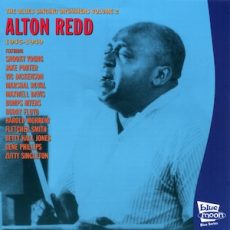
Fletcher Smith was born on September 22, 1913 in Lincoln, Nebraska and was orphaned by the age of eight. He and his siblings moved in with their grandfather who had a nine-room house. When the Lloyd Hunter Serenaders came through Lincoln and there was a guitar player there named Finney. He asked Finney to teah him to play if he could get his uncle to buy him a banjo. He wrote out a chart of chords and gave him lessons when he came back.
Smith played for Cootie Williams in 1943 and in the following years with Slim Gaillard, King Perry, Varetta Dillard, Jimmy Rushing, Big Maybelle, Linda Hopkins, Sister Rosetta Tharpe, Stick McGhee, Mickey Baker, Percy Mayfield, and Geechie Smith. In the Fifties he performed with Earl Bostic, Percy Mayfield, Benny Carter, Billy Eckstine, Lionel Hampton, Les Hite, and the Ink Spots, among others.
Under his own name, Fletcher Smith’s Squares and Fletcher Smith’s band, he played in the 1950s and recorded several singles such as Mean Poor Gal, Ting Ting Boom Scat or Shout, Shout, Shout. He recorded extensively as a sideman and toured most of the United States with various organizations. During the early 1970s he was a popular artist in Paris, France performing with the Golden Gate Quartet. From 1981 to 1991 he was featured in Las Vegas, Nevada.
Upon his return to Los Angeles, he became one of the mainstays of the Southern California music scene, he continued playing and honing his book of tunes and arrangements until his death. Pianist and bandleader Fletcher Smith died on August 15, 1993 in Los Angeles, California.
More Posts: bandleader,history,instrumental,jazz,music,piano
Daily Dose Of Jazz…
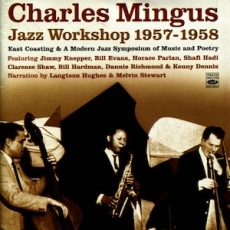
Shafi Hadi was born William Curtis Porter on September 21, 1929 in Philadelphia, Pennsylvania to William Porter and Harrietti Porter. He received piano lessons from his grandmother at age 6. He went on to study musical composition at Howard University and University of Detroit. He performed with rhythm and blues artists such as Paul Williams, Ruth Brown, and the Griffin Brothers.
He recorded with bassist Charles Mingus between 1956 and 1958. He also recorded with tenor saxophonist Hank Mobley. Hadi improvised the soundtrack music for John Cassavetes’s film Shadows, then returned to Mingus’s group in 1959. He also collaborated with Mary Lou Williams on her 1977 composition “Shafi”, although the extent of his contribution is unclear.
Between 1965 and 1969 Shafi co-wrote five songs with Lionel Hampton or Gladys Hampton: Bye, Bye, Hamp Stamps, No, Say No, A Sketch Of Gladys, and Mama Knows.
Tenor and alto saxophonist Shafi Hadi died in June 1976, at the age of 46.
More Posts: bandleader,history,instrumental,jazz,music
Daily Dose Of Jazz…
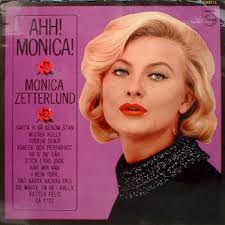
Monica Zetterlund was born Eva Monica Nilsson on September 20, 1937 in Hagfors, Sweden. She began by learning the classic jazz songs from radio and records, initially not knowing the language and what they sang about in English. Her hit songs included Swedish covers of Walking My Baby Back Home. Little Green Apples, Waltz for Debby, Hit the Road Jack, and Moon Over Bourbon Street, among many others.
She also interpreted the works of Swedish singer-songwriters Evert Taube, Olle Adolphson and Povel Ramel, as well as international jazz musicians/songwriters. She worked with Louis Armstrong, Bill Evans, Stan Getz, Steve Kuhn and Quincy Jones, and in the Scandinavian jazz world with people like Georg Riedel, Egil Johansen, Arne Domnérus, Svend Asmussen and Jan Johansson.
In 1964, she recorded the jazz album Waltz for Debby, featuring Bill Evans, and was the most proud of. Her professional skill was amply demonstrated in her performance of the challenging Harold Arlen song, So Long, Big Time. Her rendition of Once Upon A Time In Stockholm, though not suitable for the 1963 Eurovision Song Contest, remained successful in Sweden.
She suffered from severe scoliosis which began after a childhood accident, and as a result was forced to retire from performing in 1999. On May 12, 2005, vocalist Monica Zetterland, as awarded the Illis quorum by the government of Sweden, died probably due to her habit of smoking in bed following an accidental fire in her apartment in Stockholm, Sweden at age 67.
More Posts: bandleader,history,instrumental,jazz,music,vocal