

Daily Dose Of Jazz…
Bronisław Suchanek was born August 30, 1948 in Bielsko-Biała, Poland. During his studies at the Secondary Music School he was a member of the Andrzej Zubek Quartet and from 1967 to 1971 he studied at the Academy of Music. In 1969, while still a student, he began collaborating with Tomasz Stańko’s quintet and recorded two albums and were among the first musicians to inaugurate the first Music Workshop in Chodzież, Poland.
He made his debut on the music scene playing in the Silesian Jazz Quartet, which he co-founded with pianist Andrzej Zubek, trumpeter Bogusław Skawina, Jerzy Jarosik on flute and saxophone, and drummer Kazimierz Jonkisz.
At the end of 1972, Bronisław went with the Klan Band to Finland where he took part in a concert as part of the Helsinki Festival and presented the premiere of free-jazz and rock. In 2016, GAD Records released an album titled Live Finland 1972 with a recording of this concert. In the 1970s he was a member of the Polish Radio Jazz Studio Orchestra.
He has performed and recorded both in Poland and abroad with American jazz musicians such as Don Cherry and Rick Stepton. In the second half of the decade he emigrated to Sweden, where he played in the Swedish Jazz Radio Group. He operated in Scandinavia for over a dozen years, collaborating with the bands Sound of Flowers and Birka.
The 1980s saw him giving concerts and recording albums in Germany and Austria with different formations. In 1995 Suchanek moved to the United States where he taught at the Maine School of Music and played in the Woody Herman Big Band and the Artie Shaw Orchestra.
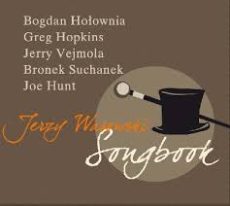
He recorded an album titled Sketch in Blue in a duet with Dominik Wania. In 2010 he recorded an album titled Jerzy Wasowski Songbook together with Bogdan Hołownia, Jerry Veimola and Joe Hunt. He collaborated with the New Bedford Symphony Orchestra.
Double bassist Bronisław Suchanek, who was awarded the Silver Medal for Merit to Culture – Gloria Artis, continues to perform and record in the free jazz and straight-ahead mediums.
More Posts: bandleader,bass,history,instrumental,jazz,music
The Jazz Voyager
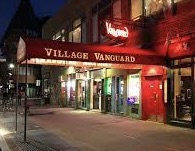
Staying on the east coast and heading back down to the city to the lower westside of Greenwich Village to the iconic jazz spote called the Village Vanguard. The 130 seat venue has been around since 1935 and has brought hundreds of legendary musicians to this New York stage. Their 16 musician Vanguard Jazz Orchestra which began as the Thad Jones/Mel Lewis Orchestra in 1966, plays every Monday night.
This week I’ll be having the privilege of hearing Joe Lovano & the Dave Douglas Quintet, who will be inresidence for a week. They have been playing together for some years, and when Lovano brings his tenor saxophone and pairs it with Douglas’ trumpet which creates an exciting performance.
The Village Vanguard is located at 178 7th Avenue S, New York City, NY 10014. For more information visit https://villagevanguard.com.

More Posts: adventure,club,genius,jazz,music,preserving,saxophone,travel,trumpet
Daily Dose Of Jazz…
Bobby Carcassés was born on August 29, 1938 in Kingston Jamaica where his Cuban grandfather worked as a diplomat. Upon moving to Villa Clara, Cuba at the age of four he grew up surrounded by Cuban rhythms, listening to Benny Moré, Conjunto Casino & Roberto Faz. He acquired a love for an eclectic spectrum of music from the opera star Enrico Carusso and Mexico’s Jorge Negrete to jazz royalty Sarah Vaughan, Buddy Rich and Stan Getz.
By the 1950’s he was involved with some of the best vocal quartets in Cuba and while playing for many years at The Tropicana the center of Cuban Jazz, he began to experiment with bebop and scat vocals. During the Sixties he traveled to Europe, spending a year in Paris where he played with Kenny Clarke and Bud Powell.
Returning to Cuba he worked in the Teatro Musical where he met three of the future founders of Irakere: Chucho Valdes, Carlos Emilio Morales and Paquito D’ Rivera. Over the next ten years he played in the best night clubs in Havana, Cuba as well as acting in Cuban cinema, Tv and essentially starting to form his own Jazz group.
In 1980 he organized the first Jazz Plaza Festival in Havana, inviting Dizzy Gillespie, Ronnie Scott, Charlie Haden, Airto Moreira, Tania Maria, Steve Coleman and many others. After his own group played these festivals. he traveled to Canada, England, France and the USA where he performed with Tito Puente, Eddie Palmieri, Patato Valdés and many others on the Latin Jazz scene.
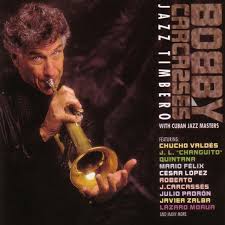
Trumpeter Bobby Carcassés, who also plays piano, bass, percussion, and flugelhorn, as well as writing his own pieces, continues to perform, record and create art that has been exhibited globally.
More Posts: bandleader,bass,composer,flugelhorn,history,instrumental,jazz,music,percussion,piano,trumpet
Daily Dose Of Jazz…
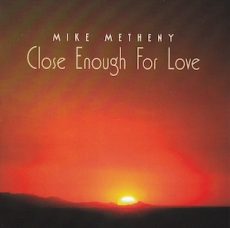
Mike Metheny was born August 28, 1949 in Lee’s Summit, Missouri and studied music education at the University of Missouri School of Music and Northeast Missouri State University, then played trumpet in the U.S. Army Field Band, Washington D.C. from 1971 to 1974. After his discharge he went to Boston, Massachusetts and became an adjunct lecturer and assistant to the head of the trumpet department at the Berklee College of Music for seven years beginning in 1976.
From 1978 to 1989 Metheny led his own quartet in Boston, and in 1988 he was named Outstanding Brass Player at the annual Boston Music Awards. His debut album was released in 1982 and followed that with eleven more and produced two records with major labels to mixed reviews. Since 2000, his albums have been produced on his own record label, 3 Valve Music.
Mike’s career in music journalism has seen him as editor for Kansas City’s Jazz Ambassador Magazine (JAM) from 1994 to 2003 and has contributed to KC Magazine, Jazziz, and The DaCapo Jazz & Blues Lover’s Guide to the U.S.
He continues to perform primarily in Kansas and Missouri, playing a trumpet synthesizern electronic valve instrument (EVI). With his brother Pat they set up the Metheny Music Foundation with Mike serving as the chairman.
Flugelhornist and trumpeter Mike Metheny, who published the anthology Old Friends Are the Best Friends: the Letters of John McKee and Mike Metheny, continues to perform and record.
More Posts: flugelhorn,history,instrumental,jazz,music,trumpet
Jazz Poems
FEBRUARY IN SYDNEYDexter Gordon’s tenor sax
plays “April in Paris”
inside my head all the way back
on the bus from Double Bay
Round Midnight, the ‘50s,
cool cobblestone streets
resound footsteps of Bebop
musicians with whiskey-laced voices
from a boundless dream in French.
Bud, Prez, Webster, & The Hawk,
their names run together riffs.
Painful gods jive talk through
bloodstained reeds & shiny brass
where music is an anesthetic.
Unreadable faces from the human void
float like torn pages across the bus
windows. An old anger drips into my throat,
& I try thinking something good,
letting the precious bad
settle to the salty bottom.
Another scene keeps repeating itself:
I emerge from the dark theatre,
passing a woman who grabs her red purse
& hugs it to her like a heart attack.
Tremolo. Dexter comes back to rest
behind my eyelids. A loneliness
lingers like a silver needle
under my black skin,
as I try to feel how it is
to scream for help through a horn.
YUSEF KOMUNYAKAA
from Jazz Poems ~ Selected and Edited by Kevin Young

More Posts: book,classic,collectible,history,jazz,library,poet