

Daily Dose Of Jazz…
Ike Isaacs was born on December 1, 1919 in Rangoon, Burma and was self-taught on guitar. He started playing professionally in college while pursuing a degree in chemistry. Moving to England in 1946, he became a member of the BBC Show Band.
During the 1960s and Seventies, he was a member of the Hot Club of London, led by guitarist Diz Disley, who often collaborated with Stéphane Grappelli. He was a member of the band Velvet with Digby Fairweather, Len Skeat, and Denny Wright.
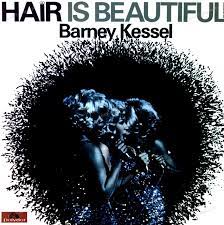
He recorded not only with Grappelli but with Ted Heath, Barney Kessel, Barry Gray, Jake Thackray, Martin Taylor and Stan Tracey. In the 1980s, he moved to Australia and taught at the Sydney School of Guitar.
Guitarist Ike Isaacs, best known for his work with violinist Stéphane Grappelli, transitioned from cancer on January 11, 1996 at the age of 76 in Sydney, Australia.

The Jazz Voyager
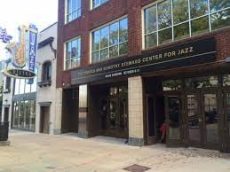
Taking a flight from Laguardia to Lambert International to take a seat in the Harold & Dorothy Steward Center For Jazz this week. Formerly known as Jazz at the Bistro, in 2014 along with the building next door was renovated into a two hundred and twenty seat venue that was renamed as the center. Located at 3536 Washington Avenue, St. Louis, MO 63103 it has become a renowned venue for performance, education and community engagement.
The Jazz Voyager will be occupying one of the seats to witness the talents of trombonist Wycliffe Gordon. Known affectionately as “Pinecone,” the Georgia-born trombonist also sings and plays didgeridoo, trumpet, soprano trombone, tuba, and piano. In 1995, Gordon arranged and orchestrated the theme song for NPR’s All Things Considered.
For more information you can visit https://notoriousjazz.com/event/wycliffe-gordon.

More Posts: adventure,club,genius,jazz,music,piano,preserving,travel,trombone
Daily Dose Of Jazz…
Jay Corre was born on Nov 30, 1924 and grew up in Atlantic City, New Jersey. His interest in music began at five years old, when he started to experiment with various instruments, including the harmonica, violin and clarinet. He picked up the saxophone at age 14 and showed a natural ability for this instrument.
By the time he was sixteen he was playing dates at various clubs that made the shore area a virtual hot bed of fine jazz entertainment. Completing his music studies at the Atlantic City High School he played with the Alex Bartha Orchestra on the Steel Pier. After a stint in the US Navy Band, his discharge favored the opportunity to join the Raymond Scott Orchestra, featuring Dorothy Collins.
He joined the Buddy Rich Big Band before performing with Harry James, Benny Goodman, Dizzy Gillespie, Ella Fitzgerald, The Duke Ellington Band under Mercer Ellington, Ella Fitzgerald, Oscar Peterson, Frank Sinatra, Mel Torme, Tony Bennett, Sammy Davis Jr. and many more.
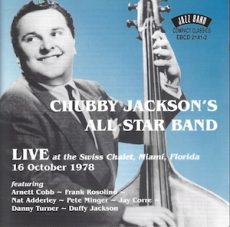
Tenor saxophonist, composer, arranger and jazz educator Jay Corre, whose influences were Coleman Hawkins, Lester Young and Charlie Parker, transitioned on Oct 26, 2014 in Stuart, Florida.

More Posts: arranger,composer,educator,history,instrumental,jazz,music,saxophone
Daily Dose Of Jazz…
Bobby Donaldson was born Robert Stanley Donaldson on November 29, 1922 in Boston, Massachusetts. Early in his career he played with the Boston Symphony. After playing locally in the early 1940s, he played with Russell Procope while serving in the Army in New York City.
In 1946–47 Bobby worked with Cat Anderson. Following this stint he played with Edmond Hall, Andy Kirk, Lucky Millinder, Buck Clayton, Red Norvo, and Sy Oliver/Louis Armstrong.
A prolific session musician for much of the 1950s and 1960s, he played with Helen Merrill, Ruby Braff, Mel Powell, Benny Goodman, Count Basie, Bobby Jaspar, Herbie Mann, André Hodeir, Kenny Burrell, Lonnie Johnson, Frank Wess, Willis Jackson, and Johnny Hodges.
Drummer Bobby Donaldson, who played both in the jazz, Dixieland and R&B idioms, transitioned in 1971.
More Posts: bandleader,drums,history,instrumental,jazz,music
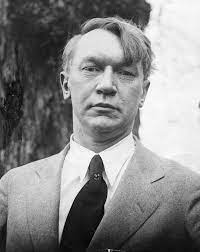
Jazz Poems
THE JAZZ OF THIS HOTEL Why do I curse the jazz of this hotel? I like the slower tom-toms of the sea; I like the slower tom-toms of the thunder; I like the more deliberate dancing knee Of outdoor love, of outdoor talk and wonder. I like the slower, deeper violin Of the wind across the fields of Indian corn; I like the far more ancient violincello Of whittling loafers telling stories mellow Down at the village grocery in the sun; I like the slower bells that ring for church Across the Indiana landscape old. Therefore I curse the jazz of this hotelThat seems so hot, but is so hard and cold
VACHEL LINDSAY
from Jazz Poems | Selected and edited by Kevin Young

More Posts: book,classic,collectible,history,jazz,library,poet