

Daily Dose Of Jazz…
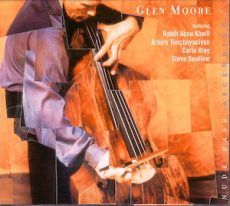
Glen Moore born October 28, 1941 in Portland, Oregon. His performing career began at age 14 with the Young Oregonians in Portland, where he met and played with Native American saxophonist Jim Pepper.
He graduated with a degree in History and Literature from the University of Oregon. His formal bass instruction started after college with Jerome Magil in Portland, James Harnett in Seattle, Washington and Gary Karr in New York, Plough Christenson in Copenhagen, Ludwig Streicher in Vienna, Austria and Francois Rabbath in Hawaii.
His main instrument is an upright bass which was made by Klotz in Tyrol, Austria around 1715. Moore is a founding member of Oregon, but also worked regularly with Rabih Abou-Khalil, Vasant Rai, Nancy King and Larry Karush.
Double bassist Glen Moore, who occasionally performs on piano, flute and violin, continues to perform and record.

More Posts: bass,flute,history,instrumental,jazz,music,piano,violin
Daily Dose Of Jazz…
Elmon Wright was born on October 27, 1929 in Kansas City, Missouri to trumpeter Lammar Wright Sr. and the brother of trumpeter Lammar Wright Jr. Following in his father’s and brother’s footsteps, he learned to play the trumpet.
Wright played with Don Redman early in his career, then with Dizzy Gillespie’s first big band in 1945. He then went on to play with Roy Eldridge and then went back to Gillespie’s band, touring and recording with him from 1946 until 1950.
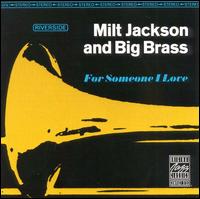
He toured with Earl Bostic for a year in 1954, then worked as a freelance musician in New York City, performing at the Apollo Theater in Harlem with R&B and rock groups. He played with Buddy Rich and Earle Warren in 1959 and recorded with Milt Jackson in 1963. Trumpeter Elmon Wright transitioned in 1984.
More Posts: history,instrumental,jazz,music,trumpet
The Jazz Voyager
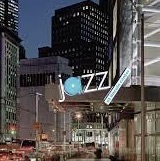
From Charlotte to New York City is the flight plan for this Jazz Voyager. Landing at LaGuardia I’m taking a private car to just above the theater district on Broadway and 59th Street where Dizzy’s Club sits. Jazz At Lincoln Center has established an intimate venue with panoramic views of the Manhattan skyline where world class musicians come to perform. The club soars high above the expansive views of Central Park.
Trombonist, arranger, composer, bandleader and educator Wycliffe Gordon will be gracing the stage on this trip. Aside from being a stellar trombonist, he also sings and plays didgeridoo, trumpet, tuba, and piano. Always bringing something new I am anticipating his arrival on stage to witness what he will be laying down on this show.
The venue is located at 10 Columbus Circle, 10019 and for more information you can visit notoriousjazz.com/event/wycliffe-gordon-friends

More Posts: adventure,club,genius,jazz,music,piano,preserving,travel,trombone,tuba,vocal
Daily Dose Of Jazz…
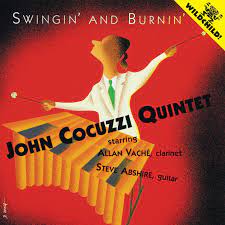
John Cocuzzi was born in Camp Springs, Maryland on Andrews Air Force Base on October 26, 1964. Taking a very early interest in playing drums, immediately after graduating from high school, in 1982 he attended Montgomery Junior College in Rockville, Maryland as an applied percussion major. While there he also studied arranging with Bill Potts, who wrote for Buddy Rich and others.
Towards the end of the decade he had established himself, performing in and around the nation’s capital. During these years, in addition to playing drums, Cocuzzi also played piano and vibraphone, gradually advancing his skills on the latter instrument until it became the dominant force in his impressive arsenal.
The early 90s saw John appearing at numerous festivals across the country, as well as Belgium and the Netherlands. Throughout his career he has mainly led his own small groups and has also played piano with the swing, blues and jump band, Big Joe And The Dynaflows, led by Big Joe Maher.
He has worked and/or recorded with Howard Alden, Joe Ascione, Louie Bellson, Bobby Gordon, Chuck Hedges, Nat King Cole, Milt Hinton, Dick Hyman, Russell Malone, Ken Peplowski, Bucky and John Pizzarelli, Houston Person, Eddie Locke, Barbara Morrison, Peter Appleyard, Russell Malone, Ed Polcer, Daryl Sherman, Warren and Allan Vaché, Johnny Varro, Bob Wilber and Snooky Young. A dynamic and swinging drummer, Cocuzzi is a fluently inventive improviser on piano. His vibraphone playing ably blends the urgent thrust he displays in his drumming with the fluid grace of his piano playing.
On radio, Cocuzzi recorded a session for NPR’s “Riverwalk: Live at The Landing” with the Jim Cullum Band. It was a tribute to Benny Goodman, The Swing Shift: Jazz on Late-Night Radio, and featured Allan Vaché on clarinet with Nicholas Payton on trumpet.
For 15 years, he was the music director for the 219 Restaurant’s Basin Street Lounge in Old Town, Alexandria, Virginia. He was also music director for the Crystal City Jazz Celebration from 2003 to 2006.
Jazz, blues and swing vibraphonist, pianist and drummer John Cocuzzi, whose influences are Lionel Hampton and Red Norvo, continues to perform
More Posts: bandleader,drums,history,instrumental,jazz,music,piano,vibraphone
Daily Dose Of Jazz…
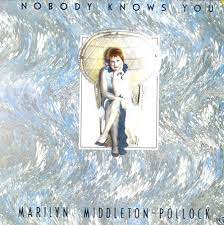
Marilyn Middleton Pollock, born October 25, 1947 in Chicago, Illinois began singing folk music professionally at the age of fifteen. Expanded her repertoire to include rock & roll and blues, she then turned to jazz.
By the end of the 1980s Marilyn had moved to England where she worked with Max Collie, touring with him internationally. Their album Nobody Knows You received the Music Retailers Association Award for Excellence in 1988. She appeared in the theater show A New Orleans Mardi Gras and then in her critically acclaimed solo shows Those Women of the Vaudeville Blues and Jazz Me Blues.
From 1994 she produced the series Vaudeville, Red Hot and Blue for BBC Radio 2 with her jazz band The Chicago Hoods. She toured Great Britain several times with her band.
Vocalist Marilyn Middleton Pollock continues to perform, tour and record.
More Posts: bandleader,instrumental,jazz,music,vocal