

Three Wishes
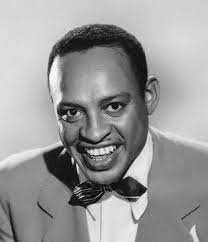
Pannonica finally got the opportunity to ask Lionel Hampton what he would wish for and his retort was:
-
- “To be in tune with jazz. Jazz to me is like the human emotion of the Negro. From the time he was in bondage praying to God to give him freedom – that was the blues then, coming from the spiritual vein – and when he was freed some, he would make jazz more happy. It was coming from the Negroes. From the time of the slave in the cotton fields, swinging up, you dig? From the time it got popularized and commercial, and left the cotton fields and railroad tracks, and they were putting it in the cafes. It was the days of King Oliver and Sidney Bechet..”
- “The colored man always has been the one to change the color of jazz. As the country advanced, they changes the music. It’s always been moving along, integrated by Negroes, turning to his feelings as he advanced. From Louis Armstrong up to Fletcher Henderson, Don Redman, Edgar Sampson, and Sy Oliver. They started changing the picture of jaz. It was their orchestrations, their chart that made jazz. They began writing arrangements for Benny Goodman, Tommy Dorsey, and so on – for the ofay bands. fats Waller, Jimmie Lunceford, those guys were all great arrangers. Then Monk, Dizzy, Prez, Don Byas, and Charlie Parker, they came in, all influencing the music, all great instrumentalists. As the Negro got free he added more ingredients. You’d need an encyclopedia to tell it all. I hope I’ll always be tuned so I can dig the transitions in jazz. Because there are more transitions coming.”
- “Lots of white folks write about jazz, but they don’t know the pains of it. You should be the one to write about it, because you understand. And musicians will talk to you. Gotta get down on that stand now, but I’ll be over to your pad tomorrow, and we’ll do this with the tape recorder. It’ll take another three of four hours, at the very least. I’ve not done more than get started on the first answer yet, you dig?”

More Posts: bandleader,baroness,history,instrumental,jazz,music,pannonica,percussion,piano,three,vibraphone,wishes
Daily Dose Of Jazz…
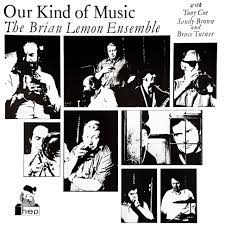
Raymond Crane was born on October 31, 1930, Skegness, Lincolnshire, England. Refusing to become discouraged with a music instructor who regarded his tooth unsuitable for his designed profession, he started playing trumpet around his city. After being employed in the East Midlands for several years, playing in groupings like the Mercia Jazz Music group, in 1963 he became a member of Bruce Turner’s Leap Music group. This brought him to the attention of the much wider market through concerts and information, such as Heading Places.
Afterwards he played in groups led by Brian Lemon, with whom he previously proved helpful while they had been still in the Midlands, and Stan Greig. Crane frequently accompanied American jazzmen, including Henry “Crimson” Allen, Ray Nance and Costs Coleman.
He occasionally performed as a pianist, which proved helpful to his being a musical pedagogue, teaching and leading a youth jazz band which graduated Martin Taylor and Guy Barker.
Trumpeter Ray Crane, who was a fiery, swing-era-rooted player, transitioned on June 29, 1994 at the age of 63.

More Posts: history,instrumental,jazz,music,trumpet
Daily Dose Of Jazz…
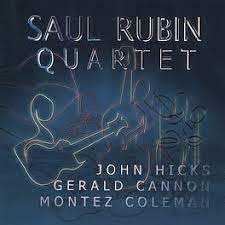
Saul Rubin was born in New York, New York on October 30, 1950. He studied at Hartt College in Hartford, Connecticut and was taught by jazz masters. He graduated with a Undergraduate Degree in Composition in 1980.
An accomplished guitarist Saul’s career has taken him around the world as well as occupying a place in the New York jazz scene as a musician, producer, impresario and personality. He is a regular member of Roy Hargrove’s Big Band sitting in the guitar seat as well as writing charts for the band.
He has shared the stage and studio with Sonny Rollins, Kirk Lightsey, Victor Lewis, Jonathan Batiste, Bob Cranshaw, Gregory Porter, Renee Fleming, John Hicks, Johnny O’Neal, Hank Jones, Frank Wess, Candido, Winard Harper, Larry Willis, Eric Revis, Sherman Irby, Thomas Chapin, Lew Soloff, and countless others.
Rubin has produced countless recordings and live shows, has run his infamous long- running weekly Jazz Vocalist Series at his ZEB’S performance space and studio, and has played host to many of the world’s greatest jazz artists. This intimate “loft Jazz” style venue became a go-to place for musicians in New York from 2009 to 2016.
His last album as a bandleader aptly entitled, Zeb’s House, is a tribute to the community of great artists, showcasing both his irrepressible sense of humor as well as his signature gritty, purposeful, urbane sensibility, throughout a mix of both originals and standards.
Guitarist, composer and producer Saul Rubin continues to perform and record.
More Posts: composer,guitar,history,instrumental,jazz,music,producer
Requisites
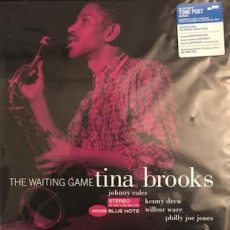
The Waiting Game ~ Tina Brooks | By Eddie Carter
Tina Brooks enters this morning’s spotlight with what would be his final album, The Waiting Game (Blue Note TOCJ-66075). He recorded exclusively for Blue Note over three years as a leader and sideman, but only one of his records, True Blue, would be released during his lifetime. This morning’s album initially hit the Japanese stores in 1999 as a CD album and reached the US a few years later. Joining the tenor saxophonist is a superb supporting cast: Johnny Coles on trumpet, Kenny Drew on piano, Wilbur Ware on bass, and Philly Joe Jones on drums. My copy is the 2021 Blue Note Tone Poet Series Stereo audiophile reissue (BST-40536).
Side One starts with Talkin’ About, the first of five tunes by Tina Brooks. The rhythm section’s introduction segues into the quintet’s easygoing melody. Johnny has the first relaxing solo; and then Tina delivers the next message comfortably. Kenny follows with a laid-back reading, and Wilbur goes for an easy stroll into the ensemble’s reprise. One For Myrtle picks up the pace significantly from Philly’s brief introduction to the group’s brisk theme. Tina launches the solos; then Johnny shows his energetic exuberance next. Kenny follows with a sizzling reading. Wilbur is up next with a quick flight, and Philly turns in an exciting finale ahead of the theme’s restatement and abrupt ending.
Dhyana opens with the ensemble swinging easily on the danceable melody. Tina gets things going with a splendid opening statement. Johnny follows with a delightful reading, and Kenny closes with an exceptional solo. The quintet’s closing chorus features a brief comment by Wilbur just before the climax. Side Two comes to life with the front line and Philly collaborating in the introduction to David The King ahead of the quintet’s Middle Eastern theme. Johnny takes the song’s first stirring solo. Tina sails smoothly into the second statement. Kenny delivers a dazzling reading of his own, and Wilbur takes a short, satisfying walk toward the song’s conclusion.
Stranger In Paradise by Chet Forrest and Robert Craig Wright begins with a brief introduction by Philly that blossoms into Tina and the rhythm section stating the melody. Johnny steps up first with an impressive statement. Tina swings skillfully next, and Kenny glows brightly on the closer, leading to the reprise and gentle fadeout. The Waiting Game kicks off with the ensemble’s invigorating beat to the melody. Tina blows with feeling in the first solo spot, paving the way for Johnny’s spontaneous ideas that flow constantly. Kenny ends with a few marvelously executed ideas before the theme’s restatement and abrupt halt.
Alfred Lion produced the original session, and Rudy Van Gelder was the recording engineer. Joe Harley produced the audiophile reissue, and Kevin Gray mastered this album. The reissue’s sound quality is amazing, with a stunning soundstage and excellent dynamics. The pressing is extremely quiet until the music starts. The gatefold photos are breathtaking and worthy of hanging on your wall. The front and rear covers are gorgeous, and the use of 180-gram audiophile vinyl is the icing on the cake. If you’re in the mood for an excellent album by one of the best, underrated tenor saxophonists, I invite you to check out The Waiting Game by Tina Brooks on your next record-shopping trip. It’s a great album if you love jazz and are a hard-bop fan that’s highly recommended for a spot in your library!
~ True Blue (Blue Note BLP 4041/BST 84041) – Source: Discogs.com ~ Stranger In Paradise – Source: Wikipedia.org © 2023 by Edward Thomas Carter

More Posts: choice,classic,collectible,collector,history,instrumental,jazz,music,saxophone
Daily Dose Of Jazz…
Rolland Pierce “Rollie” Culver was born on October 29, 1908 in Fond du Lac, Wisconsin. His first entry into professional entertainment was as a tap dancer, but after 1930 he concentrated on drumming.
He played in the territory band of Heinie Beau for most of the 1930s, then, in 1941, began playing with Red Nichols. He drummed behind Nichols for more than twenty years, working with him right up to Nichols’s death in 1965.
Other associations include work with Jack Delaney and Raymond Burke. He became a session musician for film soundtracks. Drummer Rollie Culver transitioned on December 8, 1984 in Culver City, California.
More Posts: drums,history,instrumental,jazz,music