

Daily Dose Of Jazz…
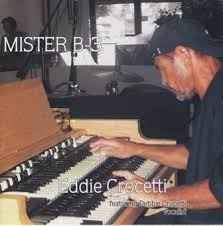
Eddie Crocetti was born on June 25, 1943 in Baltimore, Maryland. His interest in music came when he heard a band perform in his father’s bar and he was drawn into the world of professional music. His father immediately purchased him his first set of drums and he began studying drums and piano. By the time he was 14 years old, he was playing professionally for the local musicians of the city. He went on to study the organ.
Eddie married at age 19 and began his family all while entertaining and delighting audiences with his own personal musical approach. For the past 25 years he has been playing alongside Dizzy Gillespie, James Moody, Ira Sullivan, Nat Adderley, Joe Venuti, Allen Harris, Toni Bishop, and more. Beyond jazz he has worked with Robert Goulet, Carole Lawrence, The Smother’s Brothers, The Drifters, The Coasters, The Platters, Fats Domino, Lucy Arnaz, Bill Cosby, Donald O’Connor, Patti Page and Julio Iglesias among others.
In 2001, Crocetti found his soulmate and formed the jazz group Perfect Fusion, which includes his new bride. This led to his release of a jazz organ recording. His wife lent vocals to one of his original works.
Organist Eddie Crocetti currently performs in jazz venues across the United States.

More Posts: bandleader,drums,history,instrumental,jazz,music,organ
Daily Dose Of Jazz…
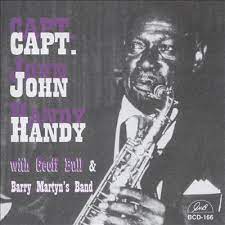
Captain John Handy was born on June 24, 1900 in Pass Christian, Mississippi. His father, John Handy Sr., had a family band that included two of his brothers, Sylvester and Julius. Although he also played guitar, mandolin, and drums at an early age, he chose reeds to develop his professional musical career, beginning with clarinet and then migrating to saxophone.
He moved to New Orleans, Louisiana in 1915 and during the 1920s played clarinet working with Kid Rena and Punch Miller. He switched to alto saxophone in 1928. From the early 1930s he led the Louisiana Shakers with his brother Sylvester, and toured throughout the South. In the latter 1930s Handy worked with Charles Creath in St. Louis, Missouri.
Captain John returned to New Orleans in the 1940s, where he performed with the Young Tuxedo Brass Band. Handy was interviewed several times for the Hogan Jazz Archive at Tulane University in New Orleans in the late 1950s and early Sixties. During the 1960s, he played with Kid Sheik Cola and the Preservation Hall Jazz Band and recorded for GHB, RCA, and Jazz Crusade.
Alto saxophonist Captain John Handy, who was part of the New Orleans jazz revival, transitioned in New York on January 12, 1971 at the age of 70.
More Posts: bandleader,clarinet,history,instrumental,jazz,music,saxophone
Daily Dose Of Jazz…
Hank Shaw was born Henry Shalofsky was born June 23, 1926 in London, England. At the age of 15 he played with Teddy Foster’s band during World War II. In the latter half of the decade he played around his hometown with Oscar Rabin, Frank Weir, and Tommy Sampson, then switched permanently from swing to playing bebop music in 1946 after hearing Dizzy Gillespie.
Visiting the United States in 1947 he came with close friend and fellow pioneer bebopper altoist Freddy Syer. However, unable to secure work permits they moved to Canada where they played with Oscar Peterson and Maynard Ferguson. Returning to England in 1948, Hank was one of the early Club Eleven players, along with Ronnie Scott, John Dankworth, Lennie Bush, and others. He also played with many of these musicians on the recordings of Alan Dean’s Beboppers.
After Club Eleven shuttered, Shaw played with Vic Lewis and toured Europe with Cab Kaye, then joined Jack Parnell’s ensemble in 1953 and Ronnie Scott’s nonet in 1954. He joined Jamaican alto saxophonist Joe Harriott in his celebrated quintet in 1958 but left with pianist Harry South when Harriott sought to introduce his “free-form” concept. Shaw played regularly both live and as a session musician for many British jazz musicians over the course of the next twenty or so years, working with Joe Harriott, Tony Crombie, Don Rendell, Tony Kinsey, Stan Tracey, Bill Le Sage, and others.
He led a quartet at the 100 Club in the Sixties, and played in the Bebop Preservation Society and the John Burch Quartet for over two decades each. He retired due to ill health in the late 1990s. Bebop trumpeter Hank Shaw transitioned four months past his 80th birthday on October 26, 2006 in Kent, England.
More Posts: bandleader,history,instrumental,jazz,music,trumpet

The Jazz Voyager
This week the Jazz Voyager is flying out of Paris and is off to Denmark’s capital city to be part of the audience in the legendary jazz venue, Jazzhus Montmartre. The club gained its status as one of Europe’s preeminent venues during the Sixties when homegrown world class stars such as bassist Niels Henning Ørsted Pedersen emerged. Soon Black musicians Coleman Hawkins, Dexter Gordon and Ben Webster, worn down by their treatment at home became Copenhagen residents and were intrigued by the warmth shown to them by Scandi audiences.
There I’ll be witness to a jazz competition between three up and coming jazz groups with their own take on where the music is heading. The jazz competition focuses on the development of young jazz musicians by offering them the opportunity to play live at professional venues, get professional feedback on their music, coaching and the opportunity to be exposed on the radio via P8 Jazz.
Kosmos Trio plays modern jazz in a minimalist and Nordic-sounding sound universe. The trio speaks a simple and understandable language via complex compositional ideas. This field of tension makes them an interesting and wide-ranging group that ensures a present and great concert experience. The trio is Frede Holger: Piano, Harald Hagelskjær: bass, Gustav Hagelskjær: drums.
KÖZ is a burgeoning band with origins in the Roots & Hybrid scene in Aarhus. The band fuses genres and styles from distant lands with modern western tones. The music encourages dancing as well as reflection. Rock, hip-hop, jazz and Afro-grooves are mixed with odd tones and time signatures and melancholic floating universes from the cold north. :The group is Anne Skov Frost Jensen, vocals & trombone, Alma Hjelholt: vocals & trumpet, Aske Høj Krogh: bass, Bjarke Frandsen Andersen: keys & rap, Frederik Lyhne Uhrenholt: guitar, Jacob Tang Maunsbach: guitar, Johanna Mosbech: vocals & trumpet , Mathias Ploug: drums.
Aske Stubkjær plays Nordic-sounding jazz with an experimental approach. The tracks emerge from visual and auditory observations from everyday natural actions. He captures situations in the present, and tries to embrace the moment in his music by using real sound and integrating the moments in the tracks. The duo is Aske Stubkjær: piano, Daniel Skov: guitar & synthesizer.The club is located at Store Regnegade 19A, 1110 Copenhagen K. For more info the number is 70 20 20 96.

More Posts: adventure,album,club,competition,festival,genius,jazz,museum,music,preserving,restaurant,travel
Daily Dose Of Jazz…
Lemuel A. Davis was born in Tampa, Florida on June 22, 1914. He started playing alto saxophone in high school and worked in semi-pro bands before moving to New York City in the early Forties. There his career started with pianist Nat Jaffe. He went on to play with the Coleman Hawkins Septet in 1943 and with Eddie Heywood’s group.
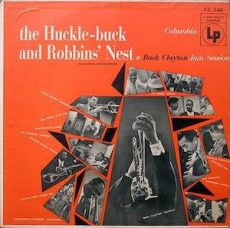
Throughout the 1940s, he played in a variety of jazz groups. Lem composed the bebop tune Lem Me Go in 1946 and recorded it with Eddie Safranski’s All Stars along with Vido Musso, Sanford Gold and Denzil Best. Then in 1953 he appeared on Buck Clayton’s The Hucklebuck recording. He continued playing in New York City throughout the 1950s, recording four albums with Buck Clayton between 1954 and 1956. He recorded little thereafter.
Alto saxophonist Lem Davis, mostly associated with swing music, transitioned on January 16, 1970 in New York City.
More Posts: history,instrumental,jazz,music,saxophone