

Requisites
Mirage ~ Art Farmer Quintet | By Eddie Carter
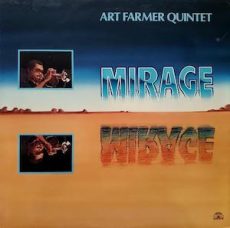
The word mirage, defined in the Merriam-Webster Dictionary, is “something that is believed to be true or real but is actually false or unreal.” This morning’s record from the library by The Art Farmer Quintet is an excellent Hard-Bop release that’s certainly not a Mirage (Soul Note SN 1046). This album marked a reunion for the leader and Clifford Jordan. They’d known each other for a long time but only recorded occasionally. The group is Art Farmer on flugelhorn, Clifford Jordan on tenor sax, Fred Hersch on piano, Ray Drummond on double bass, and Akira Tana on drums. My copy is the 1982 Italian Stereo release with a cover variation.
Side One starts with Barbados by Charlie Parker. Akira and Ray bring the song to life with two concise comments that segue into the quintet’s inviting theme. Art opens things up with an easygoing solo. Clifford follows with a few leisurely flowing lines, then Fred concludes with a carefree statement into the closing chorus and fades out. Passos by Fritz Pauer has a Bossa-Nova beat in its structure. The song’s title means “steps” in Portuguese, and the group moves unhurriedly through the melody. Farmer sets the mood with a relaxing solo, followed by Jordan’s laid-back reading. Hersch ends with a delightful interpretation as refreshing as a gentle breeze leading to the ensemble’s exit.
My Kinda Love by Louis Alter and Jo Trent is an old song that the group freshens up with a soothing theme. Jordan’s opening solo is as relaxing as a cup of chamomile tea; then Farmer moves into the next reading with cat-like ease. Hersch follows with a soulful charm next, and Drummond goes for a leisurely walk toward the reprise and close. The title tune, Mirage, is a thoughtfully tender ballad by Fred Hersch that begins Side Two with the quintet’s polite opening chorus. Farmer opens with a deeply lyrical statement that hits the sweet spot. Jordan infuses the second solo with an expressive beauty, and Hersch carries things to a gorgeous climax in an intimate finale.
Cherokee Sketches by Fritz Pauer starts with a melody reminiscent of Thelonious Monk. Art speeds out of the gate like a rocket, then Clifford flies down the road like the Road Runner. Fred shifts into high gear on the following solo. Akira shares the first part of his statement with the front line before embarking on an explosive run ahead of the reprise and exit. Smiling Billy is Jimmy Heath’s tribute to drummer Billy Higgins. It gets underway with the quintet’s lightly swinging melody. Drummond opens with a relaxed statement, and Farmer makes his mark in a gorgeous solo. Jordan succeeds him with a tasty reading; afterward, Hersch has the last word ahead of the theme’s return.
Art Farmer produced Mirage, and Giovanni Bonandrini was the executive producer. Dave Baker was behind the dials of the recording session. The sound quality is excellent, with a superb soundstage that brings the musicians to your listening room in stunning detail. Both front and rear covers also have a nice gloss. If you’re an Art Farmer fan and are in the mood for a Hard-Bop album, I’m pleased to recommend and invite you to consider Mirage by The Art Farmer Quintet on your next vinyl shopping trip. It’s a gorgeous release with an outstanding lineup that will take your breath away each time you listen!
Postscript: A second album cover of Mirage was released in 1982 with two mirror image photos of Art Farmer.
~ Passos – Source: Album liner notes by Ira Gitler ~ Barbados, My Kinda Love – Source: Wikipedia.org © 2023 by Edward Thomas Carter For the serious collector of jazz… #Jazz #Classic #Collectible #Music #Notorious
More Posts: choice,classic,collectible,collector,history,instrumental,jazz,music,trumpet
Daily Dose Of Jazz…
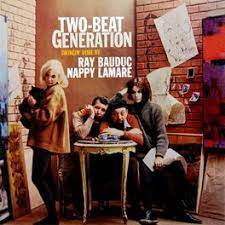
Ray Bauduc was born June 18, 1906 in New Orleans, Louisiana and was the son of cornetist Jules Bauduc, his older brother was a banjoist and bandleader, and his sister was a pianist. His youthful work in New Orleans included performing in the band of Johnny Bayersdorffer, and on radio broadcasts. His New Orleans origin instilled in him a love for two-beat drumming, which he retained when he played with Bob Crosby’s swing-era big band.
Moving to New York City in 1926 he joined Joe Venuti’s band. During the 1920s he recorded with the Original Memphis Five and the Scranton Sirens, which included Tommy and Jimmy Dorsey. His time with the Bob Crosby Orchestra brought him national fame and Bauduc and bassist Bob Haggart composed two hits for the orchestra, South Rampart Street Parade and Big Noise from Winnetka, which has become a jazz standard.
After his discharge from the Army in 1944, he and former Crosby group leader Gil Rodin formed a short-lived big band. He toured with a septet in 1946 and also worked in Tommy Dorsey’s orchestra for a couple of months that year. By 1947, he joined Bob Crosby’s new group, then left to play with Jimmy Dorsey where he stayed for the next two years. He freelanced on the West Coast for a couple of years before joining Jack Teagarden in 1952. In 1955, he formed a band with Nappy Lamare which found considerable success, touring nationally and recording several albums.
From 1960 Ray went into semi-retirement and relocatred to Bellaire, Texas but visited New Orleans in 1983. He appeared occasionally at Crosby Orchestra reunions, worked with Pud Brown on several recordings, and played with the Market Square Jazz Band headed by James Weiler in the early 1980s in Houston.
A trend setter in traditional jazz circles, his precise, disciplined, yet fiery patterns and syncopated fills, helped New Orleans drummers make the transition into swing from the rigid, clipped progressions that had defined the previous era. His use of woodblocks, cowbells, China cymbals, and tom-toms distinguished him from most drummers of the swing era, and made him one of the few white drummers to be influenced by Warren ‘Baby’ Dodds. Drummer Ray Bauduc, who authored two books on drumming, transitioned in Houston, Texas, on January 8, 1988.
More Posts: bandleader,drums,history,instrumental,jazz,music

Daily Dose Of Jazz…
Jaimie Breezy Branch was born June 17, 1983 in Huntington, New York and started playing trumpet at age nine. At 14 she moved to Wilmette, Illinois, a suburb of Chicago. She attended the New England Conservatory of Music and after graduating moved back to Chicago and began working as a musician, organizer, and sound engineer on the local music scene. She performed in Chicago and New York with her trio Princess Princess, with bassist Toby Summerfield and drummer Frank Rosaly, and in other trios before founding the band Block and Tackle with Jason Stein, Jeb Bishop, and Jason Roebke.
By 2012 Branch had moved to Baltimore, Maryland where she worked toward a master’s degree in Jazz performance from Towson University. At this time she also founded the record label Pionic Records, which released the music of her group Bomb Shelter. After two years, she dropped out of Towson, and six months later she moved to New York to seek treatment for heroin addiction.
In 2015 Jaimie moved to Brooklyn, New York where she began working with Fred Lonberg-Holm, Mike Pride, Luke Stewart, Jason Nazary, Tcheser Holmes, and many more. In addition, she performed on albums with independent rock groups. In 2017 she released her debut solo album, Fly or Die, with Tomeka Reid, Jason Ajemian, Chad Taylor, Matt Schneider, Ben LaMar Gay, and Josh Berman. Fly or Die was chosen as one of NPR Music’s Top 50 Albums of 2017.
Citing Don Cherry, Axel Dörner, Booker Little, Miles Davis, and Evan Parker among her musical influences. Jaimie Branch transitioned at home in the Red Hook section of Brooklyn on August 22, 2022, at the age of 39.
More Posts: bandleader,history,instrumental,jazz,music,trumpet

Daily Dose Of Jazz…
Lou Gare was born Leslie Arthur Gare on June 16, 1939 in Rugby, Warwickshire, England. He is best known for his works with the improvised music ensemble AMM and recorded six albums with the group and another two as a soloist.
Eventually settling in the West Country, he still played in relative obscurity. Then Lou joined a big band that became The Uncommon Orchestra. He remained with them until health problems limited his participation.
Throughout his career he played with musicians such as Eddie Prévost, Mike Westbrook, Cornelius Cardew, Keith Rowe and Sam Richards
Free-jazz tenor saxophonist Lou Gare transitioned on October 6, 2017.
More Posts: history,instrumental,jazz,music,saxophone
The Jazz Voyager
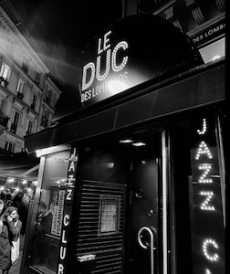
From Italy to the Czech Republic to France is a journey that has led this Jazz Voyager to the long-running jazz club Le Duc des Lombards where American pianist Bobby Few opened the venue, then called the Bar de l’Etoile. With an upright piano under the stairs they have been hosting diverse artists for nearly 40 years.
The venue has been the essential club in Paris offering an intimate setting with drinks & nibbles. Decorated by the American designer Elliot Barnes, the club has become the Parisian reference for jazz clubs. Performances are Monday to Saturday and its free entry Jams every Friday and Saturday beginning at 11:30 p.m.
This week I will be in the 10:00pm audience to partake of the talents of drummer and vocalist Roni Kaspi and her trio with Oxy on Keyboards & synthesizer and bassist Noé Berne. Later that night the jam session commences where musicians, young and old come to improvise, explore and learn.
Located at 42, rue des lombards 75001 Paris, more information can be attained by calling 01.42.33.22.88.

More Posts: adventure,album,club,drums,festival,genius,jazz,museum,music,preserving,restaurant,travel