

Daily Dose O fJazz…
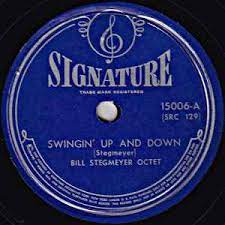
Bill Stegmeyer was born October 8, 1916 in Detroit, Michigan. He attended Transylvania College in Lexington, Kentucky from 1934 to 1936, and following his studies he played through the rest of the decade with Austin Wylie, Glenn Miller, and Bob Crosby.
In the 1940s, he did arrangement work and played clarinet and occasionally, saxophone with Billy Butterfield, Yank Lawson, Bobby Hackett, Will Bradley, and Billie Holiday from 1945 to 1947. He arranged for WXYZ, a Detroit radio station, for two years starting in 1948, then followed this with arranging Your Hit Parade for eight years.
In the 1950s he also continued to play jazz with Lawson, Butterfield, Bob Haggart, Jimmy McPartland, and Ruby Braff. He went to work for CBS in the early 1960s.
Clarinetist and arranger Bill Stegmeyer, whose only recordings as a leader were five tunes for Signature Records in 1945 and some V-Discs, transitioned from cancer in Long Island, New York on August 19, 1968 at the age of 51.

More Posts: arranger,bandleader,clarinet,history,instrumental,jazz,music
Daily Dose Of Jazz…
Alton “Slim” Moore was born October 7, 1908 in Selma, Alabama and began on baritone horn before settling on trombone by age 17. He played with local bandleaders and territory bands in his youth, such as Georgia Barlowe, Eddie Lemon, Gonzelle White, and Gene Coy.
Moving to New York City early in the Thirties he played with Jack Butler, Charlie Skeete, and Bobby Neal. Frequently switching ensembles in New York, in 1938 he did a short tour of Cuba with the Leon Gross Orchestra. Toward the end of the decade Moore moved up to play in more high-profile bands such as those of Fats Waller, Coleman Hawkins, Hot Lips Page, and Charlie Johnson. In the 1940s he played with Ella Fitzgerald, Benny Carter, Dizzy Gillespie and Louis Armstrong.
By the 1950s Slim had reduced his outings to part-time playing, after an extended stay in the band of Stafford “Pazuza” Simon. He would go on to play with Fletcher Henderson in 1957, and in the 1960s played in the Prince Hall Symphonic Band in New York as well as other big band revival outfits.
Trombonist Slim Moore, who also played and recorded on euphonium and did some scat singing, transitioned in 1978 in New York City.
More Posts: euphonium,history,instrumental,jazz,music,trombone

The Jazz Voyager
Back to the Big Apple for this Jazz Voyager to finally hear the luscious voice of Denise King at Minton’s Playhouse 206 West 118th Street, Harlem, New York. This was one of my hangouts in the Seventies when I needed to get away from the R&B and just chill with an appreciative crowd. Harlem was home once I crossed 110th and Lenox. And like everywhere I go, I will be wearing my N95!
To that point, I will be flying in a day ahead and once again come to Harlem to experience vocalist Denise King on October 7th. She has two sets, the former beginning at 7:00pm, the latter set at 9:30, of which I will be attending. Doors open an hour before showtime. The cover is $25.00 with a $20.00 minimum per guest. For additional information, the number is 212-866-1262 or mintonsharlem.com.
This vocalist overflows with energy, enjoying herself as she swings and interprets. She places the listener at the scene to experience every nuance that each character in the song portrays, be it one or many. She lives within each song and brings you along for the ride, be it gospel, r&b, soul, jazz or the Great American Songbook.
And of course this is the city that never sleeps, so I will carouse through the late night haunts of Harlem, Broadway Uptown or head downtown to The Village or may even go across the bridge to Brooklyn while I’m there through the weekend. But Miss King is my priority on this sojourn!

More Posts: adventure,album,club,festival,genius,jazz,museum,music,preserving,restaurant,travel,vocal

Daily Dose Of Jazz…
Ami Nakazono was born on October 6, 1986 in Kagoshima, Japan and began classical piano lessons at the age of 4. By 12 she was playing the alto saxophone and joined her school brass band. After two years, she won the “City Solo Instrumental Competition.” At the same time she was offered a full scholarship to study music at Fukuoka Daiichi High School in Fukuoka, Japan, where she studied classical music, theory, ear training, harmony, and brass band skills.
After graduation, she entered Senzoku Gakuen University, Japan’s most prestigious university, with a jazz major. During this time, Ami formed her own band and began playing gigs in and around Tokyo, Japan. Again two years later in 2007 she accepted a scholarship from Berklee College of Music, moved to Boston, Massachusetts and continued to perform and study under Walter Beasley, Dino Govoni, Bill Pierce, Shannon LeClaire and Jeff Harrington, and flute with Mia Olson. In 2008 with mentor and inspiration George W. Russell Jr., the two worked on several collaborations during this period at Berklee.
Nakazono began performing internationally with the acclaimed band, Violette, headed by French jazz singer~songwriter Violette De Bartillat. In 2010 she recorded for two critically praised albums, Joie de Vivre with Violette and Shine with George W Russell Jr.
Saxophonist Ami Nakazono is currently an active member of Boston’s entertainment group Raw Ambition and continues to perform at prestigious venues and festivals across the United States.
More Posts: bandleader,history,instrumental,jazz,music,saxophone
Daily Dose Of Jazz…
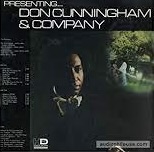
Alicia Cunningham was born Alicia Rodriguez of Mexican heritage on October 5, 1946 in Los Angeles, California. A classically trained vocalist and pianist, she worked in the L.A. studios and as an educator at Loyola University in her early years.
Meeting her husband Don was fortuitous when he moved to Los Angeles in the early 70s. Their combination of his jazz-influenced energetic singing style and Alicia’s fluid, clear and lyrical sound, established a solid reputation. This would lead to a tour with Count Basie in Europe for five months at major events and jazz festivals in England and Switzerland.
She was an intricate and melodic harmonizer and arranger and paired with the Cunningham stage presentation, they offered enormous panache. They not only kept her hometown audiences satisfied but they traveled around the country and the world thrilling listeners in Europe, Canada, Singapore, Brazil, Japan, Indonesia and South Korea.
In 2012, they released their final album together titled Sao Paulo Lights that was recorded in Brazil. In the autumn of 2014, Alicia made her last performance in St. Louis when Don received a St. Louis Jazz Hall of Fame Award.
Vocalist Alicia Cunningham, who sang hard jazz, transitioned in Las Vegas, Nevada on December 23, 2014 at the age of 68 after battling cancer for a year.
More Posts: arranger,bandleader,history,instrumental,jazz,music,vocal