


Daily Dose Of Jazz…
Buddy Petit was born Joseph Crawford on May 25, 1897 in White Castle, Louisiana. His early life is somewhat mysterious but he was adopted by trombonist Joseph Petit, whose name he took.
Taking Freddie Keppard’s place in the Eagle Band, a place earlier held by Buddy Bolden, when Keppard left town. Briefly lured to Los Angeles, California by Jelly Roll Morton and Bill Johnson in 1917, but objecting to being told how to dress and behave differently from what he was accustomed to he returned to New Orleans, Louisiana.
Buddy spent the rest of his career in the area around greater New Orleans and the towns north of Lake Pontchartrain, not venturing further from home than Baton Rouge and the Mississippi Gulf Coast.
Okeh Records offered him a chance to record on their 1925 field trip to New Orleans, but Petit held out for more money and was never recorded. Danny Barker and Louis Armstrong said that it was a great loss to jazz history that there are no recordings of Petit.
After over-indulging in food and drink, cornetist Buddy Petit, which was sometimes spelled Buddie, transitioned on July 4, 1931.

More Posts: cornet,history,instrumental,jazz,music
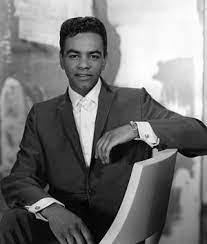
Three Wishes
What Johnny Mathis responded to the question posed by Baroness Pannonica was one word answers as to his three wishes:
-
-
“Love.”
-
“Kindness.”
- “Tactfulness.
-
*Excerpt from Three Wishes: An Intimate Look at Jazz Greats ~ Compiled and Photographed by Pannonica de Koenigswarter

More Posts: baroness,history,instrumental,jazz,music,pannonica,three,vocal,wishes
Daily Dose Of Jazz…
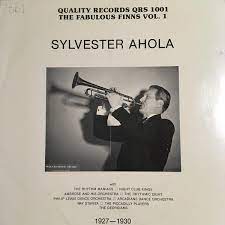
Sylvester Ahola was born on May 24, 1902 in Gloucester, Massachusetts. His parents, Sophia and John Ahola, were born in Finland. He became most popular in England rather than the United States.
He first began performing with Frank Ward and His Orchestra. In 1925 he started playing with Paul Specht and His Orchestra, with whom he did a two-month-long tour of England that following year. For the next couple of years he performed with bands like The California Ramblers and Adrian Rollini and his band.
1927 saw Ahola moving to England and landing a job playing with the Savoy Orpheans. He went on to gig with Bert Firman and Bert Ambrose. The British Musicians’ Union, unhappy to see a foreigner land so many jobs and attain so much success, effectively prohibited him from playing with anyone other than Bert Ambrose. This forced him to eventually leave in 1931 and return to New York City.
Throughout the rest of his career he never again achieved the level of success he had enjoyed during his time in England. Trumpeter and cornetist Sylvester Ahola, also known as Hooley, transitioned on February 13, 1995.

More Posts: bandleader,cornet,history,instrumental,jazz,music,trumpet
Daily Dose Of Jazz…
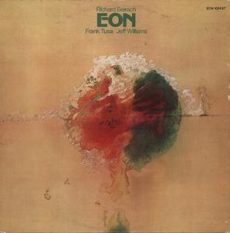
Richard Alan Beirach was born on May 23, 1947 in New York City, New York and initially studied both classical music and jazz. While still attending high school, he took lessons from pianist Lennie Tristano. He later studied at the Berklee College of Music, however, after one year he left and began attending the Manhattan School of Music. While there, he studied with Ludmilla Ulehla.
In 1972, graduating from the Manhattan School of Music he took with him a Master’s Degree in Music Theory and Composition. Beirach’s style is influenced by Art Tatum, Bill Evans, McCoy Tyner, and Chick Corea along with his earlier classical training and many touches of his individualism all its own.
He recorded 57 albums as a leader and as a sideman with George Adams, John Abercrombie, John Scofield, Chet Baker, Dave Liebman, Jeremy Steig, Steve Davis, Laurie Antonioli, and the Ron McClure Trio he recorded 17. Pianist and composer Richie Beirach continues to perform, compose and record.
More Posts: bandleader,composer,history,instrumental,jazz,music,piano
Requisites
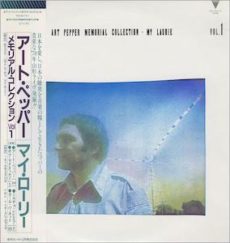
My Laurie ~ Art Pepper | By Eddie Carter
I’ve listened to and enjoyed the music of Art Pepper for many years. Despite his drug addiction and times spent in prison that interrupted his career, he recorded some great live and studio albums. My Laurie (Trio Records PAP-25037) is a 1978 live performance documenting the final part of a twenty-one-day, nineteen concert Japanese tour by the quartet. It was also the alto saxophonist’s first tour with his group, Milcho Leviev on piano, Bob Magnusson, on bass, and Carl Burnett on drums. My copy used in this report is the 1983 Japanese Mono release.
Side One starts with an original tune from Art’s pen, Ophelia. The quartet gets our fingers popping on the collective melody. Art is up first and sparkles brightly on the opening solo, then Milcho takes an infectiously swinging turn next. Bob comes in and has his say on a lively reading. Carl shares a feisty finale with Art ahead of the ending and the trio’s introductions.
Bésame Mucho by Consuelo Velázquez and Sunny Skylar is one of the most popular and recorded songs in jazz. Pepper stretches himself ambitiously on the vivacious introduction preceding the song’s theme. Art then tugs at our emotions with a heartfelt first solo. Leviev begins the second reading with a tender lyricism that soars briskly to a satisfying finish. Magnusson has a short say next leading to the foursome’s gorgeous exit and the crowd expressing their approval.
My Laurie is Art’s loving tribute to his wife occupying the second side. The ensemble makes a regal introduction into a gentle melody by the altoist. He makes a compelling case with two beautifully expressed readings culminating with appreciative applause from the audience at the song’s end. Sandwiched between Art’s solos is a tender interpretation by Milcho.
The concert was produced by Haruo Serikawa, the recording engineer was Morio Shoya, and the remastering for My Laurie is by James Mooney. The sound quality on Side One is excellent with a vibrant soundstage across the highs, midrange, and low end. On Side Two, there’s a slight bit of harshness during Pepper’s second solo on My Laurie. That said, I hope that won’t dissuade you from seeking out this album for a spot in your library. The highlight for me personally is Bésame Mucho, the quartet gives this old favorite new life with an exceptionally fresh and creative approach. There are three other live records in The Art Pepper Memorial Collection, and I’ll be on the lookout for them. If you’re a longtime fan of his or are just discovering his music, I hope you’ll consider My Laurie by Art Pepper on your next vinyl expedition. He’s in great form here and the rhythm section compliments him splendidly!
~ The Summer Knows, Vol. 2 (Trio Records PAP-25038), I’ll Remember April, Vol. 3 (Trio Records PAP-25041), A Night In Tunisia, Vol. 4 (Trio Records PAP-25044) – Source: Discogs.com ~ Bésame Mucho – Source: JazzStandards.com © 2022 by Edward Thomas Carter
More Posts: choice,classic,collectible,collector,history,instrumental,jazz,music,saxophone