

Three Wishes
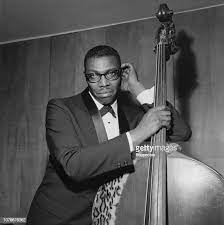
What Major “Mule” Holley told Pannonica when she asked him what his three wishes were was:
-
- “I’d like to have every person I come in contact with understand my true meaning.”
- “I would like to be always comfortable: enough money to allow myself to work if I felt like it, in health and strength..”
- “I would like to be able to repay, or reimburse in some measure, everyone who has helped me progress in my life.”

More Posts: baroness,bass,history,instrumental,jazz,music,pannonica,three,wishes
Daily Dose Of Jazz…
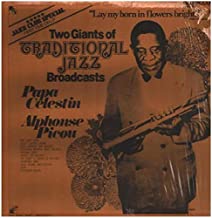
Alphonse Floristan Picou was born on October 19, 1878 in New Orleans, Louisiana into a prosperous middle-class Creole of Color family in downtown NOLA. Taking to music early by 16, he was working as a professional musician on both the guitar and clarinet, concentrating on the latter. To appease his family’s frown on music he trained and worked as a tinsmith, but in demand as a clarinetist, he made most of his living from music.
He played classical music with the Creole section’s Lyre Club Symphony Orchestra and played with various dance bands and brass bands including those of Bouboul Fortunea Augustat, Bouboul Valentin, Oscar DuConge, Manuel Perez, Freddie Keppard, Bunk Johnson, the Excelsior Brass Band, the Olympia Brass Band among others.
Due to his light-skin Picou sometimes worked with white bands as well in his youth. He was one of the early musicians playing in the new style that was developing in the city, not yet known as “jazz”. He sometimes played with Buddy Bolden, perhaps the most important force in the musical change. He was an influence for many of the up and coming younger clarinetists. His subtle variations are usually more melodic embellishments than what would later be called improvisation.
At least once he went north to Chicago, Illinois around 1917 and briefly to New York City in the early 1920s. Not liking life up North, he spent most of his career in his home city, writing tunes for King Oliver that included Alligator Hop and Olympia Rag.
Clarinetist and arranger Alphonse Picou, perhaps best known for originating the clarinet part on the standard High Society, passed away on February 4, 1961 in New Orleans.

More Posts: clarinet,history,instrumental,jazz,music
Daily Dose Of Jazz…
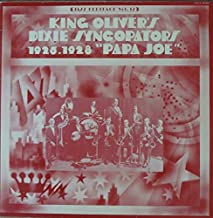
Paul “Stump” Evans was born in Lawrence, Kansas on October 18, 1904. He experimented with several instruments: alto horn, trombone, and alto saxophone. In the 1920s, he played baritone saxophone in Chicago, Illinois as a member of the Creole Jazz Band led by King Oliver and the Dixie Syncopators.
He played C melody saxophone when he backed singer Priscilla Stewart. With Oliver he played soprano saxophone, then alto saxophone with the Red Hot Peppers led by Jelly Roll Morton. Stump also worked as a sideman for Erskine Tate and Jimmy Wade.
Saxophonist Stump Evans passed away from tuberculosis on August 29, 1928. In Douglas County, Kansas at the age of 23.
Share a dose of a Lawrence saxophonist to inspire inquisitive minds to learn about musicians whose legacy lends their genius to the jazz catalog…
More Posts: history,instrumental,jazz,music,saxophone
Requisites
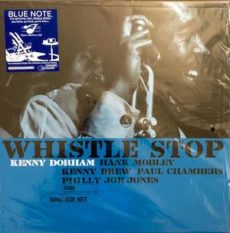
Whistle Stop ~ Kenny Dorham | By Eddie Carter
One of the biggest pleasures I get from listening to and discussing records from my library each week is I’m able to revisit favorite albums and artists to share my thoughts with my readers. If you’re a fan of Hard-Bop, this morning’s subject of discussion is one of the best by trumpet player, Kenny Dorham. Whistle Stop (Blue Note BLP 4063/BST 84063) was recorded and released in 1961 with a stellar supporting cast: Hank Mobley on tenor sax, Kenny Drew on piano, Paul Chambers on bass, and Philly Joe Jones on drums. Kenny was born in Fairfield, Texas; he played and recorded with many great jazz musicians during his lifetime. He was also a member of the orchestras of Billy Eckstine, Dizzy Gillespie, Mercer Ellington, and The Jazz Messengers. Dorham composed all seven tunes on Whistle Stop and my copy used in this report is the 2017 Music Matters Stereo audiophile reissue (MMBST-84063).
Side One starts with ‘Philly’ Twist, a driving blues that’s off to the races from the opening notes of Philly’s brief introduction into the quintet’s brisk melody. Kenny opens with a vigorously agile reading, then Hank wails convincingly on the second solo. Kenny sinks his teeth into the third performance vigorously. Paul is especially impressive on a concise statement ahead of Philly’s dazzling velocity and propulsive timing on the song’s finale. Buffalo is good soul-food cooking at midtempo with a carefree theme in unison. Mobley starts the soloing with four mellow verses. Dorham responds with a leisurely ride punctuated by the rhythm section’s groundwork. Drew keeps the laid-back feeling going with an infectiously swinging interpretation that’ll have the listener snapping their fingers and tapping their toes. Chambers wraps up everything with a short stroll anchored by only Jones into the reprise and exit.
Sunset closes the first side with the trio’s tastefully elegant introduction to one of the album’s loveliest tunes. Kenny on muted trumpet and Hank lead the quintet through a pretty mid tempo melody. Dorham remains on the mute for the opening statement, cooking easily. Hank strolls into the second performance with jaunty confidence. Kenny dips into a well of positive energy on the next reading. Paul adds the closing word with a feisty finale leading to a soft fade. Whistle Stop starts Side Two with the ensemble’s brisk melody. Mobley ignites the opening chorus with a fiery passion, then Dorham provides an electrically charged reading. Drew steps up next for a zesty performance of creative energy. Philly shares a moment with the front line in an exchange on the closing statement, before executing a lively finale preceding the climax.
Sunrise In Mexico has a soulful personality that comes alive as the day begins on the quintet’s theme. Dorham starts with a solid groove on the first interpretation. Hank demonstrates a lesson in musicality on the second reading. Kenny is as cool as the other side of the pillow on the next solo, and Paul swings softly on an effective closing statement ahead of the reprise and gentle dissolve. Windmill is an energized swinger right out of the gate beginning with a blazing melody. Dorham begins the lead solo with an aggressive fierceness, then Mobley makes searing heat on the second statement. Drew adds an abundant amount of high voltage to the third performance. Chambers walks with a happy bounce on an abbreviated reading. Jones breaks loose briefly on the finale with vivacious brushwork leading to the quintet’s high-spirited ending.
The album closes with Dorham’s Epitaph, a short, beautiful ensemble tune Kenny wrote for his passing. It illustrates his ability as a ballad composer and opens with a very gentle opening chorus by the leader complemented by the sentimental support by Hank and the rhythm section. An expanded version of this song was also written for a large orchestra and renamed Fairy Tale. Kenny Dorham continued recording excellent albums throughout the sixties that were easily the equivalent of those released by Miles Davis, Freddie Hubbard, and Lee Morgan, but sadly never received the recognition that might have catapulted him to stardom. He passed away at age forty-eight from kidney disease on December 5, 1972.
The mastering by Kevin Gray of Cohearent Sound and audio engineer Steve Hoffman is phenomenal and improves on the original recording by Rudy Van Gelder with a crystal-clear sound that’s demonstration class placing you in the studio alongside the musicians. Each of the MMJ reissues receives a great deal of care with attention to detail including high-definition gatefold photos, superb packaging of the covers, and 180-gram audiophile vinyl for the music. If you’re looking for a Hard-Bop album that’ll excite your ears, I invite you to audition Whistle Stop by Kenny Dorham. It’s a delightfully rewarding album by one of the best trumpet players in jazz that merits multiple listens and is worth adding to any jazz library!
© 2021 by Edward Thomas Carter
More Posts: choice,classic,collectible,collector,history,instrumental,jazz,music,trumpet
Daily Dose Of Jazz…
Leslie Anthony Joseph Thompson was born on October 17, 1901 in Kingston, Jamaica where as a child he studied music at the Roman Catholic Alpha Cottage School. When he was 16, he joined the West India Regiment and played in their band locally in Kingston movie palaces in the 1920s.
Moving to London, England in 1929 and studying at Kneller Hall. During this time he played euphonium and cornet. In 1930 he began playing with Spike Hughes, where he played trumpet, trombone, and double bass until 1932. Thompson toured Europe with Louis Armstrong, then formed his own band, intended to be all-black although initially with two white trombonists who blacked up. with the help of Ken “Snakehips” Johnson, who himself took over control of this band in 1936. Jiver Hutchinson was one of his sidemen.
In 1936–37 Leslie played with Benny Carter, and later played double bass with Edmundo Ros. He served in the Royal Artillery on the south coast during World War II. He had been unable to become a bandmaster in the army because of rules preventing black soldiers becoming officers. He was active in dance halls and nightclubs after the war, but stopped playing music professionally after 1954 and later became a parole officer.
His autobiography was first published by Rabbit Press in 1985, and was reissued as Swing from a Small Island – The Story of Leslie Thompson by Northway Publications in 2009. Trumpeter Leslie Thompson passed away on December 26, 1987 in London, England.
More Posts: history,instrumental,jazz,music,trumpet