

Daily Dose Of Jazz…
William Earnest Green was born on February 28, 1925 in Kansas City, Kansas and learned to play the alto saxophone at age ten, picking up the clarinet when he was twelve. He eventually learned to play most varieties of saxophone, clarinet, and flute.
Serving in the military until 1946, Green began working at a club called Small’s in Kansas City. Relocating to Los Angeles, California in 1947 he enrolled at the Los Angeles Conservatory of Music and Arts, and graduating in 1952 remained on staff as an educator until 1962. He also ran a music education studio on La Brea Avenue in Los Angeles for many years.
During his early career Bill played with Gerald Wilson, and began working with Benny Carter in the latter half of the 1950s. From 1959 to 1962 he played in Louie Bellson’s big band, then went to work extensively as a section player in the bands of Quincy Jones, Henry Mancini, and Buddy Rich. He would accompany vocalists such as Frank Sinatra, Tony Bennett, Nat King Cole, Nancy Wilson, and Dionne Warwick.
Through the mid to late Sixties he played the Monterey Jazz Festival with Gil Fuller, worked with Oliver Nelson, and then Blue Mitchell. The 1970s saw him performing or recording with Gene Ammons, the Capp-Pierce Juggernaut, Ella Fitzgerald, Sonny Rollins, and Sarah Vaughan. He continued working with the Capp-Pierce Orchestra in the early 1980s, as well as with Lionel Hampton, Woody Herman, and the Clayton-Hamilton Jazz Orchestra.
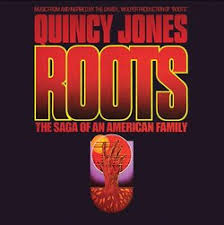
His most notable recordings are Benny Carter’s Aspects and the Quincy Jones recording of the soundtrack for Roots. Multi-instrumentalist Bill Green, who played most saxophones, clarinet and flute, passed away on July 29, 1996. His personal papers and recordings are archived at University of California, Los Angeles..

More Posts: clarinet,flute,history,instrumental,jazz,music,saxophone
Daily Dose Of Jazz…
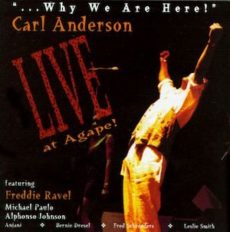
Carl Anderson was born Carlton Earl Anderson on February 27, 1945 in Lynchburg, Virginia, one of 12 children to James and Alberta Anderson. During his junior year of high school, he enlisted in the U.S. Air Force, where he served as a communications technician for two years. Honorably discharged and returning home he completed high school, graduating in 1965. He went on to sing at military bases across the United States as part of the World Wide Air Force Talent Contest.
Making his way to Washington, D.C. in 1969, he and some friends formed a group called The Second Eagle with Anderson handling the vocals. They covered jazz and rock tunes that included songs from the album Jesus Christ Superstar, released long before the stage production was launched. In 1971, a talent agent from the William Morris Agency saw Anderson perform some songs from the show at St. Stephen’s Church and recognized his potential as a solo performer.
His global popularity and star power came from his role as Judas in Jesus Christ Superstar both on Broadway and in the film. He also had rolesin The Black Pearl, The Color Purple, The Eddie Capra Mysteries, Cop Rock, Days of Our Lives, and Hill Street Blues.
As a recording artist, Carl was equally prolific, initially signing with Motown Records in 1972, working with Stevie Wonder on his Songs in the Key of Life double album, as well as numerous others. While working the club circuit in Los Angeles, California he was noticed by and signed to Columbia Records and released four albums on their Epic label. He would go on to perform duets with Gloria Loring, Angie Bofill, Linda Eder and Nancy Wilson.
His duet with Loring, Friends and Lovers, reached Number 2 on the charts, and endeared Anderson to soap opera fans, after being performed on Days of Our Lives. He also recorded Between You and Me, as the title theme for the film Her Alibi.
In 2003 he had a minor car accident on his way to perform and while being treated for his injuries, doctors discovered that he had leukemia. Soul jazz vocalist and actor Carl Anderson passed away the following year from the illness on February 23, 2004, in Los Angeles, just four days before his 59th birthday.
Daily Dose Of Jazz…
Chris Anderson was born on February 26, 1926 in Chicago, Illinois and self-taught, began playing in Chicago clubs in the mid-1940s and played with Von Freeman and Charlie Parker, among others. Hired as Dinah Washington’s accompanist, his tenure with her was brief, as Washington changed accompanists frequently. She fired him in New York six weeks after hiring him, but he chose to remain in the city.
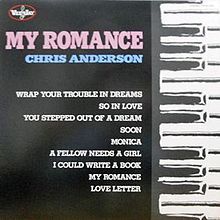
In 1960 he recorded what might be his best regarded album My Romance on the VeeJay label with bassist Bill Lee and drummer Art Taylor. Despite the respect of his peers, Anderson had difficulty finding work or popular acclaim due in large part to his disabilities. He was blind and his bones were unusually fragile, causing numerous fractures, which at times compromised his ability to perform at the times or places requested.
He continued to record until he was well into his 70s. A DownBeat profile indicated he had Osteogenesis, probably meaning osteogenesis imperfecta.
Pianist Chris Anderson, who was best known for his influence on his student Herbie Hancock, passed away of a stroke on February 4, 2008 in Manhattan, New York. He was 81.
More Posts: bandleader,history,instrumental,jazz,music,piano

Conversations About Jazz & Other Distractions
Conversations About Jazz Presents
Rubin & Dameron: A Perfect Match on February 25
On Thursday, February 25 at 7:30 pm (EST) Hammonds House Digital invites you to join us for Conversations About Jazz & Other Distractions with host Carl Anthony. Carl’s special guest will be jazz vocalist Vanessa Rubin and they will discuss her career, sample some of her favorite songs, and delve into her latest CD, This Dream is You: Vanessa Rubin Sings Tadd Dameron. This free virtual program will stream on Hammonds House Museum’s Facebook and YouTube channels. For more information about this and upcoming virtual events visit hammondshouse.org.
Revered as both a torchbearer and a storyteller, jazz vocalist Vanessa Rubin possesses a voice hailed for crystalline clarity, warmth, and playful sass. The Cleveland native brings a wealth of diverse influences to her vocal performance from both the Trinidadian/Caribbean roots of her mother and traditional jazz by way of her Louisiana-born father. Additional influences include the melodic bell tone clarity of a young Nancy Wilson, the fire of Lambert, Hendricks & Ross, the sweet sounds of trumpeter Blue Mitchell, and her love of the Motown Sound…especially girl groups like the Supremes.
Rubin’s passion for rich musical stories is evident throughout her eight albums. Highlights include the evocative “Voyager II” from the pen of Teri Thornton, “Inside a Silent Tear” written by Blossom Dearie, a waltz version of John Coltrane’s “Giant Steps” lyricized by New York Voices, and an arrangement of “Superwoman” by Stevie Wonder, inspired by the Ahmad Jamal recording of “Poinciana.” Her current endeavors include highlighting and interpreting well known, obscure and new lyrical works of composer/arranger/pianist Tadd Dameron. “I hope to do for Tadd’s music what Carmen McRae did for Monk’s music,” Rubin explained. For more information visit: vanessarubin.com.
Tadd Dameron (1917-1965) was American jazz pianist, arranger, composer, and bandleader. The most influential arranger of the bebop era, he also wrote charts for swing and hard bop players. The bands he arranged for included those of Count Basie, Artie Shaw, Jimmie Lunceford, Dizzy Gillespie, Billy Eckstine, and Sarah Vaughan. In 1940-41 he was the piano player and arranger for the Kansas City band Harlan Leonard and his Rockets. He and lyricist Carl Sigman wrote “If You Could See Me Now” in 1946 for Sarah Vaughan and it became one of her first signature songs. Dameron wrote many arrangements for Gillespie’s big band, who gave the première of his large-scale orchestral piece Soulphony in Three Hearts at Carnegie Hall in 1948. Later in 1948, Dameron led his own group in New York, which included Fats Navarro. The following year Dameron performed at the Paris Jazz Festival with Miles Davis.
Hammonds House Museum is generously supported by the Fulton County Board of Commissioners, Fulton County Arts and Culture, the City of Atlanta Mayor’s Office of Cultural Affairs, The Community Foundation for Greater Atlanta, The National Performance Network, AT&T and WarnerMedia.
Hammonds House Museum’s mission is to celebrate and share the cultural diversity and important legacy of artists of African descent. The museum is the former residence of the late Dr. Otis Thrash Hammonds, a prominent Atlanta physician and a passionate arts patron. A 501(c)3 organization which opened in 1988, Hammonds House Museum boasts a permanent collection of more than 450 works including art by Romare Bearden, Robert S. Duncanson, Benny Andrews, Elizabeth Catlett, Jacob Lawrence, Hale Woodruff, Amalia Amaki, Radcliffe Bailey and Kojo Griffin. In addition to featuring art from their collection, the museum offers new exhibitions, artist talks, workshops, concerts, poetry readings, arts education programs, and other cultural events throughout the year.
Located in a beautiful Victorian home in Atlanta’s historic West End, Hammonds House Museum is a cultural treasure and a unique venue. During the COVID-19 pandemic, they continue to observe CDC guidelines, but look forward to welcoming in-person visitors soon! For more information about upcoming virtual events, and to see how you can support their mission and programming, visit their website: hammondshouse.org.
More Posts: arranger,composer,conversations,history,instrumental,jazz,musicians,piano,vocal
The Quarantined Jazz Voyager
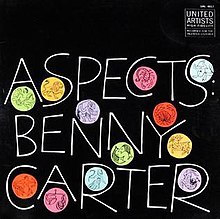
Reveling in my space during this time of temporary seclusion, I am with my music and having lit a few candles, a couple of sticks of incense burning I prepare myself for the talented alto saxophonist and composer Benny Carter. As I drop the needle on his self-produced Aspects album, I kick back, stretch out and enjoy. Recorded in late summer of 1958 in Los Angeles, California it was released the following year on United Artists.
Track List | 46:42Except where noted, all compositions by Benny Carter
- June in January (Ralph Rainger, Leo Robin) ~ 3:12
- February Fiesta (Hal Schaefer) ~ 1:54
- March Wind ~ 3:16
- I’ll Remember April (Gene de Paul, Patricia Johnston, Don Raye) ~ 3:21
- One Morning in May (Hoagy Carmichael, Mitchell Parish) ~ 2:49
- June Is Bustin’ Out All Over (Richard Rodgers, Oscar Hammerstein II) – 2:59
- Sleigh Ride in July (Jimmy Van Heusen, Johnny Burke) ~ 2:50
- August Moon ~ 3:39
- September Song (Kurt Weill, Maxwell Anderson) ~ 2:39
- Something for October ~ 2:52
- Swingin’ in November ~ 3:02
- Roses in December (Ben Oakland, Herb Magidson, George Jessel) ~ 2:36
- Benny Carter – alto saxophone, arranger
- Pete Candoli, Conrad Gozzo, Uan Rasey, Shorty Sherock – trumpet
- Herbie Harper, Tommy Pederson, George Roberts – trombone
- Buddy Collette, Chuck Gentry, Justin Gordon, Bill Green – saxophone
- Arnold Ross – piano
- Larry Bunker – vibraphone
- Bobby Gibbons – guitar
- Joe Comfort – bass
- Shelly Manne – drums
- Joe Gordon, Al Porcino, Ray Triscari, Stu Williamson – trumpet
- Russ Brown, Tommy Pederson, Frank Rosolino – trombone
- Buddy Collette, Jewell Grant, Bill Green, Plas Johnson – saxophone
- Gerald Wiggins – piano
- Barney Kessel – guitar
- Joe Comfort – bass
- Shelly Manne – drums

More Posts: adventure,album,club,genius,jazz,museum,music,preserving,restaurant,saxophone,travel