


Daily Dose Of Jazz…
Mike Jackson was born on December 23, 1888 in Louisville, Kentucky. The details of his early life are not known, however, in 1921 he began composing songs for publisher Joe Davis. Soon after he became an accompanist playing piano for a number of early jazz and blues recordings, with Clara Smith, Alberta Hunter, Laura Smith, Thomas Morris, the New Orleans Blue Five, the Dixie Jazzers Washboard Band, Perry Bradford, and Buddy Christian.
He also recorded under his own name as Jackson and His Southern Stompers. With Morris, he worked in the vaudeville show The Wicked Age in 1927. He emigrated to Montreal, Canada in 1928, but returned to New York City in 1930, where he continued working as a composer.
His compositions included The Louisville Blues, written with Bob Ricketts in 1921 and recorded by W.C. Handy in 1923; Scandal Blues and Black Hearse Blues, both written in 1925; and Slender, Tender and Tall and Hey, Knock Me a Kiss, both of which were recorded by Jimmie Lunceford and Louis Jordan among others.
Pianist and composer Mike Jackson passed away on June 21, 1945 in New York City.

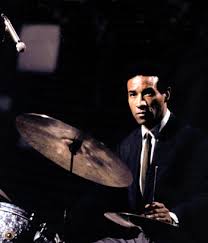
Three Wishes
When Panninica asked Max Roach what his three wishes would be, he simply said:
- “Wishes would be a superfluous luxury for me, because I have everything I desire. That’s the most important thing in the world.”
*Excerpt from Three Wishes: An Intimate Look at Jazz Greats ~ Compiled and Photographed by Pannonica de Koenigswarter

More Posts: baroness,drums,history,instrumental,jazz,music,pannonica,three,wishes
Daily Dose Of Jazz…
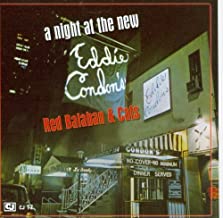
Red Balaban was born Leonard Balaban on December 22, 1929 in Chicago, Illinois. Moving the family to New York, he completed his early education at the Ethical Culture School. After graduating from Milford Academy in Connecticut, he graduated from Brown University.
Moving south to the panhandle, he raised breeding cattle on a farm in Bonifay, Florida and as a musician, he was a sideman, bandleader, and club owner. He played in regional ensembles from the 1950s, Red went on to hold a regular gig from 1966 at the Dixieland jazz club Your Father’s Mustache in New York City.
Balaban worked extensively as a sideman, for musicians such as Wild Bill Davison, Eddie Condon, Gene Krupa, Dick Wellstood, and Kenny Davern. He co-led Eddie Condon’s house band with Ed Polcer from 1975, and noted musicians in this outfit included Vic Dickenson, Warren Vache, and Connie Kay, before the club closed in the mid-1980s.
Tubist and sousaphonist Red Balaban, who also played banjo, stand-up bass, slide trombone, ukulele, and rhythm guitar, passed away after a brief illness seven days past his 84th birthday on December 29, 2013 in Milford, Connecticut.
More Posts: banjo,bass,guitar,history,instrumental,jazz,music,slide trombone,sousaphone,tuba,ukulele
Daily Dose Of Jazz…
George McKinley Treadwell was born on December 21, 1918 in New Rochelle, New York. He played in the house band at Monroe’s in Harlem from 1941 to 1942 before working with Benny Carter in late 1942 in Florida. Following stints with Ace Harris’s Sunset Royals and Tiny Bradshaw, he worked with Cootie Williams for three years from 1943 to1946.
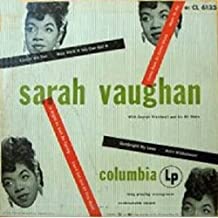
Joining J.C. Heard in 1946 he stayed for a year and the ensemble accompanied Etta Jones and Sarah Vaughan, whom he married in 1947. He also recorded with Dicky Wells and Ethel Waters in 1946.
George quit playing late in the 1940s to work as Vaughan’s manager, and continued in this capacity after their divorce in 1957. He also managed the Drifters and Ruth Brown and did artists and repertoire (A&R) work in the 1950s. After 1959 Treadwell also worked as a songwriter.
Trumpeter George Treadwell, whoalso led a big band and orchestra, passed away on May 14, 1967 in New York City.
More Posts: bandleader,history,instrumental,jazz,music,trumpet
Requisites
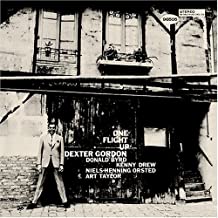
One Flight Up ~ Dexter Gordon | By Eddie Carter
This next entry from the library is an album I first heard in 1967 during one of my Saturday stops to Record Rendezvous in Cleveland, Ohio. It introduced me to tenor saxophonist Dexter Gordon who steps into the spotlight with his second LP recorded after moving abroad, One Flight Up (Blue Note BLP 4176). It follows an excellent 1963 quartet album titled Our Man In Paris. Gordon was a staple on the jazz scene since the Bebop era in the forties while a member of Billy Eckstine’s Big Band and would become a major influence for two future giants, John Coltrane, and Sonny Rollins.
He chose to move abroad because he was treated much more fairly than here in the United States and was considered an equal rather than a second-class citizen. There was also plenty of work in some of the best jazz clubs Europe and France had to offer. Dexter is assisted here by Donald Byrd on trumpet, Kenny Drew on piano, Neils-Henning Orsted Pedersen on bass, and Art Taylor on drums. My copy used in this report is the 1967 US Liberty Records Stereo reissue (BST 84176).
Side One opens with Byrd’s Tanya occupying the entire first side and giving Dexter, Donald, and Kenny plenty of solo space. The rhythm section charts its course with a brief introduction developing into a haunting theme led by both horns. Dexter works his magic on the opening chorus with nearly six-minutes of joyful bliss. Donald shows off his chops next with a brilliant-toned performance that keeps the listener’s interest throughout. Kenny turns in one of his very best performances on the finale with Neils-Henning and Art providing the articulate foundation into the out-chorus and gentle dissolve.
Side Two commences at a slightly faster beat than Tanya with Coppin’ The Haven by Drew. The trio makes a casual, laid-back introduction evolving into Byrd and Gordon’s comfortable groove on the theme. Dexter opens with a terrific performance, then Donald takes over for a reading as smooth as a sled on fresh snow. Kenny shows he’s perfectly at home on the closer with a sharp interpretation possessing a light, refreshing beat before the ensemble reassembles for the climax.
The album concludes with the 1939 standard, Darn That Dream by Jimmy Van Heusen and Eddie DeLange, introduced in the Broadway musical, Swingin’ The Dream. This is a beautiful quartet performance by Dexter and the trio who give an intimate introduction to the melody. Dexter is the centerpiece here and his lead solo is captivating. Kenny draws the listener further into the song’s spell on the closer with a tender climax.
The album was recorded by the French engineer, Jacques Lubin, and the sound quality is spectacular with a mesmerizing soundstage transporting your listening chair to the studio alongside the musicians. Gordon’s career lasted nearly forty years, making some amazing records for a host of labels including Bethlehem, Prestige, Savoy, and SteepleChase. However, it was the five years he recorded for Blue Note (1961-1966) that are among the most precious jewels in his rich discography. He passed away on April 25, 1990, at sixty-seven from kidney failure and cancer of the larynx. If you’re a fan of Dexter Gordon or Donald Byrd, I highly recommend One Flight Up by Dexter Gordon, an album I feel is an essential addition for any jazz library that you shouldn’t miss!
~ Our Man In Paris (Blue Note BLP 4146/BST 84146) – Source: Discogs.com
~ Darn That Dream – Source: JazzStandards.com ~ Dexter Gordon – Source: Wikipedia.org © 2020 by Edward Thomas Carter
More Posts: choice,classic,collectible,collector,history,instrumental,jazz,music