


Daily Dose Of Jazz…
Gil Rodin was born in Russia on December 9, 1906 and studied saxophone, clarinet, flute, and trumpet in his youth. He played in Chicago, Illinois with Art Kahn in the middle of the 1920s. Moving to California and played with Harry Bastin before joining Ben Pollack in 1927, remaining in his band until 1934.
He simultaneously did studio work and played with Red Nichols’s radio band. Making his only recordings as a leader in 1930-31, amounting to four tracks which included Jack Teagarden on vocals, he also enlisted Eddie Miller and Benny Goodman as sidemen.
After Pollack’s band dissolved in 1934, Gil played with some of the players in the group until Bob Crosby regrouped them into his own ensemble. Rodin remained with Crosby through 1942, when he was drafted. While serving in the Army he played in the Artillery Band and after his discharge in 1944 he played with Ray Bauduc for a year, then with Crosby again.
His major composition was Big Noise from Winnetka, for which he wrote the lyrics with Bob Crosby. The music was written by Ray Bauduc and Bob Haggart. The song appeared in the films Raging Bull, Cannery Row, Manhattan Murder Mystery, Saving Mr. Banks, and What If.
Later in his career, Gil worked radio and television production, with Bill Cosby among others. He produced the soundtracks to the films American Graffiti and The Sting. Saxophonist, songwriter, and record producer Gil Rodin passed away on June 10, 1974.
More Posts: history,instrumental,jazz,music,record producer,saxophone,songwriter
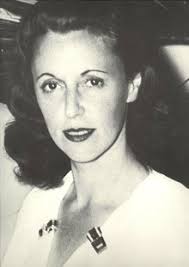
Three Wishes
From the Notes of Nica de Koenigswarter:
You can quote Satchmo as saying:
“Health is wealth! If I were sick, and I wanted to borrow a dime, d’you think that cat would cross the street to offer it to me? No, sir! I’d have to have my health to go and get it from him.”
“And people would never get sick if they didn’t get constipated. Why, I’ve never had an operation in my life, because I never let myself get constipated.”
*Excerpt from Three Wishes: An Intimate Look at Jazz Greats ~ Compiled and Photographed by Pannonica de Koenigswarter

More Posts: baroness,history,instrumental,jazz,music,pannonica,patron,three,wishes,writer
Daily Dose Of Jazz…
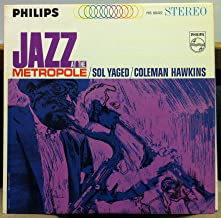
Sol Yaged was born on December 8, 1922 in Brooklyn, New York and began playing the clarinet at the age of 12 after hearing Benny Goodman’s broadcasts for Nabisco in 1935. He studied under a New York Philharmonic clarinetist, however turned down a classical career to play jazz in New York City nightclubs.
After three years in the Army during World War II, Yaged played clarinet professionally and continuously for over 70 years, with Phil Napoleon, Coleman Hawkins, Red Allen, and Jack Teagarden among others. In the 1960s, he began working primarily as an ensemble leader in City. In the Nineties he worked in Felix Endico’s swing band, and served as a consultant on Benny Goodman’s musical style for the 1956 film, The Benny Goodman Story.
For two years in the mid-1990s he worked under the musical direction of bandleader Jack Vartan at the Stony Hill Inn in Bergen County, New Jersey. He recorded four albums as a leader and six as a sideman. Clarinetist Sol Yaged, who was strongly influenced by Benny Goodman passed away on May 11, 2019.
More Posts: bandleader,clarinet,history,instrumental,jazz,music
Daily Dose Of Jazz…
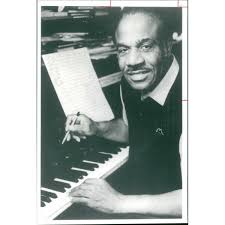
William Moore, Jr., better known as Billy Moore was born on December 7, 1917 in Parkersburg, West Virginia. Chiefly known as an arranger for most of his jazz career, Billy wrote charts for Jimmie Lunceford, Charlie Barnet, Jan Savitt, and Tommy Dorsey in the 1940s. He also worked for publishing companies in New York City.
In the 1950s he relocated to France, where he accompanied and wrote for The Peters Sisters from 1953 to 1960. Following this, he worked from 1960 to 1963 as an arranger for Berliner Rundfunk and then accompanied the Delta Rhythm Boys on tour.
He formed his own music publishing company in order to combat the then prevalent habit of band leaders taking credit for the work of their arrangers and composers. Amongst his uncredited works is the famous countermelody to Barnet’s million-selling hit Skyliner. Moving to Copenhagen, Denmark in the 1970s, he remained active as an arranger. Being friends with Leonard Feather, he sometimes used Moore’s name for songwriting credits.
In his later years in Denmark, he was the administrator of the music foundation established in Ben Webster’s name and for whom he also worked as a business aide. He was also the manager and musical director for the European tours of the Peters Sisters. Pianist and arranger Billy Moore passed away on February 28, 1989 in Copenhagen, Denmark.
Requisites
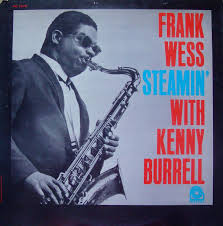
I begin this morning’s discussion with a 1963 reissue of an album originally released in 1957 titled After Hours (Prestige 7118), one of the label’s excellent jam session records. Steamin’ (Prestige PRST 7278) features an all-star group led by Frank Wess on flute, tenor sax, and Kenny Burrell on guitar. Joining them are Thad Jones on trumpet, Mal Waldron on piano, Paul Chambers on bass, and Art Taylor on drums. Waldron composed all four tunes on the album, and my copy used for this report is the 1963 Mono reissue (Prestige PRLP 7278).
Steamin’ begins Side One with a swinging introduction by Art. Both horns present the melody in unison with Thad on the muted trumpet. Frank opens with an aggressive performance, then Kenny takes over for a hard-swinging reading. Thad creates a volcanic eruption on the third interpretation, and Frank takes a second solo, this time on flute and at breakneck speed. Wess and Jones take a few spirited riffs before Walton zips through the next reading. Taylor punctuates the final statement with a stinging bite in a momentary spotlight before the ensemble takes the song out quickly.
Blue Jelly begins at a laid-back pace, gradually ascending to midtempo as the sextet states the opening chorus. Jones solos first, his ideas flowing freely to a slowly unfolding beat. Thad, Kenny, and Frank (on flute) exchange short riffs, then Burrell settles into a comfortable tempo for the second solo. The three instruments repeat, then Wess serves up a stylish dish of blues. Walton follows the next exchange with a very satisfying statement. Chambers speaks easily on the finale with great skill ahead of the close. Count One opens Side Two and the sextet gets right to work with a lightly swinging introduction by Cedar. Thad and Frank wail on the melody and everyone gets solo space except Art who keeps things in check with a driving backbeat. Frank begins the opening statement with skillful dexterity, and Thad soars on the second solo with a riveting presence. Kenny engages the ear delightfully on the next reading, then Cedar continues the bopping beat with an insistent swing. Paul accentuates the final interpretation with two short verses that are flawless.
The album closes with a trip down an Empty Street at a slow, easy tempo opening with a wistful introduction in unison. Jones leads the opening march on the muted trumpet, and the first solo by Burrell is superbly interpreted with a soothing timbre and sensitivity. Wess follows on flute with a thoughtfully pleasant reading that’s one of the most beautiful moments on the album. Jones sounds each note of the next performance tenderly and with the utmost clarity. Walton comes in next with a dreamlike, poignant presentation of sensual beauty, and Chambers wraps up the record with a rather beautiful and deeply moving interpretation before the sextet reassembles for the reprise and coda. Although, Steamin’ is credited to Frank Wess and Kenny Burrell, this album and its original title After Hours should have been released under Mal Waldron’s name in my opinion. His spirit pervades these four tunes with incredible passion and perfect pacing in his playing, complemented by the rhythmic energy and consummate musicianship of his bandmates.
That issue aside, Steamin’ serves as an excellent starting point for those who are just discovering the music of Mal Waldron or the other albums by the group who was also known as The Prestige All-Stars. The album has a brilliant soundstage across the highs, midrange, and low end that places you in the studio alongside the musicians as they’re playing. If you’re a fan of Hard-Bop and enjoy a good jam session, I invite you to audition Steamin’ by Frank Wess with Kenny Burrell or After Hours by The Prestige All-Stars. Either version should make a welcome addition to any fan’s library!
© 2020 by Edward Thomas Carter
More Posts: choice,classic,collectible,collector,flute,history,instrumental,jazz,music,saxophone