


Daily Dose Of Jazz…
Erskine Butterfield, born February 9, 1913 in Syracuse, New York and began playing piano at an early age when his family moved to Newark, New Jersey, where he later studied piano. In the 1930s, he regularly appeared on radio, including WOR in New York City, and played with Noble Sissle’s orchestra. He made his first sound recording and reproduction in 1937 on the Variety record label.
In 1938, he signed with Decca Records for which he recorded over forty titles between 1940 and 1942, many of which were released. Butterfield was called the Singing Vagabond of the Keys by the Chicago Defender in 1939. He was innovative in utilizing black and white musicians together in his combo, which included session musicians such as clarinetist Jimmy Lytell, guitarist Carmen Mastren, and Haig Stevens on bass.
1939 saw Butterfield signing with Joe Davis of Beacon Records, with whom he would maintain a long term relationship. However, in 1943 he was drafted but continued to play in a group, recorded eight titles for Joe Davis under the name Erskine Butterfield and his Blue Boys in ‘44 and cutting V-Discs in 1945.
After World War II, Erskine formed a trio and toured extensively, but his music style was less successful commercially. He recorded for a number of small labels in the late 1940s, after which his recording activity dropped off. In 1956, however, he again recorded a number of titles for Joe Davis with a reformed group, Butterfield and his Blue Boys, including musicians such as Sam “The Man” Taylor on saxophone and Panama Francis on drums. He made appearances on The Nat King Cole Show, The Tony Martin Program and The Jo Stafford Show.
His light swing and traditional piano phrases resulted in some of his songs, such as Lovin’ Man and Because Of You, being used in film soundtracks. Pianist, singer, bandleader and composer Eskine Butterfield, credited with helping to invent the style of cocktail piano, passed away on July 11, 1961 in New York City.
More Posts: bandleader,history,instrumental,jazz,music,piano

Daily Dose Of Jazz…
On February 8, 1947 Kerrie Agnes Biddell was born in the inner-city community of Kings Cross in Sydney, New South Wales, Australia. An only child two pianist parents, her mother an accomplished jazz pianist and her father a part-time pianist, she attended St. Vincent’s Convent at the age of six, soon after her father left her mother. In 1962, she suffered a collapsed lung and rheumatoid arthritis, the latter of which affected her piano playing, so she decided to become a singer.
At twenty, Kerrie sang background vocals for Dusty Springfield and impressed, Springfield suggested she become a lead singer. She joined a local band, The Echoes, then in 1968, The Affair. With her added voice the group was able to cover various musical styles, such as soul, funk, and pop compositions. In 1969, they competed and won the national competition Hoadley’s Battle of the Sounds in the vocal-group category. The prize was a trip to London, England, the group relocated in mid-1970, only to disband months later. Before disbanding, they recorded Sly and the Family Stone’s Sing a Simple Song, which would become one of Biddell’s signature songs.
Returning to Australia she toured with the Daly-Wilson Big Band, performing swing music. In between her stint with Wilson, she toured with Dudley Moore, Cilla Black, and Buddy Rich. In 1972, married to former alto saxophonist for Sounds Incorporated David Glyde, they moved to Canada and her career as a session singer began soon after. She and her husband toured in the United States, including clubs in Las Vegas. Offered a three-year six-figure contract with the MGM Grand Hotel and Casino, but declined and moved back to Australia, enrolling in the Sydney Conservatorium of Music.
Moving on to a solo career, her first album won two ARIA awards, she sang on hundreds of jingles, television shows and film scores, and joined the faculty of the Jazz Diploma course at the Conservatorium. She wrote a one-woman show, Legends, which later included June Bronhill, Lorrae Desmond, Toni Lamond, and Jeanne Little. In 2001, due to poor health, she retired from performing but continued her teaching career. On 4 September 2014, jazz and session singer and vocal teacher Kerrie Biddell passed away from a stroke on September 5, 2014. She was 67.
More Posts: bandleader,history,instrumental,jazz,music,vocal
Daily Dose Of Jazz…
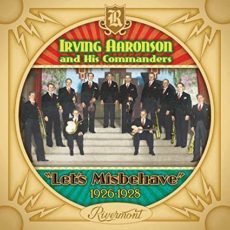
Irving A. Aaronson was born in New York on February 7, 1895 and learned to play the piano from Alfred Sendry at the David Mannes School for music. By age 11 he played accompaniment in silent movie theaters called nickelodeons. In 1921 he co-wrote a hit song, Boo-Hoo-Hoo.
When his band was signed with the Victor label, the band name was changed to Irving Aaronson and his Commanders. From 1926 to 1929, the band recorded for the label and had a notable success with Let’s Misbehave in 1927. The band appeared in Cole Porter’s Broadway musical Paris, in 1928 and broadcasted on KFWB in Hollywood, California in 1929.
In 1935, he starred in the Irving Aaronson Orchestra radio program on NBC. The band toured movie theatres and ballrooms across the US before calling it quits in the mid-1930s, But his band had included at various times musicians such as Phil Saxe, Joe Gillespie, Artie Shaw, Gene Krupa, Tony Pastor, and western movie actor Fuzzy Knight was the band’s drummer in the late Twenties.
By the time he turned 45, Irving was working as a musical director for MGM studios. He remained there in that capacity, voicing for television Mr. Nobody in the MGM’s animation Betty Boop for President and as an assistant to producer Joe Pasternak, until his death from a heart attack. Pianist, bandleader and composer Irving Aaronson passed away in Hollywood, California on March 10, 1963 at the age of 68. His most popular song, The Loveliest Night of the Year, was not recorded with his band but was adapted by Aaronson in 1950 for the Mario Lanza film The Great Caruso.
More Posts: bandleader,composer,history,instrumental,jazz,music,piano

The Jazz Voyager
The Jazz Voyager is heading off to the sea islands state where the Civil War started to the corner of The Village at Wexford where the Jazz Corner is located at 1000 William Hilton Parkway, Hilton Head Island, SC 29928. The Hilton Head landmark is celebrating twenty years of offering superb jazz music and gourmet food in a chic yet charming venue amid the natural beauty of the low country.
The venue is the dream of the late jazz musician and historian, Bob Masteller, and he established the 99-seat space is an ideal setting to enjoy an evening of vocalist Tierney Sutton and trumpeter/vocalist Joe Gransden along with a bit of Southern-inspired cuisine. For more information and reservations the number is 843-842-8620.

More Posts: adventure,club,genius,jazz,museum,music,preserving,restaurant,travel,voyager
Daily Dose Of Jazz…
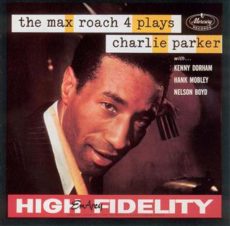
Nelson Boyd was born on February 6, 1928 in Camden, New Jersey and played in local orchestras in Philadelphia, Pennsylvania around 1945. Two years later he moved to New York City in 1947 and played with Coleman Hawkins, Tadd Dameron, and Dexter Gordon, and later with Sarah Vaughan, Dizzy Gillespie, and Charlie Barnet in 1948.
In 1947, he recorded with Fats Navarro and Charlie Parker, later with Jay Jay Johnson on Miles Davis’ Birth of the Cool sessions in 1949. In addition, the Davis composition Half Nelson was named after Boyd because of his stature.
After 1949, he often played with Gillespie and toured the Middle East with him in 1956. Later, he recorded with Melba Liston in 1958 with her trombone ultimates on Melba Liston and Her ‘Bones. Boyd also did sessions with Max Roach and Thelonious Monk. His last recordings were in 1964. Bebop bassist Nelson Boyd passed away in October 1985 in his hometown of Camden.
More Posts: bass,history,instrumental,jazz,music