

On The Bookshelf
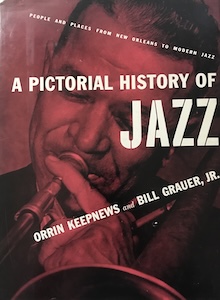
A Pictorial History Of Jazz | Orrin Keepnews & Bill Grauer Jr.
A classic photographic collection documenting jazz history, particularly up to the mid-1960s, though some note its coverage of later styles is limited. Praised for its extensive and captivating black-and-white photographs, the text may be less substantial than the images and the coverage of later jazz movements is not as thorough.
The book is often described as a valuable visual reference for jazz enthusiasts, and some consider it an essential purchase, though older editions may be harder to find in good condition.
A Pictorial History Of Jazz: 1966 Crown Publishers, Inc.

Daily Dose Of Jazz…
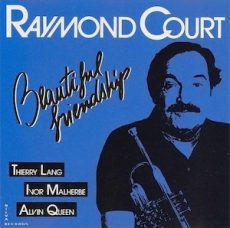
Raymond Court was born on December 2, 1932 in Lausanne, Switzerland. He began playing trumpet in his late teens, but by age 20 was playing in Raymond Droz’s band from 1952 to 1956.
Later in the 1950s he played with Flavio Ambrosetti and Kurt Weil, and the early 1960s saw him with Daniel Humair, Martial Solal, and Rene Urtreger.
Starting in the mid-Sixties, he began concentrating on a new career in woodworking and cabinetry, but returned to music after about a decade. He recorded as a leader in the 1980s and with Weil again and Charly Antolini in the 1990s.
Trumpeter Raymond Court died March 03, 2012.

More Posts: bandleader,history,instrumental,jazz,music,trumpet
Daily Dose Of Jazz…
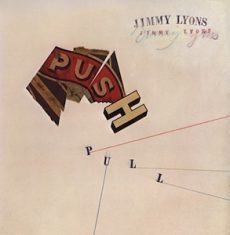
Jimmy Lyons was born on December 1, 1931 in Jersey City, New Jersey and raised there until the age of nine, when his mother moved the family to Harlem and then the Bronx in New York City. In the mid-1940s he got his first saxophone and took lessons from Buster Bailey.
After high school he was drafted into the United States Army and spent 21 months on infantry duty in Korea before spending a year playing in army bands. Once discharged he enrolled at New York University but by the end of the Fifties, Lyons was supporting his music by working for the United States Postal Service.
1960 saw Jimmy followed Archie Shepp into the saxophone role in the Cecil Taylor Unit. His post-Parker sound and strong melodic sense became a defining part of the sound of that group, from the 1962 Cafe Montmartre sessions onwards. During the 1970s, he ran his own ensemble, with bassoonist Karen Borca and percussionist Paul Murphy and was part of the loft jazz movement.
Lyons’ group and Cecil Taylor Unit continued a parallel development throughout the 1970s and 1980s, often involving the same musicians, including trumpeter Raphe Malik, bassist William Parker and percussionist Murphy.
In 1976, Lyons performed in a production of Adrienne Kennedy’s A Rat’s Mass directed by Cecil Taylor at La MaMa Experimental Theatre Club in the East Village of Manhattan.
Alto saxophonist Jimmy Lyons, who recorded eight albums as a leader, twenty-nine as a sideman and performed in the free jazz genre, died from lung cancer at the age of 54.
More Posts: bandleader,history,instrumental,jazz,music,saxophone
Requisites
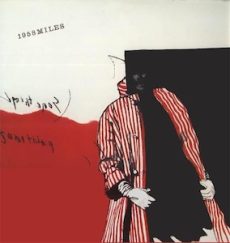
1958 Miles ~ Miles Davis | By Eddie Carter
Throughout his career, Miles Davis was widely regarded not only as a leading figure in jazz but as a monumental presence in music as a whole. He consistently demonstrated his influence by producing an impressive array of records that have remained influential over the years, offering critics, listeners, and fellow musicians more to consider and appreciate than most artists across any musical style. This morning’s album up for discussion is 1958 Miles (CBS/Sony 20AP 1401). Interestingly, this record did not see a complete release in Japan until 1974. Tracks: A1 to A3 were initially released on “Jazz Track” in 1958. Track B1 later appeared on the 1975 double album “Black Giants, ”while track B2 appeared twice in 1973, on the compilations “Basic Miles—The Classic Performances of Miles Davis” and the CBS/Sony Japanese release “The Miles Davis Quintet & Sextet.”
By the time he recorded this album, Davis had brought in some new talented musicians to his group. Red Garland and “Philly” Joe Jones had left, and in their places, pianist Bill Evans and drummer Jimmy Cobb joined the band. Rounding out the ensemble are Julian “Cannonball” Adderley on alto sax (tracks: A1, A2, B1), John Coltrane on tenor saxophone (tracks: A1 to B2), Bill Evans (tracks: A1 to A3, B1), and Red Garland on piano (track: B2). On bass, Paul Chambers is featured on track B2, while Jimmy Cobb (tracks: A1 to A3, B1) and “Philly” Joe Jones (track: B2) keep the rhythm going on drums. The copy of the album I used for this report is the 1979 Japanese Mono Reissue.
Side One kicks off with the timeless song On Green Dolphin Street by Bronislaw Kaper and Ned Washington.Initially written for the 1947 film “Green Dolphin Street”, it’s Miles Davis’s version that truly made it a jazz standard we cherish today. He starts his soulful dialogue on the muted horn, with the trio providing a relaxed, friendly groove around the melody. His energetic lead solo radiates positive vibes, sizzling at a comfortable medium heat, while Coltrane responds with a lively, lyrical interpretation. Cannonball adds his beautiful touch on the third reading, and Evans plays just as wonderfully, culminating in a joyful moment before Miles wraps up the song with a satisfying finish.
Fran-Dance is a heartfelt tribute from Miles to his second wife, Frances Taylor. I first heard this beautiful tune on the 1961 live album, “Miles Davis In Person, Saturday Night at The Blackhawk, San Francisco, Volume 2.” Miles, playing a gently muted trumpet, creates a beautifully dreamy theme that feels warm and inviting, ending with a rich, mellow note. Coltrane’s opening is so lush that it feels like it melts right into your heart. Cannonball's tender, slightly fragile tone adds a delicate touch to the next performance, and Evans approaches the finale with such fingertip delicacy that it becomes one of his most touching ballad performances.
The 1944 jazz classic Stella By Starlight, by Victor Young with lyrics by Ned Washington, provides a graceful ending to the album’s first side and stands as a cherished staple of The Great American Songbook. Cannonball takes a reflective moment to appreciate this enduring masterpiece, highlighting the remarkable solos by Miles, Coltrane, and Evans. The enchanting atmosphere is set immediately with the opening chorus, as the muted trumpet conveys each phrase with deep emotion. Coltrane delivers a powerful, regal rendition, seamlessly leading into Evans’ exquisite solo, which builds to a memorable climax.
Love For Sale, by Cole Porter, made its first appearance in the 1930 musical “The New Yorkers.” The song’s lyrics paint a vivid image of a streetwise woman offering love for purchase, and it has become one of Porter’s most frequently covered songs. Notably, Cannonball and Miles recorded their own rendition just two months earlier for the 1958 album “Somethin’ Else.” Miles opens with a brisk, upbeat introduction, playing with a mute and delivering a truly memorable highlight. Following that, Cannonball takes over and shines brilliantly. Evans then immerses himself in the closing statement, providing a remarkable performance before the group’s theme reprise concludes.
Jackie McLean’s composition Little Melonae made its debut on his 1955 album, “Presenting Jackie McLean”, and is dedicated to his daughter. Cannonball Adderley also doesn’t perform on this track. The quintet introduces the tune with a unified statement of the melody, followed by a captivating solo from Miles Davis, who opens with the mute off, adding a striking touch. John Coltrane responds with heartfelt sincerity in the following statement. Red Garland impresses with refined technique and elegance on his only appearance on the album. Paul Chambers briefly steps into the spotlight, after which the quintet brings the song to a close together.
Teo Macero produced the album, and Larry Keyes carefully engineered each recording session. The sound quality is absolutely stunning across all ranges—treble, midrange, and bass—creating a rich, immersive experience. The sextet’s performance surrounds your favorite listening spot with a beautifully solid soundstage from the instruments, making every note feel alive. Since this is a Japanese release, 1958 Miles might be a bit tricky to track down on your next vinyl hunt. But with a little patience, you’ll be rewarded with an extraordinary album that would make an excellent addition to the Hard-Bop section of your library. It also offers a fresh perspective on Miles Davis’s sound in the Modal style, which reached its peak a year later with “Kind of Blue!”
~ Basic Miles-The Classic Performances of Miles Davis (Columbia KC 32025); Black Giants (Columbia KG 33402); Jazz Track (Columbia CL 1268); Kind of Blue (Columbia CL 1355/CS 8163); Miles Davis In Person, Saturday Night at The Blackhawk, San Francisco, Volume 2 (Columbia CL 1670/CS 8470); Presenting Jackie McLean (AdLib 6601); Somethin’ Else (Blue Note BLP 1595/BST 81595); The Miles Davis Quintet & Sextet (CBS/Sony SOPM-140) – Source: Discogs.com
~ On Green Dolphin Street, Love For Sale – Source: JazzStandards.com
© 2025 by Edward Thomas Carter

More Posts: choice,classic,collectible,collector,history,instrumental,jazz,music,trumpet
Daily Dose Of Jazz…
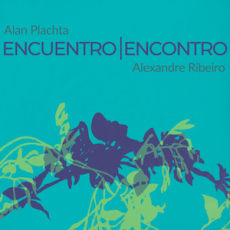
Alan Plachta was born on November 30, 1981 and raised in Buenos Aires, Argentina. Recently recorded in NYC his last album “Un viaje” in collaboration with Richard Nant, featuring Luis Perdomo on piano, Sam Sadigursky on reeds, Satoshi Takeishi on drums and Matt Pavolka on bass.
As a composer, arranger and conductor he has worked with the Boris Big Band, Orquesta Sudamericana, Kai de Raiz, and Orquesta de Cuerdas Elvino Vardado in collaboration with Juan Pollo Raffo.
Alan has played and/or recorded with numerous South American musicians such as Roberto Taufic, Hugo Fattoruso, Urbano Moraes, Daniel Maza, Robert Vincs, Alex & Nilusha, Alexandre Ribeiro, Ana Luiza and Luis Felipe Gama, Nicolás Ospina, Celeste Carballo, Ligia Piro, Liliana Herrero, and Cecilia Pahl among others.
A leader or co-leader, he has recorded five albums, the first in 2005. A prolific arranger and producer Nussbaum has collaborated as guitarist and guest arranger for Cambrio de Estacion, Roma, Soy Una Tarada, Desmesura, Este Tiempo, Ensamble Real Book Argentina, and Y De Amor No Supe Nada.
As a guitarist he has recorded ninetten albums and his compositions are included in Real Book Argentina. His educator role has Adam teaching ear training, arrangement, harmony and guitar. He is in charge of the Musical Language´s Technichs at the Tecnólogo en Jazz y Música Creativa career at UTEC.
Guitarist, composer, arranger and educator Alan Plachta continues to explore his music and his teaching.

More Posts: arranger,bandleader,composer,educator,guitar,history,instrumental,jazz,music