

Daily Dose Of Jazz…
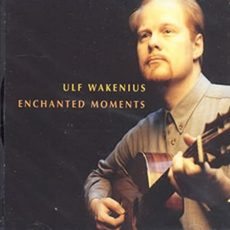
Ulf Karl Erik Wakenius was born April 16, 1958 in Halmstad, Sweden and raised in Gothenburg. In the 1980s he played with Peter Almqvist in Guitars Unlimited during the intermission for 600 million viewers of the Swedish International Finale of the Eurovision Song Contest in 1985. He went to Rio de Janeiro, Brazil that same year and began recording the first of three records with Sivuca, Aquarela Do Brazil, followed by Rendez-Vous in Rio in 1986 and Let’s Vamos in 1987.
During the Eighties Ulf collaborated with Niels-Henning Ørsted Pedersen also started this decade, and during the mid to late Nineties they recorded Those Who Were and This Is All I Ask. He led the U.W. Group, releasing Venture with Jack DeJohnette on drums, Bill Evans and Bob Berg on saxophones, trumpeter Randy Brecker, pianist Niels Lan Doky, Chris Minh Doky and Lars Danielsson on bass. In 1994 he recorded New York Meeting with Niels Lan Doky, Ira Coleman and Billy Hart.
He would go on to work with Lars Jansson, Lars Danielsson, Raymond Karlsson, Gösta Rundqvist, Yasuhito Mori, Jukkis Uotila, Carsten Dahl, Morten Lund, Lars Danielsson, Haakon Graf, John Scofield, Dennis Chambers, Gary Grainger, Oscar Peterson, Michel Legrand, Ray Brown, Pat Metheny Jon Larsen, Stian Mevik, Jimmy Rosenberg Lisa Nilsson, Cæcilie Norby, Viktoria Tolstoy, Esbjörn Svensson and Youn Sun Nah among others.
Guitarist Ulf Wakenius,a member of of Oscar Peterson’s last quartet from 1997 and a member of the Ray Brown trio, continues to lead his own band and record.
Sponsored By

www.whatissuitetabu.com

#preserving genius
More Posts: guitar
Daily Dose Of Jazz…
Theodore “Wingie” Carpenter was born on April 15, 1898 in St. Louis, Missouri. He lost his left arm as the result of an accident during his early teens, with the amputation performed by a noted surgeon who was an uncle of jazz musician Doc Cheatham. Sometime later, he took up the trumpet and by 1920 he was working in traveling carnival shows, and in 1921 he toured with Herbert’s Minstrel Band.
By 1926 he had settled in Cincinnati, Ohio and worked with Wes Helvey, Clarence Paige, Zack Whyte, and Speed Webb. In 1927, Wingie played in Buffalo, New York, with Eugene Primus. Off and on from late 1926 through 1928, he was featured on the Whitman Sisters’ Show with pianist Troy Snapp’s band.
During the early 1930s the trumpeter was featured with Smiling Boy Steward’s Celery City Serenaders and another Florida band led by Bill Lacey. In the mid-1930s, he became a touring regular with bandleaders including Jack Ellis, Dick Bunch, and Jesse Stone. By the late 1930s, Carpenter settled in New York City, where he worked with Skeets Tolbert and Fitz Weston.
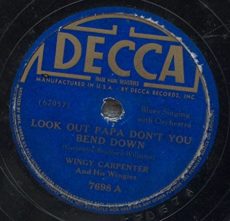
From 1939 on, Wingie worked as the leader of his own band through the 1960s, playing occasional dance dates and working for periods at well-known clubs such as The Black Cat, The New Capitol, Tony Pastor’s The Yeah Man, and other venues. He composed several works not limited to Look Out Papa Don’t You Bend Down, Preachin’ Trumpet Blues, Put Me Back In The Alley, Rhythm of The Dishes and Pans, and Team Up.
Trumpeter, vocalist and bandleader Wingie Carpenter, who was one of several one-armed trumpeters who worked in the music business, including similarly nicknamed Wingy Manone, passed away on July 21, 1975 in New York City.
Sponsored By

Bronze Lens
#preserving genius
Daily Dose Of Jazz…
Walter Gilbert Fuller was born on April 14, 1920 in Los Angeles, California and is no relation to the jazz trumpeter and vocalist Walter “Rosetta” Fuller. In the 1930s and 1940s he did extensive work writing and arranging for bandleaders such as Les Hite, Floyd Ray, Jimmie Lunceford, Billy Eckstine, and Tiny Bradshaw.
He also worked with Benny Carter, Benny Goodman, Woody Herman, Count Basie, Machito and Tito Puente. Following World War II, Gil found himself increasingly in demand as a bebop arranger along with fellow modern arrangers Tadd Dameron, Gil Evans, and George Russell. Fuller’s work with Dizzy Gillespie was of particular note, yielding the tunes “Manteca”, “Swedish Suite”, and “One Bass Hit”. He is the composer of the jazz standard ballad “I Waited For You”, co-credited with Dizzy Gillespie.
Fuller started his own publishing company in 1957, and while he continued to work with some jazz musicians including Stan Kenton in 1955 and again in the 1960s, he also branched out into film music and pop with Ray Charles, among others.
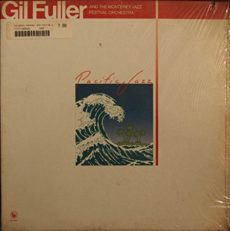
Arranger Gil Fuller recorded a few albums before he passed away on May 26, 1994 in San Diego, California.
Sponsored By

#preserving genius
More Posts: arranger
Atlanta Jazz Festival…2008
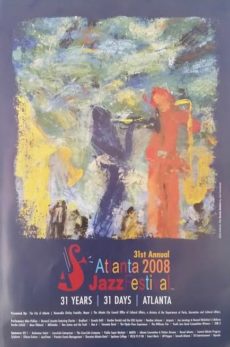
It is 2008 and Piedmont Park Conservancy embarked upon a restoration plan to bring the lawns to their former pristine condition, thus requiring the festival to move to another location. This year audiences were able to appreciate their free jazz from their blankets and chairs in Woodruff Park over the Memorial Day weekend from May 24th through May 26th.
The performers were Bernard Linnette featuring Charito, Gordon Vernick and the GSU Jazztet, Jaspects, Joe Jennings and Howard Nicholson’s Lifeforce, Mike Phillips, Ojeda Penn Experience, Ron James and the Truth, Rua and the Serenata Band.
The 2008 Future of Jazz Winners that performed were Bradford in the Nu Jazz category, Genetic Drift for Fusion, Heather Johnson for Contemporary Vocals, Kemba Cofield featuring Melvin Jones in the Straight-Ahead Vocals category, Mace Hibbard snagged the Straight-Ahead Instrumental and Zon 3 picked up the Contemporary Instrumental brand.
The festival sponsors were Anheuser Busch Companies, BET J, Coca Cola Company, Coca-Cola Enterprises, Publix Super Markets, Inc., Central Atlanta Progress, MARTA, Brand Atlanta, Atlanta Convention & Visitors Bureau, Bank of America, JazzTimes, Spelman College, 91.9 WCLK, Gibson Guitars, Ephiphone, SmartMusic, JW Pepper, Sheraton Atlanta Hotel, CONNECT Magazine, Smooth Atlanta, TD Entertainment, Upscale, Rolling Out and City Living Home Furnishings. #AJF40

#preserving genius
More Posts: festival,forty,free,history,jazz,music,tradition,years
Daily Dose Of Jazz…
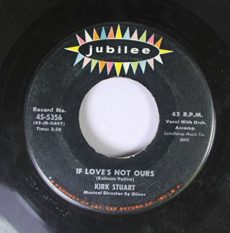
Kirk Stuart was born Charles Kincheloe Stuart on April 13, 1934 in Charleston, West Virginia. He studied at a conservatory before accompanying singers such as Billie Holiday in 1956, Della Reese from 1957–59 and for another two years with Sarah Vaughan beginning in 1961. He also arranged and conducted for these singers.
Stuart led his own unit in Los Angeles, California later in the 1960s, and recorded with Al Grey and once more with Reese along with a few 45 rpm records as a leader on the Josie and Jubilee labels during the decade. In later years he led ensembles in Las Vegas, and accompanied Joe Williams at the Smithsonian Institution in 1982.
Pianist, vocalist and educator Kirk Stuart, who taught at Howard University, passed away during spleen surgery on December 17, 1982.
Sponsored By

#preserving genius