

Daily Dose Of Jazz…
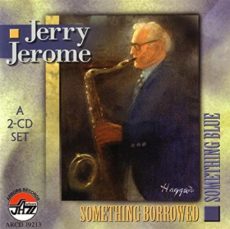
Jerry “Buck” Jerome was born on June 19, 1912 in Brooklyn, New York and began playing the saxophone in high school in Plainfield, New Jersey. In 1936 he was part of a national tour with bandleader Harry Reser and his Clicquot Club Eskimos.
He joined Glenn Miller’s original orchestra in 1937 and was a member until it broke up in 1938. He played on the Miller recording Doin’ the Jive in which in soloed. He then joined the Red Norvo band followed by taking a chair in the Benny Goodman Orchestra in 1938.
When Goodman broke up his band in 1940, Buck joined the Artie Shaw Orchestra. While with Shaw he appeared in the 1940 film Second Chorus starring Fred Astaire and Burgess Meredith.
Tenor saxophonist Jerry Jerome, who was a mainstay during the big band era and led four recording sessions, passed away on November 17, 2001.
Sponsored By


More Posts: saxophone
Daily Dose Of Jazz…
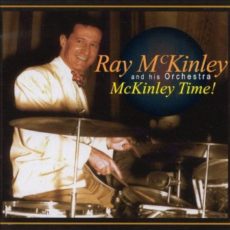
Ray McKinley was born on June 18, 1910 in Fort Worth, Texas. He got his start at age 9 working with local bands in the Dallas–Fort Worth area. Leaving home when he was 15, he played with Milt Shaw’s Detroiters and the Smith Ballew and Duncan-Marin bands. It was with the Smith Ballew band in 1929 that McKinley met Glenn Miller. The two formed a friendship that lasted from 1929 until Miller’s death in 1944. McKinley and Miller joined the Dorsey Brothers in 1934.
The Dorsey brothers split in 1935 and Ray remained with Jimmy Dorsey until 1939, when he joined Will Bradley, becoming co-leader. His biggest hit with Bradley, as a singer, was Beat Me Daddy, Eight to the Bar, which he recorded in 1940 and got a partial songwriting credit. Known also as Eight Beat Mack, taken from the lyrics to Down the Road a Piece, he recorded the song a trio with Will Bradley and Freddie Slack.
Splitting with Bradley in 1942, McKinley formed his own band and recorded for Capitol Records. The band was short-lived and he joined Glenn Miller’s Army Air Force Band, which he co-led with arranger Jerry Gray after Miller’s disappearance in December 1944. Upon discharge he formed a modern big band that featuring original material by legendary arranger Eddie Sauter and vocals by the leader. However, with business declining, by 1950 that band was history and his interest turned towards becoming a part-time leader and radio and TV personality.
In 1956, capitalizing on the popularity of The Glenn Miller Story movie with James Stewart, McKinley was chosen to be the leader of the revived Glenn Miller band, which he led until 1966. He co-hosted, with former Air Force band vocalist Johnny Desmond, a 13-week CBS-TV summer replacement series with the band called Glenn Miller Time in 1961. He also wrote the lyrics to the 1945 wartime song My Guy’s Come Back with music by Mel Powell and recorded by Benny Goodman with vocals by Liza Morrow on Columbia Records. His final recording session was in 1977 for Chiaroscuro Records. Drummer, singer, and bandleader Ray McKinley passed away on May 7, 1995.

Uplift Someone’s World

More Posts: drums
Daily Dose Of Jazz…
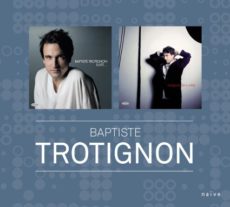
Baptiste Trotignon was born on June 17, 1974 near Paris, France. He started playing the violin at the age of 6 and the piano three years later attending the Nantes Conservatory. While there he won prizes for both piano and harmony. During his teen years he discovered and taught himself jazz and improvisation, playing his first concerts at the age of sixteen.
In 1994 he appeared in the movie Le Nouveau Monde as both actor and musician. Four years later he formed his own trio with bassist Clovis Nicolas and drummer Tony Rabeson. In 2000 he recorded his debut album Fluide winning the Django d’Or for Best First Album. His sophomore release Sightseeing picked up the Prix Django Reinhardt. He recorded his debut solo piano album was in 2003 titled Solo.
Over the course of his career he has performed with Eric Harland, Fabrizio Bosso, Russell Malone, Jeremy Pelt, Tom Harrell, Jeanne Added, Melody Gardot, onica Passos, Miossec, Donald Harrison, Billy Hart, Bireli Lagrene, Kenny Wheeler, Jeff “Tain” Watts, Gregory Hutchinson, Ari Hoenig, Brad Mehldau, David Murray, Stefano di Batista, Milton Nascimento, Didier Lockwood, Archie Shepp and the list goes on and on.
Pianist Baptiste Trotignon continues to compose music and and perform, often playing classical music as well as his own compositions and interpretations of music from Led Zeppelin and Bob Dylan to Edith Piaf.
Jazz Is Global – Share
More Posts: piano
Daily Dose Of Jazz…
Dominique Frances Eade (was born on June 16, 1958 in London, England. The daughter of an American Air Force officer and a Swiss mother, she grew up in a musical household and spent much of her childhood moving within the US and in Europe. She studied piano as a child and decided she was going to be a singer in the second grade. She picked up guitar in her teens, learning folk, pop and jazz songs and writing some of her own.
She played her first gigs in the coffee houses of Stuttgart while there in high school. Later, as an English major at Vassar, Eade sang for a time with a jazz group, Naima, which also included Poughkeepsie native Joe McPhee. Eade transferred briefly to Berklee College of Music, and then finished her degree at New England Conservatory (NEC), where pianist Ran Blake became an important mentor and performing colleague. Staying in Boston after graduation she soon began teaching at NEC.
Dominique was an active performer on the vibrant Boston jazz scene during the 80’s, forming groups with Boston-based artists including Mick Goodrick, Donald Brown and Bill Pierce. She toured the United States and Europe as a clinician and performer and in addition to her own groups, she performed contemporary classical music and was a featured soloist with Boston Musica Viva, Composers in Red Sneakers, NuClassix and jazz big bands Orange Then Blue and the Either/Orchestra.
By 1987 she became the first jazz artist to be accepted into the NEC Artist Diploma program, where she studied for two years with Dave Holland and Stanley Cowell, and in 1989 she became the first jazz performer to be awarded the New England Conservatory’s NEC Artist Diploma. In 1990, Dominique moved to New York City and released her first CD, The Ruby and the Pearl, featuring Alan Dawson and Stanley Cowell. During this time she maintained her teaching position at NEC, and performed in a variety of contexts including soloist roles in two Anthony Braxton operas, duo restaurant performances with Gene Bertoncini, and an adventurous trio with Ben Street and Kenny Wollesen.
She performed with various groups around the East Village with Mark Helias, Peter Leitch, Larry Goldings, John Medeski, Fred Hersch, Kevin Hays, James Genus, Gregory Hutchinson, and Tom Rainey. She recorded her second CD, My Resistance is Low with Bruce Barth, George Mraz, and Lewis Nash.
Prior to returning to Boston in 1996 she recorded two critically acclaimed CDs for RCA Victor, When the Wind Was Cool featuring Benny Golson, Fred Hersch, James Genus, Matt Wilson, and many others, and The Long Way Home with Dave Holland and Victor Lewis, highlighted her arranging and songwriting. She has toured the United States and Europe, then focused on composing, recording and local performances around Boston.
Dominique eventually began to reemerge in New York, first with Ran Blake, then in duos and quartets with Jed Wilson, Ben Street, Matt Wilson and Brad Shepik, all receiving critical recognition. She continues to perform, record and compose, teach at the New England Conservatory and give private lessons to the likes of Luciana Souza, Kate McGarry, Sara Lazarus, Lisa Thorson, Julie Hardy, Patrice Williamson, Kris Adams, David Devoe, Aoife O’Donovan, Roberta Gambarini and many others.
Sponsored By

Voices From The Community
#preserving genius
More Posts: vocal
Daily Dose Of Jazz…
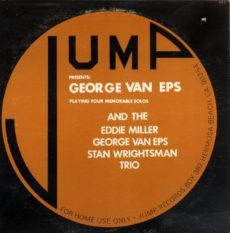
Stanley Aubrey Wrightsman was born on June 15, 1910 in Gotebo, Oklahoma. He began playing professionally in a Gulfport, Mississippi hotel, and in territory bands in Oklahoma. In 1930, he moved to New Orleans, Louisiana where he played with Ray Miller. From 1935–1936 he worked with Ben Pollack in Chicago, Illinois.
His career was interrupted by an illness, but then worked in California with the Seger Ellis Orchestra in 1937. He made his debut recordings were made soon thereafter with Spike Jones and his City Slickers. In the Forties and Fifties, Stan played with various big bands and ensembles in the traditional jazz genre, including Artie Shaw, Wingy Manone, Eddie Miller, Rudy Vallee, Nappy Lamare, Johnny Mercer, Harry James, Bob Crosby, Matty Matlock, Pete Fountain, The Rampart Street Paraders, Ray Bauduc, Wild Bill Davison, and Bob Scobey.
Wrightsman appeared in films and on the soundtrack of Blues in the Night, in which he stood in for Richard Whorf on piano, Syncopation, the Jack Webb film Pete Kelly’s Blues, the Red Nichols biopic The Five Pennies and in the feature film The Crimson Canary he appeared as a pianist.
During the 1960s, Wrightsman reunited with Pete Fountain and continued his work with Hollywood film studios. At the end of the decade, he moved to Las Vegas, Nevada where he played as a sideman for Wayne Newton and Flip Wilson.
From 1937 to 1971 he recorded 174 sessions that included Louis Armstrong, Eartha Kitt, George Van Eps, and Peggy Lee, whom he accompanied on the celesta for the song That Old Feeling in 1944. On December 17, 1975 pianist Stan Wrightsman passed away in Palm Springs, California.
Give A Gift Of Jazz – Share
More Posts: piano