

Daily Dose Of Jazz…
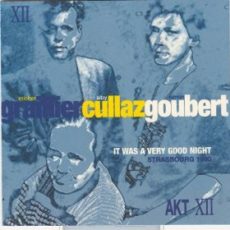
Albert “Alby” Cullaz was born on June 25, 1941 in Paris, France, the son of jazz music critic Maurice Cullaz and brother of guitarist Pierre Cullaz. He made his professional debut in 1963 as a member of the Johnny Griffin Quartet.
For many years Alby led a trio with Michel Graillier and Simon Goubert before becoming a sought after sideman. He worked with Joe Albany, Jean-Luc Ponty, Aldo Romano, Michel Graillier, Hank Mobley , René Thomas, Dizzy Gillespie, Slide Hampton, Lee Konitaz, Eddy Louiss, Art Taylor, Dexter Gordon, Kenny Clarke, Guy Lafitte, François Chassagnite, André Condouant, Raymond Fol, Steve Grossman, Rene Urtreger, Jacques & Micheline Pelzer, Sonny Grey, Philly Joe Jones and Chet Baker among others.
He was awarded the prize in 1972 Django Reinhardt Academy award and in 1973 he was received the Prix Django Reinhardt. Contra-bassist Alby Cullaz passed away at the age of 56 on February 8, 1998 after a long illness.

Inspire A Young Mind

More Posts: bass
Daily Dose Of Jazz…
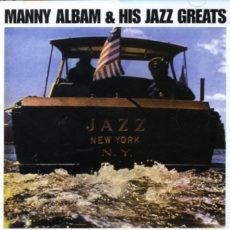
Manny Albam was born on June 24, 1922 in Samana, Dominican Republic. Growing up in New York City he became interested in jazz after hearing Bix Beiderbecke and at sixteen dropped out of school to play for Dixieland trumpeter-leader Muggsy Spanier, but it was his membership in a group led by Georgie Auld that turned his career around.
While playing with Auld group, saxophonist Budd Johnson mentored Albam as an arranger. By 1950, Albam put down his baritone sax and began to concentrate strictly on arranging, writing, and leading. Within a few years, he became known for a bebop-oriented style that emphasised taut and witty writing with a flair for distinctive shadings. Flute-led reed sections became his trademark.
He became known for his work for bandleaders Charlie Barnet and Charlie Spivak, before moving forward to collaborate with Count Basie, Stan Getz, Bob Brookmeyer, Coleman Hawkins, Dizzy Gillespie, Freddie Hubbard, Hank Jones, Mel Lewis, Art Farmer, Urbie Green, and Milt Hinton, among others.
Manny found an entree into the classical music world when he arranged Leonard Bernstein’s score for West Side Story in 1957. Bernstein was said to have been so impressed that he invited him to write for the New York Philharmonic, and, in due course, write such works as Concerto for Trombone and Strings, became musical director for United Artists-Solid State Records, composed the score for a few films and television programs, and recording the albums The Blues is Everybody’s Business, The Drum Suite, The Jazz Workshop, Jazz New York, Something New, Something Blue and his jazz suite The Soul of the City.
As an educator Manny started teaching summer workshops at the Eastman School of Music in Rochester, New York in 1964. He later joined the faculties of Glassboro State College in New Jersey and the Manhattan School of Music in New York. By 1988 he helped establish the BMI Jazz Composer’s Workshop to foster young composers and arrangers. In 1991 he eventually took over as director from Bob Brookmeyer and has as long list of former students throughout the music industry and in higher education, a pursuit he continued until his death.
Baritone saxophonist,composer,arranger, producer and educator Manny Albam passed away of cancer on October 2, 2001 in Croton-on-Hudson, New York.
Sponsored By

www.whatissuitetabu.com
More Posts: saxophone
Daily Dose Of Jazz…
Eli Robinson was born on June 23, 1911 in Greenville, Georgia. After working in Cincinnati in bands led by Speed Webb and Zack White, he worked as well with McKinney’s Cotton Pickers.
Robinson made his first recordings in 1935 with Blanche Calloway. In 1936 he moved to New York City where he played with Teddy Hill, and Willie Bryant. After working briefly with Roy Eldridge in Chicago in 1939, he joined Count Basie from 1941 to 1947.
During the 1950s and 60s, he worked with Lucky Millinder and Buddy Tate. Trombonist and arranger Eli Robinson passed away on December 24, 1972.
Dose A Day-Blues Away
More Posts: trombone

Daily Dose Of Jazz…
Donald Dean was born on June 21, 1937. ) He attended the University of Kansas, studying drums and Music Therapy, and playing snare drums in the marching band. He also played tympani, marimba, bells and snare drum in the university’s Symphony Orchestra. While matriculating, he played in a quartet with Nathan Davis on reeds, Elaine Brown Davis on piano, and trumpeter Carmel Jones.
His most famous recording was with Les McCann, Leroy Vinegar and Eddie Harris on the soul jazz album Swiss Movement, recorded live on June 21, 1969 at The Montreux Jazz Festival. He would go on to record a total of eight albums with McCann including Second Movement and Layers. Dean appeared as a jazz musician in the Tom Cruise/Jamie Foxx movie Collateral, has worked with Kenny Dorham, Jimmy Smith, George Gilliam, Carmel Jones and harold Land to name a few.
The Los Angeles Jazz Institute houses The Donald Dean Collection that includes reel to reel tapes of Sunday sessions at The Lighthouse that he recorded between 1952 and 1955. The collection also features over 700,000 photographic prints and negatives documenting both the southern and northern California scene from the mid 1960s through the late 1990s.
He has recorded on the Atlantic, Verve, Fresh Sound and Posi-Tone record labels, releasing two albums as a leader or co-leader. Drummer Donald Dean continues to perform at the age of 79 leading his own quartets and quintets.
Sponsored By
More Posts: drums