Daily Dose Of Jazz…
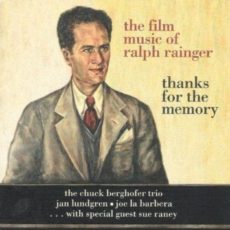
Chuck Berghofer was born Charles Curtis Berghofer on June 14, 1937 in Denver, Colorado. His interest in music began early coming from his grandfather who played with John Philip Sousa and his uncle who played tuba with the St. Louis Symphony. At eight he played trum and tuba in grade school until settling on the bass at the age of eighteen.
As a young adult he began venturing out to jazz clubs, gained an admiration to Ralph Peña and convinced him to take him on as a student. Berghofer played in high school trumpet and tuba and moved at eighteen to the double bass. Heavily influenced by Leroy Vinnegar, Paul Chambers and Ray Brown, he also admired the work of Scott LaFaro.
He went on to play with the Skinnay Ennis Orchestra, then joined Bobby Troup, Pete Jolly, Nick Martinis, Shelly Manne, Jack Sheldon, Conte Candoli, Frank Rosolino, Rahsaan Roland Kirk, Philly Joe Jones and was a member of the Abnuceals Emuukha Electric Symphony Orchestra.
He had a lengthy career in film, Berghofer, was also quite accomplished as a house jazz musician forming a semi-regular house band at Donte’s in Los Angeles with pianist Frank Strazzeri and drummer Nick Ceroli. They played with Roger Kellaway, Larry Bunker, Zoot Sims, Ray Charles, Bob Cooper, Ella Fitzgerald, Stan Getz, Peggy Lee, Shelly Manne, Gerry Mulligan, Art Pepper, Frank Rosolino, Carmen McRae, Seth MacFarlane, Barbra Streisand, Glen Campbell, Mel Torme and Frank Sinatra. Double bassist Chuck Berghofer continues to perform and record.

Inspire A Young Mind

More Posts: bass

Daily Dose Of Jazz…
Attila Cornelius Zoller was born on June 13, 1927 in Visegrád, Hungary and as a child was taught classical violin by his father, who was a professional violinist. By his teens, he switched to flugelhorn, then bass, and finally guitar.
Quitting school during the Russian occupation of Hungary following World War II, Attila began playing professionally in Budapest jazz clubs. He escaped Hungary in 1948 just before the permanent Soviet blockade of the country and began his serious music career after moving to Vienna in 1948. He formed a jazz group with accordionist and vibraphonist Vera Auer.
In 1954 Zoller left Austria for Germany in 1954, where he played with pianist Jutta Hipp, saxophonist Hans Koller and trombonist Albert Mangelsdorff. He was encouraged by Oscar Pettiford and Lee Konitz to move to America and did so in 1959 after winning a scholarship to the Lenox School of Jazz. There he studied with Jim Halland, roomed with Ornette Coleman and Don Cherry, whose influence sparked Zoller’s interest in free jazz.
Attila would go on to play and record with Chico Hamilton, Benny Goodman and Herbie Mann, Shirley Scott, Cal Tjader, Tony Scott, Jimi Hendrix, Stan Getz, Fred Nelson, Red Norvo, Jimmy Raney, Dave Pike, Herbie Hancock and Ron Carter, among others.
Zoller was the founding president of the Vermont Jazz Center (1985) where he also taught music until 1998. In 1995, he received the Lifetime Achievement Award from the New England Foundation for the Arts for his lifelong musical contribution to jazz. He was also a designer of musical instruments, patenting a bi-directional pickup for guitars in 1971 and helping to design his own signature line of guitars with different companies.
Guitarist Attila Zoller passed away on January 25, 1998 in Townshend, Vermont. He recorded more than two-dozen albums as a leader with Martial Solal, Hans Koller, Barre Phillips, Santi Debriano, Yoron Israel, Lee Konitz and Larry Willis among numerous others.
Enja Records released the tribute album of his music, Message To Attila in 2015 with Ron Carter, John Abercrombie, Mike Stern, Peter Bernstein, Pat Metheny, Jim Hall, Gene Bertoncini. He was awarded the Deutscher Filmpreis for Beste Filmmusik (best score) in Germany for the film Das Brot der frühen Jahre in 1962 and the Lifetime Achievement Award from the New England Foundation for the Arts.
Sponsored By

www.whatissuitetabu.com
More Posts: guitar
Daily Dose Of Jazz…
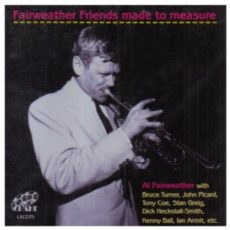
Al Fairweather was born Alastair Fairweather on June 12, 1927 in Edinburgh, Scotland. Following his education at the city’s Royal High School and Edinburgh College of Art, he served his National Service in Egypt.
In 1949 Fairweather started a band with his old schoolfriend Sandy Brown and in 1953 the pair went south to London along with Stan Greig. There they recorded a number of sides for Esquire Records as the Sandy Brown and later Fairweather-Brown All Stars.
When Brown went back to Scotland to complete his architecture studies, Al joined the Cy Laurie Jazz Band. His powerful, Louis Armstrong-inspired lead was a perfect foil for Laurie’s Johnny Dodds approach. From 1966 to 1968, he worked for clarinetist Acker Bilk.
Following a second career as an educator in Harrow, London, trumpeter Al Fairweather returned to Edinburgh in 1987, where he remained and played until his death on June 21, 1993 at the age of 66.
Dose A Day-Blues Away
More Posts: trumpet
Daily Dose OF Jazz…
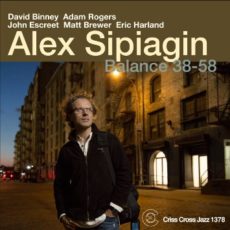
Alex “Sasha” Sipiagin was born June 11, 1967 in Yaroslavl, Russia. He began studying the trumpet at age 12, studying at the Moscow Music Institute and the Gnessin Conservatory in Moscow where he received his Baccalaureate. By 1990, he was a participant in the International Louis Armstrong Competition sponsored by the Thelonious Monk Institute in Washington D.C. where he won top honors.
Soon after Alex relocated to the jazz mecca of the world, New York City and soon became a favored player for various bands including the Gil Evans Orchestra, Gil Goldstein’s Zebra Coast Orchestra, the George Gruntz Concert Jazz Band, drummer Bob Moses’ band Mozamba, Mingus Big Band as well as the Mingus Dynasty and Mingus Orchestra, and the Dave Holland Big Band, Sextet and Octet groups.
In 2003 he recorded with Michael Brecker’s Quindectet touring also with the Michael Brecker Sextet. Sipiagin has also worked with Barbara Dennerlein, Eric Clapton, Dr. John, James Moody, Conrad Herwig, Aaron Neville, Elvis Costello, Michael Franks, Dave Sanborn, Deborah Cox, legendary producer Phil Ramone, Gonzalo Rubalcaba and many others.
Many of the recordings he has been a sideman have been nominated for or won a Grammy, as a soloist, Alex has recorded eleven recordings out to his credit, another four with Opus 5, and more than twenty-nine albums as a sideman. He has toured extensively throughout Europe, U.S., Japan and Russia with his own group.
As an educator he teaches at the Groningen Prince Claus Conservatory, Academy of Music, Basel, Switzerland as well holding a professorship at New York University.
Take A Dose On The Road
More Posts: flugelhorn,trumpet
Daily Dose Of Jazz…
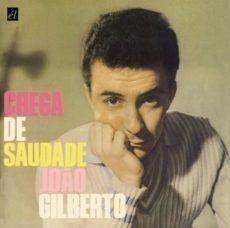
João Gilberto Prado Pereira de Oliveira was born on June 10, 1931 in Juazeiro, Bahia, Brazil. From an early age, music was a part of his life with his grandfather buying him his first guitar at the age of 14. During high school he teamed up with some of his classmates to form a small band and was influenced by Brazilian popular songs, American jazz, and even some opera, among other genres. After trying his luck as a radio singer in Salvador, Bahia he was recruited in 1950 as lead singer of the vocal quintet Garotos da Lua (Moon Boys) and moved to Rio de Janeiro. A year and a half later, he was dismissed from the group for his lack of discipline, showing up late to rehearsals or not at all.
João Gilberto’s first recordings were released in Brazil as two-song 78-rpm singles between 1951 and 1959. In the 1960s, Brazilian singles evolved to the “double compact” format, and João would release some EPs in this new format, which carried 4 songs on a 45-rpm record. For seven years, Gilberto’s career was at a low ebb. He rarely had any work, was dependent on his friends for living quarters, and fell into chronic depression. Eventually, in 1955 he was rescued from this rut by Luiz Telles, leader of the vocal group Quitandinha Serenaders, where he blossomed musically. His first bossa nova song was Bim-Bom, written as Gilberto watched passing laundresses on the banks of the Sao Francisco River balance loads of clothes on their heads.
This style, which Gilberto introduced in 1957, created a sensation in the musical circles of Rio’s Zona Sul, and many young guitarists sought to imitate it. It was first heard on record in 1958 in a recording of Chega de Saudade, a song by Jobim and Vinicius de Morais. With this success launching his career and the bossa nova craze, João featured new songs by a younger generation of performer/composers such as Carlos Lyra and Roberto Menescal on two more albums. By 1962, bossa nova had been embraced by North American jazz musicians such as Herbie Mann, Charlie Byrd, and Stan Getz, who invited Gilberto and Jobim to collaborate on what became one of the best-selling jazz albums of all time, Getz/Gilberto. Through this album, Gilberto’s then wife Astrud—who had never sung professionally prior to this recording session became an international star, and the Jobim/de Moraes composition The Girl from Ipanema became a worldwide pop music standard.
Gilberto went on to work with Claus Ogerman, Clare Fischer, Caetano Veloso, Gilberto Gil and Maria Bethânia among other collaborations. He won a Grammy Award for Best World Music Album in 2000 for his album João Voz E Violão. Singer, guitarist and composer João Gilberto continued to perform, record and composer until declining health and financial issues took their toll and on July 6, 2019 he transitioned at his apartment in Rio de Janeiro, Brazil. He was 88.