

Daily Dose Of Jazz…
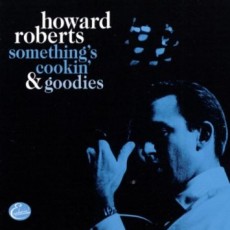
Howard Roberts was born on October 2, 1929 in Phoenix, Arizona and began playing guitar at the age of 8. By the time he was 15 he was playing professionally locally. He moved to Los Angeles in 1950 and with the help of Jack Marshall he began working with musicians, arrangers and songwriters including Neal Hefti, Henry Mancini, Bobby Troup, Chico Hamilton, George Van Eps and Barney Kessell.
Around 1956 Troup signed Howard to Verve Records as a solo artist and he he decided to concentrate on recording. He recorded both as a solo artist and “Wrecking Crew” session musician, a direction he would continue until the early 1970s. He would go on to play guitar on television themes such as The Twilight Zone, The Munsters, Bonanza, The Brady Bunch, Green Acres, Get Smart, Batman, Beverly Hillbillies, Andy Griffith, Peter Gunn, Mannix, Dick Van Dyke, I Dream of Jeannie, The Odd Couple and Mission Impossible among others. He also performed the theme for the classic Steve McQueen film Bullitt.
In 1961, Roberts designed a signature guitar, which was originally produced by Epiphone, a division of Gibson. The Howard Roberts signature was borne by two other models made by Gibson: the Howard Roberts Custom and the Howard Roberts Fusion III.
By 1963, Roberts recorded Color Him Funky and H.R. Is A Dirty Guitar Player, his first two albums after signing with Capitol Records. They both featured the same quartet with Roberts (guitar), bassist Chuck Berghofer, Earl Palmer on drums and Paul Bryant alternating with Burkley Kendrix on organ. He would go on to record nine albums with Capitol before signing with ABC Records/Impulse Records.
Over the course of his career he recorded with David Axelrod, June Christy, Buddy Collette, Milt Jackson, Hank Jones, John Klemmer, Charles Kynard, Herbie Mann, Thelonious Monk, Lalo Schifrin, Bud Shank, Bob Cooper, Gabor Szabo and Larry Williams, to name a few. As a member of the Wrecking Crew, he was a part of Phil Spector’s ‘Wall of Sound’ and played guitar on some of the most famous songs in pop music history.
From the late 1960s, Roberts began to focus on teaching rather than recording. He traveled around the country giving guitar seminars, and wrote several instructional books. For some years he also wrote an acclaimed column called “Jazz Improvisation” for Guitar Player magazine. he developed accelerated learning concepts and techniques, which led to the founding of Playback Music Publishing and the Guitar Institute of Technology. As a co-founder of GIT, now known as the Musicians Institute, his philosophy remains an integral part of the curriculum.
Guitarist Howard Roberts, who played rhythm and lead guitar, bass and mandolin, passed away of prostate cancer in Seattle, Washington on June 28, 1992. His life in music inspired the opening of Roberts Music Institute in Seattle, Washington, which is currently owned by his son, Jay Roberts.

Jazz Is Global – Share
Daily Dose Of Jazz…
Dave Holland was born on October 1, 1946 in Wolverhampton, England and taught himself to play stringed instruments, beginning at four on the ukelele, then graduating to guitar and later bass guitar. He quit school at the age of 15 to pursue his profession in a top 40 band, but soon gravitated to jazz. After seeing an issue of Down Beat magazine where Ray Brow had won the critics’ poll for best bass player, he went to a record store, and bought a couple of LPs featuring Brown backing pianist Oscar Peterson and also two Leroy Vinnegar albums. He was also drawn to Charles Mingus and Jimmy Garrison.
A move to London in 1964 saw Dave played acoustic bass in small venues and studying with James Edward Merrett, principal bassist of the Philharmonia Orchestra, who taught him to sight read and then recommended he apply to the Guildhall School of Music and Drama. HoBy age 20, he was keeping a busy schedule in school, studios and Ronnie Scott’s Jazz Club. There he played in bands that supported such touring American jazz saxophonists as Coleman Hawkins, Ben Webster and Joe Henderson as well as John McLaughlin, Evan Parker, John Surman, Chris McGregor, John Stevens and Kenny Wheeler.
In 1968, Miles Davis and Philly Joe Jones heard him at Ronnie Scott’s Jazz Club, playing in a combo that opened for the Bill Evans Trio. Jones told Holland that Davis wanted him to join his band, replacing Ron Carter. Two weeks later he was given three days’ notice to fly to New York for an engagement at Count Basie’s nightclub and his two years with Davis began. His first recordings with Davis were in September 1968, and he appears on half of the album Filles de Kilimanjaro with Chick Corea, Wayne Shorter and Tony Williams. He also appeared on the albums In A Silent Way and Bitches Brew that led to his playing more electric bass with a wah-wah pedal as Davis’ music evolved into more electronic and amp-based.
Post Davis, Holland briefly joined the avant-garde jazz group Circle with Chick Corea, Barry Altshul and Anthony Braxton and recorded a few albums. He would go on to work as a leader and as a sideman with many other jazz artists in the 1970s recording and performing with Sam Rivers, Airto Moreira, Steve Grossman, Keith Jarrett Jack DeJohnette, Gary Bartz, Stan Getz, John Abercrombie and Bonnie Raitt. During the 80’s he worked with his first quintet featuring of Steve Coleman, Kenny Wheeler, Julian Priester or Robin Eubanks; formed a trio with DeJohnette and Coleman, and a quartet with Coleman, Kevin Eubanks and Marvin “Smitty” Smith.
From the 1990s onward Holland renewed an affiliation with Joe Henderson to record So Near, So Far, Porgy & Bess and Joe Henderson Big Band. He reunited with Betty Carter for the Feed The Fire recording, Herbie Hancock’s recordings of The New Standard and the Grammy Album of the Year session, River: The Joni Letters.
Dave continued to create new groups, new music and new recordings winning Best Large Ensemble Album Grammys for his work; he has won Down Beat’s Critics Poll for Musician of the Year, Big Band of the Year, and Acoustic Bassist of the Year, the Jazz Journalists’ Association also honored him as Musician and Acoustic Bassist of the Year; and has received the Miles Davis Award at the Montreal Jazz Festival, among numerous other honors and doctorates from Berklee College of Music, New England Conservatory and the Birmingham Conservatory in England..
As an educator, he has served as the artistic director of the Banff Summer Jazz Workshop, has tught workshops and master classes worldwide at universities and music schools, and is President of the UK-based National Youth Jazz Collective. Double bassist, composer and bandleader Dave Holland continues to perform, record and tour.
Give A Gift Of Jazz – Share
More Posts: bass
Daily Dose Of Jazz…
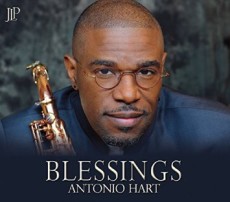
Antonio Hart was born on September 30, 1968 in Baltimore, Maryland. He attended the Baltimore School for the Arts initially trained as a classical musician. After graduating he attended and studied with Andy McGhee at Berklee College of Music and his interest turned to jazz. This was followed by a master’s degree from Queens College, city University of New York.
He gained recognition for his work with Roy Hargrove and has performed an recorded with Robin Eubanks, Dave Holland, McCoy Tyner, and Dee Dee Bridgewater. He has recorded nine albums as a leader
Alto saxophonist Antonio Hart is a member of the Alpha Phi Alpha fraternity and currently continues to perform, record and tour in conjunction with his serving as a. full-time professor of jazz studies in Aaron Copland School of Music at Queens College City University of New York.
Inspire A Young Mind
More Posts: saxophone
Daily Dose Of Jazz…
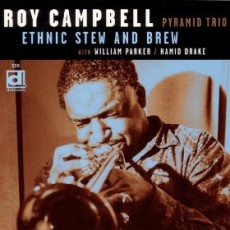
Roy Sinclair Campbell, Jr. was born on September 29, 1952 in Los Angeles, California and raised in New York. At the age of fifteen he began learning to play trumpet and soon studied at the Jazz Mobile program along with Kenny Dorham, Lee Morgan and Joe Newman. Throughout the 1960s, still unacquainted with the avant-garde movement, he performed in the big bands of the Manhattan Community College.
From the 1970s onwards he performed primarily within the context of free jazz, spending some of this period studying with Yusef Lateef. In the early 1990s Roy moved to the Netherlands and began performing regularly with Klaas Hekman and Don Cherry. He led his own groups but took a sideman seat to perform with Yo La Tengo, William Parker, Peter Brotzmann, Matthew Shipp and other improvisers.
Campbell returned stateside to lead his group Other Dimensions In Music while also forming the Pyramid Trio, without a piano, with William Parker. He performed regularly as part of the Festival of New Trumpet Music held annually in New York City. He recorded seven albums as a leader, twelve as a co-leader and nearly five dozen as a sideman working with the likes of Jemeel Moondoc, Saheb Sarbib, Billy Bang, Ehran Elisha, Rob Brown, Alan Silva, Yuko Fujiyama, Steve Lehman, the Maneri Ensemble, Khan Jamal, Kevin Norton, Garrison Fewell and Marc Ribot among numerous others.
Trumpeter Roy Campbell, who primarily performed in the bebop and free settings but also played funk and rhythm and blues, passed away on January 9, 2014 of hypertensive atherosclerotic Cardiovascular disease at the age of 61.
Dose A Day – Blues Away
More Posts: trumpet
Daily Dose Of Jazz…
John Gilmore was born on September 28, 1931. Growing up in Chicago, Illinois he played clarinet from the age of 14 and took up the tenor saxophone while serving in the United States Air Force from 1948 to 1952. He then pursued a musical career, playing briefly with pianist Earl Hines before encountering Sun Ra in 1953.
For the next four decades, he recorded and performed almost exclusively with Sun Ra. This was puzzling to some, who noted Gilmore’s talent, and thought he could be a major star like John Coltrane or Sonny Rollins. Despite being five years older than Gilmore, Coltrane was impressed with his playing, and took informal lessons from him in the late 1950s. His epochal, proto-free jazz “Chasin’ the Trane” was inspired partly by Gilmore’s sound.
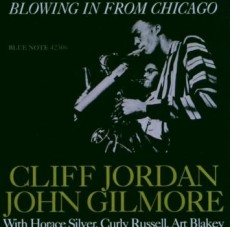
In 1957 he co-led with Clifford Jordan a hard bop Blue Note date Blowing In from Chicago with Horace Silver, Curly Russell and Art Blakey providing the rhythm section. In the mid-1960s John toured with the Jazz Messengers and participated in recording sessions with Paul Bley, Andrew Hill, Pete La Roca, McCoy Tyner, Freddie Hubbard, Elmo Hope, Phil Upchurch and others. By 1970 he was co-leading a recording with Jamaican trumpeter Dizzy Reece. Throughout his years of playing he mainly focused on the avant-garde with the Sun Ra Arkestra.
Gilmore’s devotion to Sun Ra was due, in part, to the latter’s use of harmony which he considered both unique and a logical extension of bebop. He occasionally doubled on drums and also played bass clarinet until Sun Ra hired Robert Cummings as a clarinet specialist in the mid-1950s. However, the tenor saxophonist made a huge contribution to Sun Ra’s recordings and was the Arkestra’s leading sideman, being given solos on almost every track on which he appeared.
John is known for his straight ahead post-bop running changes and fluency with a rhythmic and motive approach in addition to his long passages based exclusively on high-register squeals in the more abstract. His fame shrouded in the relative anonymity of Sun Ra’s Arkestra membership, his straight ahead post-bop talents are exemplified in his solo on the Arkestra’s rendition of “Blue Lou,” as seen on Mystery, Mr. Ra. Avant-garde tenor saxophonist John Gilmore led the Arkestra for a few years after SunRa’s death and up until his own of August 19, 1995.
Take A Dose On The Road
More Posts: saxophone