

Daily Dose Of Jazz…
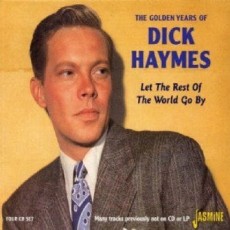
Richard Benjamin “Dick” Haymes was born on September 13, 1918 in Buenos Aires, Argentina. His mother was a well-known vocal coach and instructor and he became a vocalist in a number of big bands, worked in Hollywood, on radio, and in films throughout the 1940s and1950s.
Though never achieving the immensely popular status of fellow baritone crooners like Bing Crosby, Frank Sinatra or Perry Como was nonetheless just as respected for his musical ability. In 1942, Sinatra introduced him on the radio as his replacement in the Tommy Dorsey band, but prior to joining Dorsey’s group, he sang with the Harry James Orchestra.
Teaming with female vocalist Helen Forrest, they made numeroous hit duets during World War II, including Together, I’ll Buy That Dream, and Long Ago and Far Away, and he sang with Judy Garland on two Decca recordings of songs from the film The Shocking Miss Pilgrim, in which he appeared with Betty Grable. Haymes paired with the Andrew Sisters on a dozen or so Decca collaborations, including Teresa, Great Day, My Sin and Here In My Heart, backed by Nelson Riddle’s lush strings.
He joined Bing Crosby and The Andrews Sisters for 1947 session that produced the Billboard hit There’s No Business Like Show Business as well as Anything You Can Do (I Can Do Better). Between 1949 and 1950 Dick hosted Club Fifteen with the sisters.
In 1953, he nearly got deported for traveling to Hawaii, then a territory, without notifying the authorities, but eventually won his case to stay in the States. Falling on hard times financially by the 1960s he declared bankruptcy with a half million in debt. He appeared as unscrupulous doctor Elroy Gantman in a 1974 episode of the TV show Adam-12. Vocalist Dick Haymes, passed away from kung cancer in Los Angeles, California on March 28, 1980. He was 61 years old.

Give The Gift Of Knowledge
More Posts: vocal
Daily Dose Of Jazz…
Papa John DeFrancesco was born John Jasper DeFrancesco on September 12, 1940 in Philadelphia, Pennsylvania. Growing up with a father who played reeds in swing bands including the Dorsey Brothers, he began plaing trumpet at six and did not start playing organ until his wife bought him an organ for his 23rd birthday. After a few months of nearly nonstop practicing, he was ready to perform in clubs.
By 1967 he was a part of the Philadelphia jazz scene. However, in 1979 when his son Joey turned eight and started playing professionally, he temporarily gave up his career in order to supervise his son. Johnny, his other son, has also developed into a fine guitarist.
In the 90s Papa John returned to a more active playing career and recorded two sessions for Muse Records featuring Joey on trumpet, titled Doodlin’ and Comin’ Home. Both records gained him a national reputation of his own. His organ playing is in an infectious hard bop style that compliments his sons playing and it was while working with Joey that his career was revived
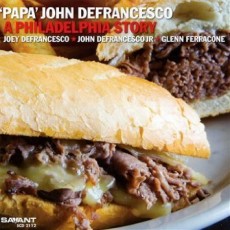
Between 2001 and 2006 he released four albums, took a five-year hiatus, and then returned to release A Philadelphia Story performed by a classic Hammond B-3 trio featuring John Jr. on guitar, drummer Glenn Ferracone with guest appearances by Joey and tenor saxophonist Joe Fortunato.
Organist and vocalist Papa John DeFranceso continues to perform, tour and record.
Put A Dose In Your Pocket

Daily Dose Of Jazz…
Stacy Rowles was born on September 11, 1955 to jazz pianist and composer Jimmy Rowles. Picking up an old trumpet in the family home she took right to it. She first performed with her father at the Monterey Jazz Festival and for a period she studied with vibraphonist Charlie Shoemake.
Perpetually undiscovered in America except on the West Coast but was better known in Europe. Stacy made her name partly in the company of her father, with whom she often played until shortly before his death in 1996.
She played restful, melodic solos with a warm tone and sang in a wise, honest voice, shy but swinging. She recorded her debut and only album Tell It Like It Is in 1984. Rowles recorded albums with her father titled I’m Glad There Is You, Me and the Moon and Looking Back. She also recorded with the Ben Sluijs Quartet and Frank Mantooth.
For a stretch in the early ’90s, father and daughter shared a weekly gig at Linda’s, a Los Angeles jazz club. On her own, Stacy also played regularly in several all-female jazz groups, including the all-female quintet the Jazz Birds, Maiden Voyage, in both of which she played alongside the trumpeter Betty O’Hara, the Jazz Tap Ensemble, the DIVA Big Band and the European band Witchcraft, with which she had toured since 2002.
Trumpeter, flugelhorn player and singer Stacy Rowles who had been active on the Los Angeles jazz scene since the 1980s, passed away from complications due to a car accident on October 30, 2009 at her home in Burbank, Calif. She was 54.
Jazz Is Global – Share
More Posts: flugelhorn,trumpet,vocal
Daily Dose Of Jazz..
William B. Lawsha, better known as Prince Lasha (pronounced “La-shay“), was born on September 10, 1929 in Fort Worth, Texas. He came of age studying and performing alongside fellow I.M. Terrell High School students John Carter, Ornette Coleman, Charles Moffett and Dewey Redman.
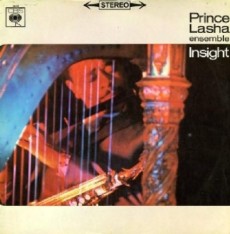
Lasha moved to California during the 1950s and by the Sixties he was active in the burgeoning free jazz movement, of which Ornette Coleman was a pioneer. Moving to Europe in 1966 his musical base was in Kensington, London and his album Insight was recorded, featuring local musicians including Bruce Cale, Dave Willis, Jeff Clyne, Rick Laird, Joe Oliver, David Snell, Mike Carr, Stan Tracey, John Mumford and Chris Bateson.
Prince returned to the U.S. in 1967, worked closely with saxophonist Sonny Simmons, recording two albums, The Cry and Firebirds for Contemporary Records. The latter album received five stars and an AMG Album Pick at Allmusic. He also appeared on two recordings with Eric Dolphy, Iron Man and Conversations, and Illumination! with the Elvin Jones/Jimmy Garrison Sextet featuring McCoy Tyner.
In the 1970s, Lasha and Simmons made additional recordings under the name Firebirds. In 2005, he recorded the album The Mystery of Prince Lasha with the Odean Pope Trio. He also recorded with Gene Ammons and Michael White.
Alto saxophonist, flautist and clarinetist Prince Lasha passed away on December 12, 2008 in Oakland, California.
Give A Gift Of Jazz – Share
Daily Dose Of Jazz…
Earl Humphrey was born on September 9, 1902 in New Orleans, Louisiana into a musical family. His father a prominent local clarinetist and music teacher, his older brother Willie was also a clarinetist and his younger brother Percy played the trumpet.
Earl learned to play trombone from his grandfather, joined a traveling circus with his father in 1919 and traveled widely in the 1920s. In 1927 he recorded with Louis Dumaine and played through the 1930s until he decided to retire from music, settling in Virginia in the 1940s.
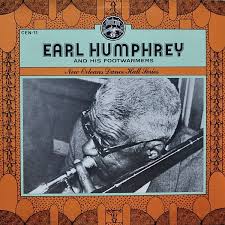
Returning to New Orleans in 1963, he was urged to resume his musical career. He joined his brother Percy’s band and played on a few albums, including Jazz City Studio. He recorded his first sessions as bandleader in 1966 titled Igor’s Imperial Orchestra and his sophomore project Earl Humphrey & His Footwarmers the following year on the Center label. Trombonist Earl Humphrey passed away on June 26, 1971 in his home in New Orleans at the age of 68.
Inspire A Young Mind
More Posts: trombone