


Hollywood On 52nd Street
Harry Warren composed the music and Mack Gordon, the lyrics for the now jazz standard, I Had the Craziest Dream, for the 1942 film Springtime In The Rockies. The film starred Betty Grable, Carmen Miranda, John Payne, Cesar Romero, Harry James and His Music Makers and the vocal group Six Hits and a Miss.
The Story: Broadway partners Vicky Lane and Dan Christy have a tiff over Christy’s womanizing. Jealous Vicky takes up with her old flame and former dance partner, Victor Price, and Dan’s career takes a nosedive. In hopes of rekindling their romance and getting Vicky back on the boards with him, Dan follows her to a ritzy resort in the Canadian Rockies, where she and Victor are about to open their new act. But things get complicated when Dan wakes after a bender to find that he’s hired an outlandish Latin secretary, Rosita Murphy, which makes Vicky think he’s just up to his old tricks again.
Sponsored By

www.whatissuitetabu.com

Daily Dose Of Jazz…
Emilie-Claire Barlow was born June 6, 1976 in Toronto, Canada to professional musician parents, so she grew up in recording studios. By age seven she had begun a career singing television and radio commercial
Encouraged by her parents to sing and study several instruments Emilie chose piano, cello, clarinet and violin. She went on to study voice at the Etobicoke School of Arts and music theory and arranging at Humber College. She lists Ella Fitzgerald, Tony Bennett and Stevie Wonder amongst her musical influences.
Barlow’s first album Sings was released in 1998. She has been named Female Vocalist of the Year at the 2008 National Jazz Awards, has been nominated five times for Canada’s Juno Awards and won Best Jazz Vocal Recording for her album Seule ce soir in 2013. The album also won Album of the Year – Jazz Interpretation at the 2013 ADISQ Awards. The same year she also picked up Best Jazz Vocalist of the Year from Sirius XM Independent Album of the Year.
Beyond music Emilie has also provided voices for many animated television series, including Sailor Venus and Sailor Mars in Sailor Moon, Bakugan Battle Brawlers and Courtney in Total Drama Island.
To date the jazz singer, arranger, record producer and voice actress has released 10 self produced jazz albums on her own label and has voiced dozens of characters for animated television series. She has performed and recorded with Melanie Doane, Peter Appleyard, Matt Dusk, Jay Oliver and Dave Weckl to name a few. Emilie-Claire Barlow continues to perform, record and tour.

Inspire A Young Mind
More Posts: vocal

Daily Dose Of Jazz…
ESP-Disk is a New York-based record label, founded in 1964 by lawyer Bernard Stollman. From the beginning, the label’s goal has been to provide its recording artists with complete artistic freedom, unimpeded by any record company interference or commercial expectations—a philosophy summed-up by the ESP motto, printed on every release: “The artists alone decide what you will hear on their ESP-Disk”.
Though it originally existed to release Esperanto-based music, but beginning with its second release, Albert Ayler’s Spiritual Unity, ESP became the most important exponent of what is commonly referred to as free jazz. However ESP also ventured into releasing recordings by non-commercial underground rock acts including The Fugs, The Godz and Pearls Before Swine. Though it suspended releasing records in the 1970s, several new releases by iconic and cutting edge artists have been released by the label, that still exists with nearly its entire catalog available.
A select list of the artists who have recorded for this label include Ornette Coleman – “Town Hall Concert”, Pharaoh Sanders – who made his recording debut on ESP, Sun Ra, Ronnie Boykins, Marion Brown, Sonny Simmons, Paul Bley, Ran Blake, Don Cherry, Giuseppe Logan, Byron Allen, Bob James, Gato Barbieri, Lowell Davidson, Gary Peacock, Frank Wright, Henry Grimes, Noah Howard, Tuli Kupferberg, Karl Berger, MarzetteWatts and Perry Robinson.
Stollman has faced allegations of not paying royalties to the artists or that were signed to unfavorable contracts with low percentage rates from ESP-Disk brought by mostly the underground groups. It is claimed he has committedly stated royalties were his as well as all publishing rights.
The label’s catalog has been licensed frequently over the years, and founder Bernard Stollman has resumed direct responsibility for reissues and for emerging artists.
Dose A Day – Blues Away
More Posts: record label
Daily Dose Of Jazz…
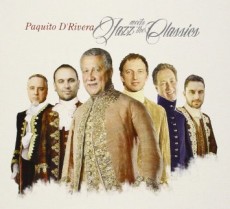
Paquito D’Rivera was born on June 4, 1948 in Havana, Cuba. He performed at age 10 with the National Theater Orchestra, studied at the Havana Conservatory of Music, and at 17, became a featured soloist with the Cuban National Symphony.
Through the Sixties and Seventies Paquito was dissatisfied playing under the constraints placed on his music by a communist Cuban government that described jazz and rock as imperialist music. After meeting with Che Guevara the idea of leaving Cuba became more than a thought. In early 1981, while on tour in Spain, he sought asylum with the American Embassy, leaving his homeland, wife and child behind in search of a better life with a promise to get them out.
With family support already in the States, D’Rivera settled into the New York jazz scene and became something of a phenomenon after the release of his first two solo albums, Paquito Blowin in 1981 and Mariel the following year. Throughout his career in the U. S. his albums have hit the top of the jazz charts and have shown his ability playing bebop, classical and Latin/Caribbean music. He is the only artist to ever have won Grammy Awards in both Classical and Latin Jazz categories.
Paquito also plays with the Ying Quartet, Turtle Island String Quartet, Mark Summer, Alon Yavnai, Yo-Yo Ma, as well as the National, London, Puerto Rico, Costa Rican and Simon bolivar Symphony Orchestras and the London and Florida Philharmonic Orchestras.
With his band, Paquito D’Rivera Quintet consisting of Peruvian bassist Oscar Stagnaro, Argentinean trumpeter Diego Urcola, American drummer Mark Walker and pianist Alex Brown they have won a Latin Grammy for Best Latin Jazz Album for Live At The Blue Note for a total of seven and has also won fourteen Grammy Awards.
Alto and soprano saxophonist, clarinetist, composer and bandleader Paquito D’Rivera has to date 72 albums as a leader and another 5 as a sideman playing with Dizzy Gillespie and Lalo Schifrin. He has received the National Medal of Arts, NEA Jazz Master, Jazz Legend Award, Two honorary Doctorates, and the Presidents Award from the IAJE amongst numerous others, continues to perform, record and tour.
Take A Dose On The Road
Daily Dose Of Jazz…
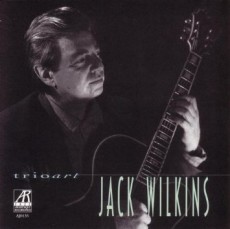
Jack Wilkins was born on June 3, 1944 in Brooklyn, New York. He has played with many jazz greats including Bob Brookmeyer, Stanley Turrentine, Jimmy Heath, Epitaph Mingus and Eddie Gomez as well as singers Mel Torme, Ray Charles, Morgana King, Sarah Vaughan, Tony Bennett, The Manhattan Transfer, Nancy Marano and Jay Clayton.
Wilkins’ cover of the Freddie Hubbard standard “Red Clay”, from his 1973 album Windows, was sampled by the hip-hop group A Tribe Called Quest on their 1993 album Midnight Marauders and also by Chance the Rapper on the song NaNa, off his 2013 mix-tape Acid Rap. His full cover was subsequently included on the 1998 break beat compilation Tribe Vibes Volume 2.
Wilkins was awarded an NEA grant in recognition of his work with the guitar. He currently teaches at The New School, New York University, Long Island University and the Manhattan School of Music in addition to performing, recording and touring.
Put A Dose In Your Pocket
More Posts: guitar