


Daily Dose Of Jazz…
Karl Curtis George was born on April 26, 1913 in St. Louis, Missouri. Early in his career he played with McKinney’s Cotton Pickers in 1933, and Cecil Lee. in the 1930s he spent time in the Jeter Pillars Orchestra and then in the orchestras of Teddy Wilson from 1939–40, followed by a year-long stint with Lionel Hampton in 1941.
George served in the Army from 1942 to 1943, then moved to California and played with Stan Kenton, Benny Carter, spent a spring with Count Basie and in Los Angeles with Happy Johnson, his final collaboration of note.
He also played in sessions led by Charles Mingus, Slim Gaillard, Oscar Pettiford, Dinah Washington and Lucky Thompson. During years1945-1946 Karl led his own group on record the track “Peek-A-Boo” by the Karl George Octet, originally released on Melodisc, has been reissued on a Topnotch compilation.
Jazz trumpeter Karl George retired back in his hometown once his health got the better of him, while recordings he had played on continued to be stocked on record store shelves. He lived out the rest of his life in almost total obscurity until passing away in May 1978.

Dose A Day – Blues Away
More Posts: trumpet
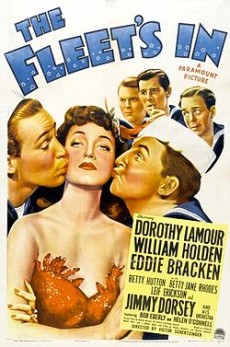
Hollywood On 52nd Street
Tangerine and I Remember You are two jazz classics that came from the talents of Victor Schertzinger, who composed the music and Johnny Mercer, who wrote the lyrics. The songs was published in 1941 and was introduced in the 1942 movie, The Fleet’s In. The film starred Dorothy Lamour, William Holden, Eddie Bracken, singer Casey Daley and introduced Betty Hutton in her film debut. Jimmy Dorsey and his band are prominently featured in the movie.
The Story: Shy sailor Casey Kirby suddenly becomes known as a sea wolf when his picture is taken with a famous actress. His buddies then make a bet with some other sailors that Casey can defrost an icy nightclub singer known as the Countess.
Sponsored By

www.whatissuitetabu.com
Daily Dose Of Jazz…
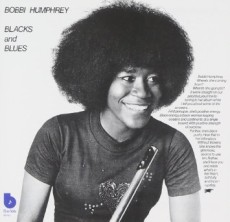
Bobbi Humphrey was born Barbara Ann Humphrey on April 25, 1950 in Marlin, Texas but was raised in Dallas. She studied classical and jazz styles before graduating from Lincoln High School in 1968 and then continued her studies at Texas Southern University and Southern Methodist University. When Dizzy Gillespie saw her play at a talent contest at Southern Methodist, he inspired her to pursue a musical career in new York City.
Humphrey followed his advice, getting her first big break performing at the Apollo Theatre on Amateur Night. She eventually began playing regularly throughout the city. By 1972, she was recording for the Blue Note Jazz label, one of the first female instrumentalists to do so. Since her debut for the label she has performed with Duke Ellington, Lee Morgan, George Benson and Stevie Wonder amongst a host of other musicians.
In 1976, she was named Best Female Instrumentalist by Billboard. In 1994 Humphrey launched her label, Paradise Sounds Records, releasing Passion Flute, which continues to be one of her best-selling recordings. She has played the Hollywood Bowl, Carnegie Hall, Montreux Jazz Festival and the Russian River Jazz Festival in Northern California, as well as other venues around the world.
Flautist and vocalist Bobbi Humphrey has a dozen albums in her catalogue, having taken a break from recording from 1979-1989 and has not recorded an album since her best selling Passion Flute in 1994. She continues to perform fusion, jazz funk and soul jazz music styles, compose, produce and tour.
Inspire A Young Mind
More Posts: flute
Daily Dose Of Jazz…
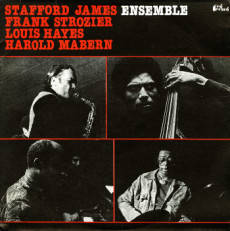
Stafford James was born April 24, 1946 in Evanston, Illinois. As a young man he enlisted in the Air Force and after his discharge he studied at the University of Chicago. In 1969 he moved to New York City and studied at the Mannes College for Music. Here he met Pharoah Sanders, with whom he played his first jazz concerts in New York. He played with Monty Alexander, Sun Ra, Alice Coltrane and Albert Ayler.
James did the first road tour of the Broadway show Hair through Canada, met Melba Moore in 1971 and played the David Frost Revue with her, and went on to Rashied Ali, Roy Ayers, Al Haig, Barry Harris, Andrew Hill, Andrew Cyrille and Chico Hamilton.
In 1973 Stafford toured Europe for the first time with Gary Bartz, then became a member of Art Blakey’s Jazz Messengers. At the same time he met Woody Shaw, began a lifelong friendship with Betty Carter and started teaching at the United Nations International School in NYC. He recorded his debut album as a leader in 1975 with Enrico Rava, Dave Burrell and Beaver Harris. A year later he founded a quintet and toured Europe.
He met Dexter Gordon while on tour with Al Cohn and recorded Homecoming with him upon his return to the United States. He continued to tour through the 1980s, arranged compositions by Ellington, and composed sonatas. By the end of the decade and into the next James moved to Paris, collaborated with Pharoah, Barney Wilens and Lavelle, formed the Stafford James Project, played with his trio and continued to compose for large ensembles.
His list of collaborations, recording sessions and tours is extensive and in recent years he has recorded The Stafford James String Ensemble, taught master classes at the university level, had a two-hour program on his life and compositions, founded the Top Hat Music Society, performed with Max Roach’s percussion ensemble M’Boom and continue his tradition of performance, composing, recording and touring around the world.
Put A Dose In Your Pocket
More Posts: bass
Requisites
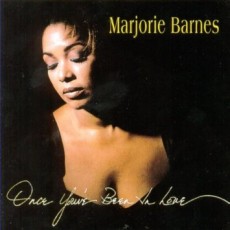
Once You’ve Been In Love by Marjorie Barnes was originally produced with twelve classic standards in the 1990s as a promotional piece to get gigs in Europe, it has since been made available to a wider audience. The vocalist was born and raised in New York City, has had starring roles on Broadway in Hair and Dreamgirls, sang with the Fifth Dimension for two years, and then made Europe her home – living in London, Paris, Vienna and Holland from 1978 to 2000. She moved back to the States working alongside Frank Sinatra, Sammy Davis Jr., Lena Horne, Billy Eckstine, Marcus Miller and Mel Lewis. In 2012 she returned to Europe making her home once again in Holland.
A rare find, temporarily unavailable on major purchase sites, however, there are a few available online from different sellers that can be snatched up.
Producer: Marjorie Barnes
Playing Time: 47.5 Minutes
Songs: Watch What Happens, Fascinating Rhythm, Once You’ve Been In Love, The Surrey With The Fringe On Top, He’s My Guy, Isn’t It A Pity, I’ve Got The World On A String, The Beauty And The Beast, A Little Tear, I Can’t Believe That You’re In Love With Me, No More Blues, Never Will I Marry

More Posts: collectible,vocal