

Daily Dose Of Jazz…
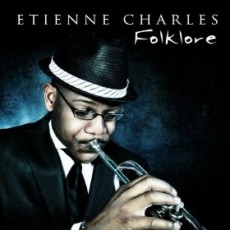
Etienne Charles was born in Trinidad on July 24, 1983 into a family with four generations of musicians. He was immersed in the folk music of his country suffused with the sounds of calypso, steel pan and African Shango drumming to create the diverse colors of his harmonic palette.
The Bishop Anstey Junior School proved to be a potent incubator where he began playing the recorder, followed by trumpet at 10 and formal lessons. An athlete with prowess, Etienne eclipsed his musical success with academics with football, cricket, swimming and water polo teams at Fatima College, winning the Provincial Cup three times, first at the age of 13. He studied privately, at the Brass Institute, become a member of the band, added drums and percussion, landed his first job in a pit orchestra, worked with his father on the road during carnival and with Phase II for the Panorama steel pan competition.
By sixteen Charles was attending the summer performance program at Berklee College of Music, then on to Florida State University, placed or won several competitions, performed at North Sea Jazz Festival, attended the Henry Mancini Institute and received his Master’s from Julliard School of Music.
Etienne has toured, performed or recorded with the Juilliard Jazz Orchestra, Grammy Award winners Roberta Flack, Wynton Marsalis, Johnny Mandel, Ralph MacDonald, Maria Schneider and the Count Basie Orchestra as well as Marcus Roberts, Monty Alexander, Frank Foster, Wycliffe Gordon, Rene Marie, Lord Blakie and David Rudder.
He released his debut album “Culture Shock” in 2006 was followed by “Folklore” three years later and then “Kaiso”. Trumpeter and composer Etienne Charles stands at the vanguard of a new generation of Caribbean musicians and he continues to record, perform and tour.
More Posts: trumpet
Daily Dose Of Jazz…
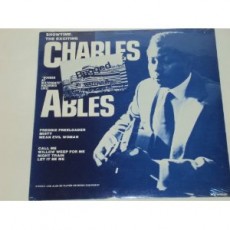
Charles Ables was born on July 23, 1943 in Mississippi and started out on his musical career playing the guitar. He worked with Ray Charles prior to switching to bass to become a member of the Shirley Horn Trio in the early Eighties. He would tour the world and record with her on Steeplechase and then Verve record labels over the next three decades
Ables is heard on guitar as well as bass on several of these, including You Won’t Forget Me, which featured guest contributions from both Miles Davis and Wynton Marsalis, Light Out of Darkness, Horn’s tribute to Ray Charles, I Thought About You, Close Enough For Love, Here’s To Life and the Grammy-winning I Remember Miles.
As well as accompanying Shirley Horn, Charles is heard with the trio on Carmen McRae’s last album in 1990, Sarah – Dedicated to You, in which Horn is featured in her often forgotten role as a pianist. He recorded in similar circumstances with Toot Thielemans on his album For My Lady, with Joe Williams and as a leader.
Bassist and guitarist Charles Ables passed away on October 8, 2001 in Washington, D. C.
Daily Dose Of Jazz…
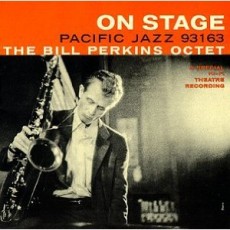
Bill Perkins was born on July 22, 1924 in San Francisco, California, grew up in Chile, moved to Santa Barbara and served in the military during World War II. While living in Santa Barbara after his discharge, he studied music and engineering at Cal-Tech at the University of California and a Westlake College.
Bill started out performing in the big bands of Woody Herman and Jerry Wald. He also worked for the Stan Kenton orchestra, a move that subsequently led to his entry into the cool jazz idiom. He became one of the coolest and a major influence in the cool school on the West Coast jazz scene.
Perk, as he was known, started recording as a leader in 1956 with John Lewis on Grand Encounter and sessions with Art Pepper, Bud Shank and Richie Kamuca, to name just a few. During the 60s he held had a dual career as a studio musician and recording engineer. From 1970-1992 he held a chair in The Tonight Show band and a member of the Bud Shank Sextet.
Though he played baritone, alto, soprano and flute he was best known for his tenor and most remembered for his baritone and tenor work with The Lighthouse All-Stars. Over the course of his career Bill Perkins recorded twenty-three albums as a leader and sideman up until the time of his death on August 9, 2003.
Daily Dose Of Jazz…
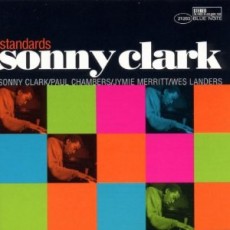
Sonny Clark was born Conrad Yeatis Clark on July 21, 1931 in Herminie, Pennsylvania, learned to play the piano and by age 12 was living in Pittsburgh. When visiting an aunt in California at age 20, he decided to stay and began working with saxophonist Wardell Gray. Clark went to San Francisco with Oscar Pettiford and after a couple months, began working with clarinetist Buddy De Franco in 1953, subsequently touring the U.S. and Europe until 1956. It was then he became a member of The Lighthouse All-Stars, led by bassist Howard Rumsey.
Wishing to return to the east coast, Clark served as accompanist for singer Dinah Washington in 1957, allowing him to relocate to New York City. He became an often-requested sideman partly because of his rhythmic comping. Frequently recording for Blue Note Records, Sonny held a sideman chair for such luminaries as Kenny Burrell, Donald Byrd, Paul Chambers, John Coltrane, Dexter Gordon, Art Farmer, Curtis Fuller, Grant Green, Philly Joe Jones, Hank Mobley, Charles Mingus, Lee Morgan and Billie Holiday among a host of others.
As a leader Clark recorded albums Dial “S” For Sonny, Sonny’s Crib, Sonny Clark Trio with Paul Chambers and Philly Joe Jones, Cool Struttin’ and Sonny Clark Trio with George Duvivier and Max Roach.
Pianist Sonny Clark, who mainly worked in the hard bop idiom, died of a heart attack in New York City on January 13, 1963. It is thought by some commentators that his drug and alcohol abuse contributed to his premature death.
More Posts: piano

Daily Dose Of Jazz…
Cynthia Scott was born July 20, 1951 in El Dorado, Arkansas, the tenth of twelve children. She started singing at the age of four, and was exposed to a wide variety of music. She grew up soaking in a myriad of influences such as Carmen McRae, Robert Flack, Aretha Franklin, Billie Holiday, Sarah Vaughan and Ella Fitzgerald.
After high school Scott moved to Dallas, Texas and while working as an airline stewardess honed her craft with James Clay, Claude Johnson, Roger Boykin, Onzy Matthews and Red Garland. In 1972 she became a Raelette, backing Ray Charles for two years. During this time they toured Europe with Oscar Peterson, Joe Pass, The Count Basie Orchestra and Joe Williams.
Following Charles’ death she would work with Hank Crawford, Marcus Belgrave, and David “Fathead” Newman. By the late 80s she was in New York’s Chelsea Place hiring a young Harry Connick Jr., turning a four-week engagement into three years. She has since headlined at such jazz spots as Birdland, Iridium, Dizzy’s Club Coca Cola and the Super Club.
Cynthia has worked with Lionel Hampton, Cab Calloway, Kevin Mahogany, The Harper Brothers, Bill Charlap, Julius LaRosa, Norman Simmons and Wynton Marsalis, the later bringing her in to be the first vocal to sing in Jazz at Lincoln Center’s Rose Room to test its acoustics.
Scott’s list of accomplishments are too long to enumerate but on the short list she has performed at festival worldwide, toured with the musical “Midnight in the Garden of Good and Evil”, was a finalist in the 1998 Thelonious Monk Vocal Competition, and the 2005 International Songwriting Competition, is a vocal teacher at The New School and City College and teaches private students and among other things has been a Jazz Ambassador for U.S. State Department.
Vocalist and educator Cynthia Scott was inducted into the Arkansas Black Hall of Fame in 2016 and she continues to perform, tour and record.
More Posts: vocal