


Daily Dose Of Jazz…
Luciano Troja was born in Messina, Italy on July 6, 1963. Self-taught from the age of 6, he studied for several years with the pianist-composer Salvatore Bonafede. In New York City, for a brief and intensive time, he studied with Richie Beirach. He attended several jazz courses and clinics such as Siena Jazz, Berklee Clinics in Umbria, Aebersold School in London, and piano courses with Shirley Scott, James Williams and Franco D’Andrea.
Luciano has performed at festivals and jazz clubs in Europe and the United States. He is the pianist of the Mahanada Quartet, an original combination of free improvisation and written music. He released three CDs with Mahanada that garnered extremely good reviews and recognitions. He released two CDs in duo with the guitarist Giancarlo Mazzù, Seven Tales About Standards and Seven Tales About Standards Vol. 2, both considered as a creative and original approach to the standards.
He along with Salvatore Bonafede of Double Piano Orchestra have recorded Double Rainbow and My Funny Valentine (Wide Sound, 2008).
He has been named Talent of the Year, Pianist of the Year, Group of the Year and CD of the Year in Top Jazz Poll of Musica Jazz magazine. He has since released At Home With Zindars a piano solo project. Pianist Luciano Troja continues to perform and record.

More Posts: bandleader,history,instrumental,jazz,music,piano
Daily Dose Of Jazz…
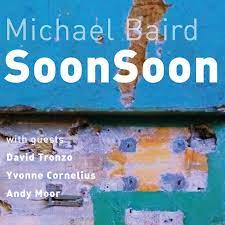
Michael Baird was born Lusaka, Zambia on July 5, 1954 and moved to the Netherlands at an early age, where he learned to play drums. Since the mid-1970s he has worked with several Dutch jazz groups and from 1975-83 he played and recorded with Gijs Hendriks, Slide Hampton, Kenny Drew, Raul Burnet, Sonny Grey, Siggi Kessler, Michel Herr, Michel Grailler, Joe Diorio, Jan Akkerman, Wim Overgaauw, Stan Tracey, and Kenny Wheeler.
He founded his own label SWP Records in 1986, led his group Sharp Wood for a decade beginning in 1986 and the octet Utrecht Deep Artment for two years. In 2000 he put together a quintet CapeAbility, followed by sextet Trendy 3D Junk and by 2002 was performing solo concerts along with various other projects and composition commissions.
He has compiled and produced a 22 Cd series “Historical Recordings by Hugh Tracey” of African music from the 40s and 50s, made his own field recordings in Zambia, Zimbabwe, Lesotho and released both on SWP Records.
Drummer, percussionist and keyboardist Michael Baird continues to perform, record and push the boundaries of jazz.
More Posts: bandleader,drums,history,instrumental,jazz,keyboards,music,percussion
Daily Dose Of Jazz…
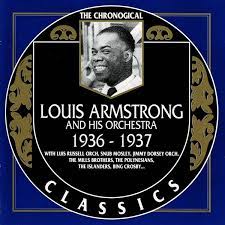
Leonard “Ham” Davis was born July 4, 1905 in St. Louis, Missouri and began his career in his hometown playing with the Odd Fellows Boys’ Band as a teenager and landing a spot in Charlie Creath’s band.
>Late in the 1920s, Ham relocated to New York City, where he played in the bands of Edgar Hayes and Arthur Gibbs. His first recording was with Eddie Condon’s ensemble in 1929, and then he sat in with McKinney’s Cotton Pickers that same year. In the 1930s he played with Benny Carter, Don Redman, and Elmer Snowden, and did a two-year stint in Louis Armstrong’s orchestra starting in 1935.
Toward the end of the decade he toured Europe with Edgar Hayes and played in the Blackbirds revue in New York City. Davis joined Sidney Bechet’s revival group in 1940, and also played in bands led by Maurice Hubbard, Albert Socarras, and George James. He continued performing in small-time settings in New York through the mid-1950s.
Trumpeter Ham Davis transitioned in 1957.
More Posts: history,instrumental,jazz,music,trumpet
Daily Dose Of Jazz…
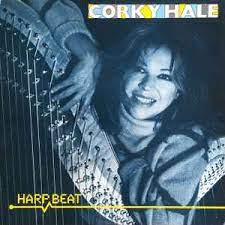
Corky Hale was born Merrilyn Hecht on July 3, 1936 in Freeport, Illinois. She learned piano, harp, flute, and cello by the time she was in her teens. She went on to study at the Chicago Music Conservatory and then at Interlochen Center for the Arts in Michigan.
By age 16 she had enrolled in Stephens College, a school for young ladies, for her last year of high school. After graduation she decided to move to Hollywood, California to be a musician but her father had other plans, sending her to nearby University of Wisconsin–Madison. After a year she dropped out, intent on moving to Hollywood but again a compromise with her parents led her to UCLA.
During the 1950s, she became a studio musician in Hollywood, playing harp on albums by Chet Baker, June Christy, Ella Fitzgerald, Anita O’Day, and Frank Sinatra. She worked as a vocalist with Freddy Martin at the Coconut Grove in Los Angeles, California. Jerry Gray invited her to perform with his band in Las Vegas, Nevada where she played piano for Billie Holiday and accompanied her on tour.
As a solo act, she recorded the album Corky Hale Plays George Gershwin and Vernon Duke with Buddy Collette, Howard Roberts, and Chico Hamilton. The late Sixties saw her accompany Tony Bennett on The Tonight Show Starring Johnny Carson and sang a song by herself.
She has worked with Liberace, Barbra Streisand, Elkie Brooks, Harry James, Peggy Lee, James Brown, Spike Jones, George Michael, Roberta Flack, Les McCann, Herbie Mann, Nina Simone and Björk, to name a few. Hale has also produced plays, including Give ‘Em Hell, Harry, starring Jason Alexander and Lullaby of Broadway, a profile of the lyricist Al Dubin. She has appeared at Vibrato, Catalina Bar & Grill, The White House, and the Kennedy Center.
At the University of Wisconsin, Hale was one of the few white students to join the NAACP. She was a birth control teacher at Planned Parenthood in New York and is on the National Advisory Board of NARAL and on the board of WRRAP. She is an American Film Institute associate and is the founder of Angel Harvest, an organization which redistributes unused food from restaurants, hotels, and events to hungry and needy people in Los Angeles.
Harpist, pianist, flutist, and vocalist Corky Hale, who recorded four albums as a leader and has been a theater producer, political activist, restaurateur, and is the owner of the Corky Hale Women’s Clothing Store in Los Angeles.
More Posts: bandleader,flute,harp,history,instrumental,jazz,music,piano,vocal
Daily Dose Of Jazz…
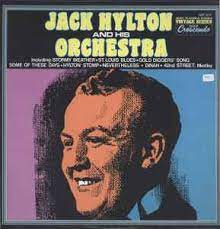
Jack Hylton was born John Greenhalgh Hilton on July 2, 1892 in Great Lever near Bolton, Lancashire, England the son of a cotton yarn twister and an amateur singer at the local Labour Club. He learned piano to accompany him on the stage and later sang to the customers when his father bought a pub in nearby Little Lever, becoming known as the Singing Mill-Boy. He also performed as a relief pianist for various bands.
Moving to London, England as a pianist in the 400 Club during his early career and playing with the Stroud Haxton Band. During World War I he became musical director of the band of the 20th Hussars, and later in the Army Entertainment Division. After the war Hylton formed a double act with Tommy Handley to little success, played with the Queens Dance Orchestra, wrote arrangements of popular songs and recorded them for His Master’s Voice and Zonophone under the label Directed by Jack Hylton. His records carried the new style of jazz-derived American dance music.
Dismissed by his own bandmates from the Queen’s Hall in 1922, Jack not only set up his own band, but also set up a number of other orchestras under the Jack Hylton Organisation. Even though he was not professionally trained for business, he brought his band to success during the Great Depression. He is credited for bringing Duke Ellington, Louis Armstrong and others to Britain and Europe in the 1930s.
Hylton also became a director and major shareholder of the new Decca record label, recorded with Paul Robeson, and made the first transatlantic entertainment broadcast with Paul Whiteman and his orchestra. He performed in the United States when Standard Oil signed him for a radio show on CBS. Returning to Britain he toured Europe, appeared on radio and television and finally disbanded by 1940.
He continued to conduct orchestras for radio in the years to come, leading the Glenn Miller Orchestra when it visited England in 1943. During the war, he took the London Philharmonic Orchestra around Britain, giving promenade concerts. At this point in his career he became an impresario, discovering new stars and managing radio, film and theatre productions.
The Fifties saw him reuniting with old band members for that year’s Royal Command Performance, billed as “The Band that Jack Built”. He founded Jack Hylton Television Productions, which lasted until 1960. IIn his final years Hylton was still producing stage shows, as well as taking a leading role in organising various Royal Command Performances, until his final stage production, Camelot, in 1965.
Complaining of chest and stomach pains he was admitted to the London Clinic, where three days later on January 29, 1965 1892~1965 | pianist, composer, bandleader and impresario Jack Hylton transitioned from a heart attack. He was 72.
More Posts: bandleader,history,impresario,instrumental,jazz,music,piano