

Daily Dose Of Jazz…
Henderson Chambers was born on May 1, 1908 in Alexandria, Louisiana and studied at Leland College and Morehouse College before joining the Neil Montgomery band in 1931. He played in Nashville with Doc Banks in 1932, then with Jack Jackson’s Pullman Porters, Speed Webb, Zack Whyte, and Al Sears in Kentucky.
After two years with Tiny Bradshaw in the middle of the Thirties, Chambers moved to New York City where he played with Chris Columbus at the Savoy Ballroom in 1939-40. Following this he played for the next three years with Louis Armstrong.
Later in the 1940s, he worked with Don Redman, Sy Oliver, Lucky Millinder, and Count Basie. By the 1950s he would spend time with Cab Calloway, Doc Cheatham, Duke Ellington, and Mercer Ellington. For a period he worked as a studio musician, however, after joining Ray Charles’s band from 1961 to 1963, Henderson played with Basie again until 1966.
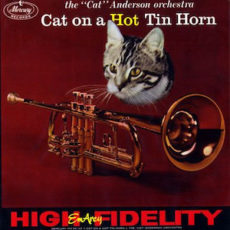
He recorded seven albums with Count Basie, five with Buck Clayton and ten with Gene Ammons, Cat Anderson, Sammy Davis Jr., Ella Fitzgerald, Edmond Hall, Arthur Prysock & Count Basie, Jimmy Rushing, Frank Sinatra & Count Basie, and Ernie Wilkins.
Trombonist Henderson Chambers’ final performances were with Edgar Battle, shortly before his transition from a heart attack on October 19, 1967 in New York City.

More Posts: history,instrumental,jazz,music,trombone

Daily Dose Of Jazz…
Michel Delville was born on April 30, 1969 in Liège, Belgium. He has been performing and composing alternative music since the mid-1980s. His bands include The Wrong Object, douBt, Machine Mass feat. Dave Liebman, Alex Maguire’s Electric 6tet, the New Texture Pan Tonal Fellowship, the Ed Mann Project, and the Moving Tones.
He has worked with Elton Dean, Annie Whitehead, Harry Beckett, Richard Sinclair, Ed Mann, Dagmar Krause, Benoît Moerlen, Karen Mantler, Geoff Leigh, Markus Stauss, Guy Segers, Klaus Blasquiz, Gilad Atzmon, and Dirk Wachtelear.
In 2009 Delville created the trio douBt with Alex Maguire and Tony Bianco and released their debut album, Never Pet a Burning Dog. The following year he was invited to join and coordinate Comicoperando, a tribute to the music of Robert Wyatt. The band toured Europe and Canada as a sextet in 2011, then went on to collaborate with the international collective 48 Cameras and Robin Rimbaud. In 2018 he was voted one of the three best electric guitarists of the year by Arnaldo DeSouteiro’s Annual Jazz Station Poll.
He has authored, edited or co-edited numerous books about comparative poetics and interdisciplinary studies and has been awarded several times for his writings. The rank of Officer of the Order of Leopold I was bestowed upon him in 2009, and he received the 2009 Prix Wernaers for research and dissemination of knowledge. He has recorded more than three dozen albums across the groups he has founded or been a part of.
Guitarist, writer and critic Michel Delville, who composes and performs in the jazz fusion and progressive rock genres, teaches literature at the University of Liège, and continues to compose and perform.
More Posts: bandleader,guitar,history,instrumental,jazz,music

Daily Dose Of Jazz…
Claus Ogerman, born Klaus Ogermann on April 29, 1930 in Ratibor (Racibórz), Upper Silesia, Germany is now part of Poland. He began his career with the piano but became one of the most prolific arrangers of the 20th century.
In the 1950s, Ogerman worked in Germany as an arranger-pianist with Kurt Edelhagen, saxophonist and bandleader Max Greger, and Delle Haensch. He also worked as a part-time vocalist and recorded several 45 rpm singles under the pen name of Tom Collins, duetting with Hannelore Cremer. He also recorded a solo vocal with the Delle Haensch Jump Combo.
Moving to the United States in 1959, Claus joined producer Creed Taylor at Verve Records, working on recordings with many artists. During this time he also arranged many pop hits, and in 1967 joined Creed Taylor on the A&M/CTi label. Ogerman charted under his own name in 1965 with the RCA single Watusi Trumpets.
In 1980 Ogerman won a Grammy Award for Best Instrumental Arrangement for Soulful Strut and the 2010 Grammy Award for Best Instrumental Arrangement Accompanying Vocalists for Quiet Nights. He composed music for seventeen movies, recorded fifteen albums, and released a compilation in 2002.
He arranged and conducted an impressive 58 albums with George Benson, Solomon Burke, Donald Byrd, Betty Carter, Sammy Davis Jr., Bill Evans, Connie Francis, Michael Franks, Stan Getz, Astrud Gilberto, João Gilberto, João Donato, Lesley Gore, Stephane Grappelli, Al Hirt, Billie Holiday, Johnny Hodges, Freddie Hubbard, Willis Jackson, Cal Tjader, Antônio Carlos Jobim, Dr. John, Wynton Kelly, Ben E. King, Diana Krall, Wes Montgomery, Danilo Perez, Oscar Peterson, Frank Sinatra, Jimmy Smith, Barbra Streisand, Cal Tjader, Mel Tormé, Stanley Turrentine, and Kai Winding.
Having worked in the jazz, top 40, rock, pop, R&B, soul, easy listening, Broadway and classical music fields, it has never been determined the exact number of recording artists for whom he has either arranged or conducted during his career. Arranger, conductor, and composer Claus Ogerman,transitioned on March 8, 2016
More Posts: arranger,bandleader,composer,conductor,history,instrumental

Daily Dose Of Jazz…
Norma Louise Teagarden was born in Vernon, Texas on April 28, 1911 into a musical family that consisted of her mother Helen, who played ragtime piano and taught; her brothers Charlie, a trumpeter, Clois, a drummer, and Jack, a trombonist. She performed with the latter in the 1940s and 1950s.
She performed on piano and violin during the early part of her career, which began in Oklahoma City, Oklahoma. In the 1920s she moved to New Mexico and worked in territory bands, returning to Oklahoma City in the 1930s. After another stint there she moved to California in the 1940s touring with her brother Jack from 1944–1947 and from 1952–1955.
Outside the Teagarden family, Norma worked with Ben Pollack, Matty Matlock, and Ray Bauduc. Eventually settling in San Francisco, California she often performed on solo piano and with bandleader Turk Murphy.
Pianist and violinist Norma Teagarden transitioned on June 6, 1996.
More Posts: bandleader,history,instrumental,jazz,music,piano,violin
Daily Dose Of Jazz…
Denzil DaCosta Best was born April 27, 1917 in New York City, New York into a musical Caribbean family originally from Barbados. Trained on piano, trumpet, and bass, he concentrated on the drums starting in 1943. Between the years 1943 and 1946 he worked with Ben Webster, Coleman Hawkins, Illinois Jacquet and Chubby Jackson.
Known to sit in at Minton’s Playhouse, he took part in a recording with George Shearing in 1948 and was a founding member of his Quartet, remaining there until 1952. In 1949, he stepped out to play on a recording session with Lennie Tristano for Capitol Records and recorded later with Lee Konitz.
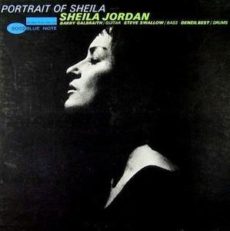
In 1953 a car accident fractured both legs and Best was forced into temporary retirement until 1954. His comeback had him playing with Artie Shaw, and then in a trio with Erroll Garner (1955–57), including Garner’s live album Concert by the Sea. He went on to play with Phineas Newborn, Nina Simone, Billie Holiday and Tyree Glenn. 1962 saw him in the drummer’s seat on Shiela Jordan’s first album Portrait of Sheila.
Best composed several bebop tunes, including Move, Wee, Nothing But D. Best, and Dee Dee’s Dance. With Thelonious Monk he composed Bemsha Swing and his composition 45 Degree Angle was recorded by Herbie Nichols and Mary Lou Williams.
Suffering from paralysis after the Jordan recording session, drummer, percussionist and composer Denzil Best, who was a prominent bebop drummer in the 1950s and early 1960s, transitioned after falling down a staircase in a New York City subway station at the age of 48 on May 24, 1965.