

Daily Dose Of Jazz…
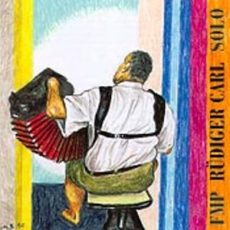
Rüdiger Carl was born on April 26, 1944 in Goldap, Poland ( formerly East Prussia) and has been involved in improvised music since 1968. He recorded his first record in 1972 and then began playing with a wide range of musicians including Arjen Gorter, Makaya Ntshoko, Louis Moholo, Maarten van Regteren Altena, Tristan Honsinger, Johnny Dyani and Han Bennink.
He maintains a long-standing partnership with Irene Schweizer that began in 1973 and continues to the present day. For a three year period, from 1973 to 1976 Carl was a member of Globe Unity Orchestra. He started giving solo performances in 1977 and the following year started two other long-term professional partnerships, with Sven-Åke Johansson and Hans Reichel.
Rüdiger’s most striking change in improvised music came when he gave up the saxophone and began performing with the accordion in duets with Hans Reichel. Though he continued to play the two instruments virtually side-by-side, adding clarinet to his arsenal, recorded Vorn which featured a version of the McCartney tune Those Were The Days. The COWWS Quintet was formed, continuing his musical relationship with Schweizer along with Philipp Wachsmann, Jay Oliver and Stephen Wittwer.
In addition to the COWWS, he performs with the Canvas Trio, in duos with Mayo Thompson of the Red Crayolas and Joëlle Léandre. During the Eighties he organized concerts of Musik im Portikus and beginning in 1994 has led the F.I.M. Orchester in Frankfurt/M.
Accordionist Rüdiger Carl is also an arranger and composer and continues to record and perform.

More Posts: accordion,arranger,bandleader,clarinet,composer,history,instrumental,jazz,music
Daily Dose Of Jazz…
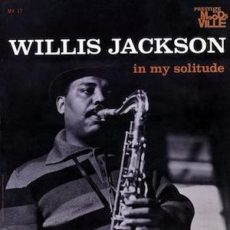
Willis “Gator” Jackson was born on April 25, 1928 in Miami, Florida and educated at the University of Miami. In 1948 he joined the Cootie Williams band as a teenager, and was part of it on and off until 1955.
Under his own name, Willis Jackson and His Orchestra, he recorded various rhythm-and-blues instrumentals for Atlantic Records. His most famous record for Atlantic is Gator’s Groove in 1952, with Estrellita as the B-side.
He toured as leader of the backing band for singer Ruth Brown. Publicly they were married, but privately they never were but lived together from 1950 to 1955. Joining Prestige Records in 1959, he made a string of albums with Pat Martino, Brother Jack McDuff, and Johnny “Hammond” Smith among many others. He also recorded for Atlantic, Muse, Trip, Big Chance, Verve, and Argo record labels.
Tenor saxophonist Willis “Gator” Jackson transitioned in New York City one week after heart surgery on October 25, 1987 at the age of 55.
More Posts: bandleader,history,instrumental,jazz,music,saxophone
Daily Dose Of Jazz…
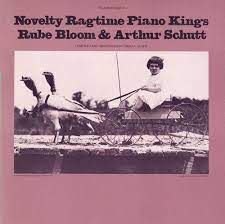
Reuben Bloom was born April 24, 1902 in New York City, New York to Jewish parents. During the 1920s he wrote many novelty piano solos, recorded for the Aeolian Company’s Duo-Art reproducing piano system various titles including his Spring Fever. His first hit came in 1927 with Soliloquy; his last was Here’s to My Lady in 1952, which he wrote with Johnny Mercer. In 1928, he made a number of records with Joe Venuti’s Blue Four for OKeh, including five songs he sang, as well as played piano.
He formed and led a number of bands during his career, most notably Rube Bloom and His Bayou Boys, which recorded three records in 1930. The Bayou Boys consisted of Benny Goodman, Adrian Rollini, Tommy Dorsey, Mannie Klein and Frankie Trumbauer in the Sioux City Six.
His I Can’t Face the Music, Day In Day Out, Fools Rush In (Where Angels Fear To Tread) and Give Me The Simple Life has become a part of the Great American Songbook and jazz standards.
During his career, he worked with many well-known performers, including those mentioned above and Ruth Etting, Stan Kenton, Jimmy Dorsey and collaborated with a wide number of lyricists, such as Ted Koehler, and Mitchell Parish.
Pianist, arranger, bandleader, recording artist, vocalist, and author Rube Bloom published several books on piano method before he transitioned on March 30, 1976 in his home city.
More Posts: arranger,author,bandleader,composer,history,instrumental,jazz,music,piano,vocal
Daily Dose Of Jazz…
Bryan Carrott was born in Queens, New York on April 23, 1959. After graduating from Fiorello H. LaGuardia High School of Music & Art and continued at the Manhattan School of Music before studying percussion with Morris Lang at Brooklyn College, then studied vibraphone with Dave Samuels at William Paterson University, receiving his Bachelor of Music degrees in Jazz Studies and Jazz Performance.
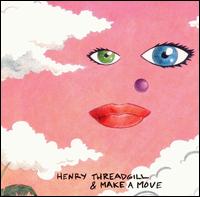
He has toured and/or recorded with David Fathead Newman, Ralph Peterson, Henry Threadgill, Muhal Richard Abrams, Sam Rivers, Don Byron, Dave Douglas, Charlie Hunter, Bob Moses, Roy Campbell, Herbie Mann, Cassandra Wilson, John Lurie & the Lounge Lizards, Greg Osby, Tom Harrell, Bennie Wallace, Steve Kroon, Joe Batan, and Kip Hanrahan, among others.
Carrott is an assistant professor and coordinator of percussion instruction at Five Towns College. He is a clinician and has led educational performances across the United States, Taiwan and Taipai. A featured soloist with Cologne, Germany’s WDR Orchestra conducted by Gunther Schuller, he was a mallet percussionist for Disney’s Broadway production of The Lion King.
For seven consecutive years, Bryan was cited in DownBeat Magazine’s International Critics’ Poll in the vibe category for Talent Deserving Wider Recognition, and has been featured on several film soundtracks, including 3 A.M. with Branford Marsalis. He currently serves as coordinator & professor of percussion studies at Five Towns College in Dix Hills, N.Y.
Vibraphonist and composer Bryan Carrott, who also plays marimba, piano, and leads his own trio, quartet and quintet, has yet to record as a leader but continues to perform and teach new generations of musicians.
More Posts: bandleader,composer,history,instrumental,jazz,marimba,music,percussion,piano,vibraphone
Daily Dose Of Jazz…
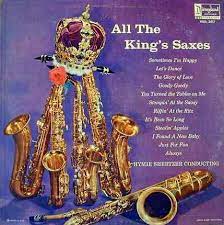
Hymie Schertzer was born Herman Schertzer on April 22, 1909 in New York City, New York and began playing violin when he was nine years old. He picked up the saxophone when he was a teenager and went on to work as a sideman for Gene Kardos at the club Birdland, then joined Benny Goodman’s band, where he was the lead saxophonist until 1938, though he recorded with Goodman intermittently until the mid-1940s.
Between 1938 and 1940 Hymie was in Tommy Dorsey’s band, and recorded in the late 1930s with Bunny Berigan and Lionel Hampton. He worked with Billie Holiday in 1941 and again in 1944, then became a house musician for NBC radio and television.
Working as a session player for studio recordings Schertzer was behind Ella Fitzgerald, Frank Sinatra, Sarah Vaughan, Sy Oliver, Louis Armstrong, and Artie Shaw during the years 1947-1953. He continued working with Goodman live, on television, and on record from 1951 until 1969.
Saxophonist and conductor Hymie Schertzer, who was a member of the Tonight Show Band during its Johnny Carson era, transitioned in New York City, on March 22, 1977 at the age of 67.
More Posts: conductor,history,instrumental,jazz,music,saxophone