

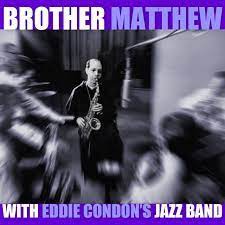
Daily Dose Of Jazz…
Boyce Brown was born on April 16, 1910 in Chicago, Illinois. He worked with Wingy Manone, Paul Mares, and Danny Alvin. Best known of his recordings is a 1935 session with Paul Mares and his Friars Society Orchestra, that was first issued on LP in 1955 as part of Columbia’s Chicago Style Jazz album and a 1939 session with Jimmy McPartland & his Jazz Band, which was first released as part of Decca’s Chicago Jazz album. Both of these sessions had Brown demonstrating a driving, harmonically advanced style.
In 1953, Boyce entered a monastery of the Roman Catholic Servite Order, however, he returned in 1956 to release his one and only album as Brother Matthew, backed by a band organized by Eddie Condon.
Alto saxophonist Boyce Brown, who played in the dixieland genre, transitioned from a heart attack on January 30, 1959 at the age of 48.
More Posts: bandleader,history,instrumental,jazz,music,saxophone
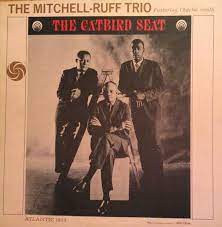
Daily Dose Of Jazz…
Charlie Smith was born April 15, 1927 in New York City and played locally in the city during the late 1940s before taking a position accompanying Ella Fitzgerald. Working briefly with the Duke Ellington’s Orchestra in 1951 before being replaced by Louie Bellson, he also played with Joe Bushkin, Erroll Garner, Slim Gaillard, Benny Goodman, Hot Lips Page, Oscar Peterson, Artie Shaw, and Slam Stewart.
He performed on television with Dizzy Gillespie and Charlie Parker in 1952, and later in the decade worked with Billy Taylor, Aaron Bell, and Wild Bill Davison. Relocating to New Haven around 1960, Smith played with Willie Ruff and Dwike Mitchell in a trio setting.
Drummer Charlie Smith, who was an educator late in his life, transitioned on January 15, 1966 in New Haven, Connecticut.
More Posts: drums,history,instrumental,jazz,music
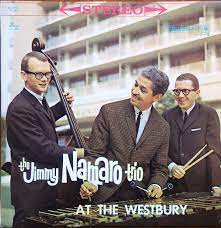
Daily Dose Of Jazz…
Jimmy Namaro was born James Namaro on April 14, 1913 in La Rosita, Mexico however, his family moved to Hamilton, Ontario in 1921. This is where he studied piano with Sid Walling and Eric Lewis.
He made his radio debut as a marimba player on CHML, Hamilton, and was heard in his teens on CFRB, Toronto, and on the CBC. In 1933, he was assistant conductor of a marimba band at the Chicago World’s Fair. Namaro subsequently pursued dual careers as the leader of pop or light jazz trios and quartets in nightclubs in Toronto, Canada and New York and as a popular CBC radio performer.
As a member of the Happy Gang from 1943 to 1959, he was also bandleader or soloist on several other CBC radio and television programs before moving to the United States in the Seventies. He was music director for Frankie Laine 1978-1993, with whom he toured the USA, Canada, and the UK. Namaro moved to Richmond, British Columbia, in 1987, where he continued to compose and to work with Laine.
His discography includes LPs Between 1958 and 1972 he recorded for Sparton, RCA Victor, Quality, Camden and others originally produced by the Canadian Talent Library Trust (CTL). Namaro wrote many jingles and composed music for CBC dramas such as the TV series Seaway, for the Broadway production Andorra, and for ballet. His paintings, in the primitive style, have had several exhibitions.
Vibraphonist, marimbist, percussionist, composer, painter Jimmy Namaro, who was naturalized Canadian around 1945, transitioned in Richmond, British Columbia on April 25, 1998.
More Posts: bandleader,composer,history,instrumental,jazz,marimba,music,percussion,vibarphone
Daily Dose Of Jazz…
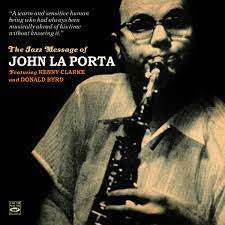
John Daniel LaPorta was born on April 13, 1920 in Philadelphia, Pennsylvania and started playing clarinet at the age of nine. He studied at the Mastbaum School in Philadelphia, alongside classmate Buddy DeFranco. As a teenager he played in local bands with Charlie Ventura and Bill Harris, and studied classically with Joseph Gigliotti of the Philadelphia Orchestra and Leon Russianoff at the Manhattan School of Music.
1942 saw him as a member of the Bob Chester big band for two years, then spent the following two years with the Woody Herman Orchestra. Beginning in 1947, he studied with Lennie Tristano, and with Teo Macero and Charles Mingus he was a member of the Jazz Composers Workshop, trying to combine jazz with classical music. Classically, he worked with Boston Pops, Leonard Bernstein, Leopold Stokowski, and Igor Stravinsky. In jazz he worked with Kenny Clarke, Miles Davis, Dizzy Gillespie, Charlie Parker, Buddy Rich, and Lester Young.
In 1956, La Porta played the first jazz concert in Venezuela at Caracas National Theater, where a selection of the repertoire performed was released under the title South American Brothers by Fantasy Records, becoming the first jazz recording in Venezuela.
As an educator he taught at Parkway Music School, then at public schools on Long Island, followed by the Manhattan School of Music and the Berklee College of Music. With guitarist Jack Petersen, he pioneered the use of Greek modes for teaching chord-scales.
In the 1990s, he retired to Sarasota, Florida, where he performed at the Sarasota Jazz Club and as a guest with the Fred Williams Trio. His autobiography is titled Playing It by Ear. Clarinetist and composer John LaPorta transitioned from complications of a stroke on May 12, 2004 in Sarasota.
More Posts: bandleader,clarinet,composer,history,instrumental,jazz,music
Daily Dose Of Jazz…
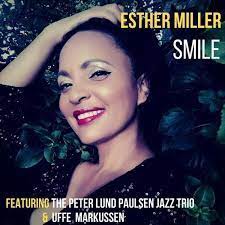
Esther Miller was born on April 12, 1968 and raised in the east coastal motor city of Port Elizabeth, South Africa. It is here that she sang in church and school choirs and raided the family Nat King Cole albums for early inspiration.
Leaving Port Elizabeth to study medicine at Cape Town University, she soon gave in to the lure of jazz. Esther started her professional career as the vocalist with Gerry Spencer’s Jazz Cyclone, one of the leading bands on the South African jazz circuit at the time.
During this early apprenticeship Miller worked with some excellent players on both sides of the pond, Herb Ellis, Alan Skidmore, Johnny Fourie, Errol and Alvin Dyers, Winston Mankunku and Ezra Ngkukana, to name but a few.
Esther has honed her technique with classical singing lessons and delved into jazz history, gleaning inspiration from Sarah Vaughan, Billie Holiday, Shirley Horn, Blossom Dearie, Frank Sinatra, and of course, Nat King Cole.
She performed in South African jazz festivals, concert halls and jazz clubs before settling in the United Kingdom for 10 years. There she performed and recorded with some excellent musicians including Steve Melling, Steve Waterman, Zoltan Dekany, Karen Sharp, among others.
Possessing an outstanding technique and sensitive interpretation, with a half dozen albums under her belt, vocalist Esther Miller has moved to Denmark where she continues to add to her repertoire as she explores the Scandinavian jazz scene.
More Posts: bandleader,history,instrumental,jazz,music,vocal