

Daily Dose Of Jazz…
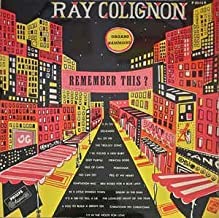
Raymond Colignon was born on February 7, 1907 in Liège, Belgium. He initially was active as an accompanist for silent films, then went on to tour Switzerland, France and Algeria. In the early 1930s, he joined the Lucien Hirsch and His Orchestra who made the first recordings for Columbia Records. Between 1931 and 1934 he worked in a nightclub in his native town. From 1935 to 1940 he played and wrote big band arrangements with Fud Candrix.
As a soloist, he recorded under his own name for the Brussels Jazz Club record label. In 1939 he recorded Honeysuckle Rose for Telefunken and Swinging Through the Style, accompanied by bassist Camille Marchand and drummer Armand Dralandts. The early Forties saw him playing in Brussels, Belgium with Jack Lowens and His Swing Quartet, in Berlin, Germany with Kurt Widmann and his dance orchestra, and in Adolf Steimel ‘s Organum dance orchestra.
In 1941/42 further recordings were made in Brussels under his own name, with trumpeter and singer Billy West recording I Hear A Rhapsody and with Tony Jongenelen Gute Nacht, Mutter (Good NIght , Mother) sung in German. In the post World War II period he worked mainly as an organist in the genre of dance and entertainment music, recording Surprise Party – Calling All Dancers or Come Dance with Me for Philips.
Pianist, organist and arranger Coco Colignon, who was involved in 53 jazz recording sessions between 1931 and 1961, transitioned on February 10, 1987 in Wavre, Belgium.

More Posts: arranger,bandleader,history,instrumental,jazz,music,organ,piano
Daily Dose Of Jazz…
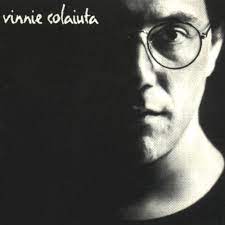
Vincent Peter Colaiuta was born on February 5, 1956 in Brownsville, Pennsylvania and was given his first drum kit when he was seven. He took to it naturally, with little instruction. By fourteen, the school band teacher gave him a book that taught him some of the basics and Buddy Rich was his favorite drummer until he heard the album Ego by Tony Williams, an event that changed his life. He started listening to organ groups, notably Jack McDuff, Jimmy McGriff and Don Patterson.
While matriculating through Berklee College of Music in Boston , Massachusetts at the time jazz fusion was on the rise, he listened to and admired Alphonse Mouzon and Billy Cobham. After leaving school, he played local gigs in Boston, joined a brief tour organized by Al Kooper, then worked in California on an album by Christopher Morris.
Returning to Boston, Colaiuta was drawn back to California by friends and took the bus from Boston to Los Angeles during the blizzard of 1978. After performing in jazz clubs, he won the audition to play drums for Frank Zappa, with whom he toured and appeared on the albums Joe’s Garage, Tinsel Town Rebellion, and Shut Up ‘n Play Yer Guitar.
In 1981, he left Zappa for the gig as a studio musician and recorded for the band Pages, Gino Vannelli, saxophonist Tom Scott, bassist Larry Klein, Joni Mitchell, touring with the latter. The late Eighties saw him as the house drummer for The Late Show Starring Joan Rivers. The band was led by Mark Hudson and was called the Party Boys and the Tramp.
By the end of the 1980s back as a studio musician he was recording albums, doing TV and film work during the day, and playing clubs at night. He worked with jazz musicians Herbie Hancock, Chick Corea, Buell Neidlinger, and the Buddy Rich Big Band. The 1990s he was with Sting, and released his debut solo album as well as two more as a leader.
He has won over fifteen Drummer of the Year awards from Modern Drummer magazine’s annual reader polls. These include ten awards in the “Best Overall” category. He was inducted into the Modern Drummer Hall of Fame in 1996 and the Classic Drummer Hall of Fame in 2014. Colaiuta has won one Grammy Award and has been nominated twice. Drummer Vinnie Colaiuta continues to perform, tour and record.
More Posts: bandleader,drums,history,instrumental,jazz,music
Daily Dose Of Jazz…
Arthur “Artie” Bernstein, born February 4, 1909 in Brooklyn, New York, started his musical career playing cello on board cruise ships to South America. He studied law at New York University, however, by 1929 he had started playing bass, and began performing in clubs around New York City. He performed with trumpeter Red Nichols, Red Norvo and others, and recorded with Ben Pollack, Jimmy and Tommy Dorsey, and many others in the 1930s.
In 1939 he performed with Benny Goodman at the second From Spirituals to Swing concert. He fell out with Goodman in 1941 after the bandleader fiddled with Bernstein’s music-stand light so that he would have problems reading the music to appear incompetent, giving the pretext to fire him.
He went on to win the Down Beat readers’ poll in 1943 and later moved to Los Angeles, California. Artie worked in the film industry for Universal Studios and Warner Bros., continuing to work for the latter organization until 1963.
Over the course of his career he worked with Arnold Ross Quintet, Charlie Christian Jammers, Hoagy Carmichael Trio, Ralph Burns Quintet, as well as the orchestras of Adrian Rollini, Billie Holiday, Cloverdale Country Club, Clyde Hurley, Cootie Williams, Eddie Condon, Frankie Trumbauer, Harry James, Jack Teagarden, Larry Clinton, Lionel Hampton, Metronome All Stars, Mildred Bailey And Her Swing Band, Putney Dandridge, Teddy Wilson, and Ziggy Elman.
Double bassist and cellist Artie Bernstein transitioned on January 4, 1964 in Los Angeles, one month to the day shy of his 55th birthday.

Daily Dose Of Jazz…
Alfred “Chico” Alvarez was born in Montreal, Canada February 3, 1920 but grew up in Southern California. Upon graduation from high school, he attended the Los Angeles Conservatory of Music.
He was a soloist with the Stan Kenton Orchestra from 1941 to 1943 and rejoined the band after Army service in World War II. He also played with the Red Norvo and Charlie Barnet bands, and moved to Las Vegas, Nevada in 1958 and worked the hotel circuit in the 1960s and 1970s. It was during this time that he would accompany singers like Ella Fitzgerald and Sarah Vaughan.
He recorded two dozen albums with Kenton as well as a single recording session on the self-titled Nat King Cole, Bob Keene and His Orchestra, Vido Musso’s The Swingin’st, and Patti Page’s In the Land of Hi-Fi.
Trumpeter Chico Alvarez, who was the business agent for the musicians’ union, the president of the Allied Arts Council and a member of the Nevada State Council on the Arts, transitioned on August 1, 1992 in Las Vegas.
More Posts: history,instrumental,jazz,music,trumpet
Daily Dose Of Jazz…
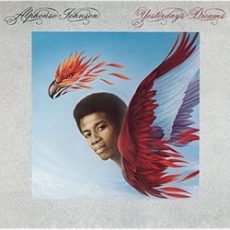
Alphonso Johnson was born on February 2, 1951 in Philadelphia, Pennsylvania and started off as an upright bass player, but switched to the electric bass in his late teens. He began his career in the early 1970s, and showing innovation and fluidity on the electric bass he sessioned with a few jazz musicians before landing a job with Weather Report, taking over for co-founding member Miroslav Vitous.
His debut with Weather Report was on the album Mysterious Traveller, followed by two more albums in the Seventies: Tale Spinnin’ and Black Market before he left the band to work with drummer Billy Cobham. During 1976-77 Alphonso recorded three solo albums as a bandleader, for the Epic label, in a fusion-funk vein.
One of the first musicians to introduce the Chapman Stick to the public, in 1977, his knowledge of the instrument offered him a rehearsal with Genesis, who were looking for a replacement for guitarist Steve Hackett but being more of a bassist than a guitarist, Johnson instead recommended his friend ex-Sweetbottom guitarist and fellow session musician Daryl Stuermer. However, he was one of two bass players on Phil Collins’s first solo album, Face Value, in 1981.
He would work with Bob Weir on a couple of projects – Bobby & The Midnites and The Other Ones; reunite with Cobham in the band Jazz Is Dead, and Steve Hackett’s Genesis Revisited album as well as with Santana, Steve Kimock and Chet Baker. He toured Europe and Japan with saxophonist Wayne Shorter, pianist James Beard, drummer Rodney Holmes, and guitarist David Gilmore.
Earning a Bachelor of Arts in Music Education degree from California State University in 2014, as an undergrad he was a member of the CSUN Wind Ensemble. With extensive experience as a bass teacher he has conducted bass seminars and clinics in Germany, England, France, Scotland, Ireland, Japan, Switzerland, Australia, Brazil and Argentina.
Bassist Alphonso Johnson continues to perform while serving as an adjunct instructor at the University of Southern California and the California Institute of the Arts.
More Posts: bandleader,bass,educator,history,instrumental,jazz,music