
Daily Dose Of Jazz…
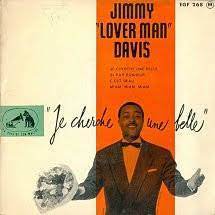
James Edward Davis was born in 1915 in Madison, Georgia. He and his family moved to Gary, Illinois, and then to Englewood, New Jersey, where he completed his high school education. Being musically gifted, he was accepted into the Juilliard School in New York City to study piano and composition, his fees being paid by a benefactress.
In the late 1930s he wrote the song Lover Man (Oh, Where Can You Be?) with Ram Ramirez but could not initially place it, until he offered it to Billie Holiday in 1942. However, due to the 1942–44 musicians’ strike Holiday didn’t record the song until 1944. Although at first it was only a minor hit, it soon achieved widespread success and went on to become a jazz standard.
During the early 1940s Davis struggled to make a living as a songwriter and supplemented his meagre royalties by giving piano lessons. Drafted in 1942, but as a member of the NAACP, refused enlistment into the segregated regiment, was ultimately imprisoned for thirteen days, then inducted into the army, serving three and a half years. By 1945, as a warrant officer, he was sent to France for six months, and learned the language. Back home, upon his discharge he left for Hollywood, joined the Actors’ Laboratory Theatre, however his acting career only offered stereotypical racial roles. At the end of 1947 he emigrated to France.
Warmly welcomed in Paris, in part, due to the fame of the song Lover Man, he styled himself Jimmy “Lover Man” Davis and entered a highly creative period, writing a number of songs and placing them with major French performers, such as Yves Montand, Maurice Chevalier, and Joséphine Baker. His songwriting royalties were still insufficient to live on, so he began singing his own songs in solo performances, touring through France, Italy, Holland, Spain, Switzerland and other countries.
Composer, songwriter, vocalist, pianist and actor Jimmy Davis, whose birth and death dates are currently unknown, and who was a close friend of Langston Hughes, transitioned in Paris, France in 1997. His biography, In Search of Jimmy ‘Lover Man’ Davis, was written by Professor François Grosjean.

More Posts: composer,history,instrumental,jazz,music,piano,songwriter,vocal

Daily Dose Of Jazz…
Clotilde Rullaud was born March 1, 1978 in Reims, France and was immersed in the performing arts of music, theatre and dance from early childhood. At five, she began studying flute and singing at the conservatoire, before going on to complete her studies in jazz and improvised music at IACP in Paris, France and EDIM in Cachan, France. She explored opera singing with the tenor singer, Peterson Cowan.
Her musical identity developed through her travels through the Balkans, Ireland, Lebanon, the United States. Clotilde’s study of vocal techniques, inspired by Meredith Monk, fado, tango, Romani music, Turkish music, Persian music, Inuit throat singing and Bulgarian voices were also great influences.
She has recorded three albums as a vocalist and flutist, her 2007 debut with Hugo Lippi, Live au 7 Lézards She has also directed and produced a short film, and written and directed a multidisciplinary performance. With a repertoire spanning jazz, free improvisation and folk music, her career as a musician has led her to perform in France, Germany, Australia, Burkina Faso, China, South Korea, Japan, Luxembourg, the Netherlands, Switzerland, Taiwan, the United Kingdom and the United States.
Since 2007, Rullaud has taught at Martina A. Catella’s school, Les Glotte-Trotters in Paris, and conducted workshops for the festival Les Suds in Arles and for the Ateliers d’ethnomusicologie (ADEM) in Geneva, Switzerland. Moving to New York City in 2017 she collaborated with American pianist Chris McCarthy, producing Pieces of a Song, a repertoire of dark and beautiful pieces based on the writings of Diane di Prima, poetess of the Beat Generation.
She has performed with Olivier Hutman, Dano Haider, Antoine Paganotti, Tristan Macé, Albin Lebossé, Emmanuel Bex, Yann Cléry, Laurent Salzard, Gautier Garrigue, and Alexandre Saada, the latter collaboration produced A Woman’s Journey, a homage to American female protest songstresses.
She has received numerous awards for her work in both jazz and film. Vocalist, flutist and composer Clotilde Rulllaud, who is also an artistic director, filmmaker, producer and facilitator, continues to pursue the limits of her creativity.
More Posts: composer,flute,history,instrumental,jazz,music,vocal
Daily Dose Of Jazz…
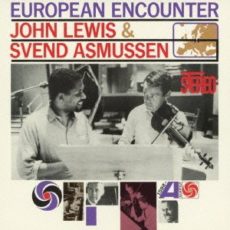
Svend Asmussen was born on February 28, 1916 in Copenhagen, Denmark into a musical family. He started taking violin lessons at the age of seven and by 16 he first heard recordings by jazz violinist Joe Venuti and began to emulate his style. He started working professionally as a violinist, vibraphonist, and singer at 17, leaving his formal training behind for good.
Early in his career he worked in Denmark and on cruise ships, with artists such as Josephine Baker and Fats Waller. Asmussen later was greatly influenced by Stuff Smith, whom he met in Denmark. During World War II he played with Valdemar Eiberg and Kjeld Bonfils, during which time jazz had moved to the underground and served as a form of political protest.
The late 1950s saw Svend forming the successful trio Swe-Danes with singer Alice Babs and guitarist Ulrik Neumann. The group gained a dance hall reputation and toured the United States. He worked with Benny Goodman, Lionel Hampton, and Duke Ellington. Asmussen was invited by Ellington to play on his Jazz Violin Session recording in 1963 with Stéphane Grappelli and Ray Nance.
In 1966, Asmussen performed alongside Grappelli, Stuff Smith, and Jean-Luc Ponty in a jazz Violin Summit in Switzerland, appeared at the ‘67 Monterey Jazz Festival,and guested on Snakes in a Hole, an album by the jazz-rock band, Made in Sweden.
Actively playing violin at the age of 94, he became a centenarian in 2016, and his collection of jazz music, photographs, posters and other material is held in the jazz collections at the University Library of Southern Denmark. Violinist Svend Asmussen transitioned peacefully in his sleep on February 7, 2017.

More Posts: bandleader,history,instrumental,jazz,music,violin
Daily Dose Of Jazz…
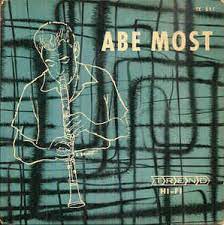
Abe Most was born on February 27, 1920 in New York City, New York. He began his career in 1939 as a member of Les Brown’s Big Band. After serving three years in the Army during World War II beginning in 1942, he became a member of Tommy Dorsey’s Big Band.
Most made a few albums with smaller labels between 1946 and 1984, including Superior, Trend, Annunciata and Camard. His last two albums were Abe Most Live! and I Love You Much Too Much.
He was a studio musician for seven decades, recording on albums by Ted Gärdestad, Dick Haymes, Randy Newman, Dory Previn, Laurindo Almeida, Dominic Frontiere, Henry Mancini, Peggy Lee, Carmen McRae, Ray Conniff, and George Shearing, as well as Joni Mitchell, Cher, Earth, Wind & Fire, and B. B. King among others. He can also be heard playing on the soundtrack of the film How to Marry a Millionaire.
Clarinetist Abe Most, the older brother of flautist Sam Most, recorded three albums as a leader and thirty-one as a sideman, transitioned on October 10, 2002.
More Posts: bandleader,clarinet,history,instrumental,jazz,music
Daily Dose Of Jazz…
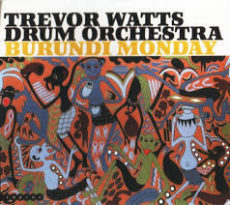
Trevor Charles Watts was born in York, England on February 26, 1939 and is largely self-taught, having taken up the cornet at age 12 then switched to saxophone at 18.
While stationed in Germany with the RAF from 1958 to 1963, he encountered the drummer John Stevens and trombonist Paul Rutherford. After his service he returned to London, England and in 1965, he and Stevens formed the Spontaneous Music Ensemble (SME), which became one of the crucibles of British free improvisation.
Leaving the band to form his own group Amalgam in 1967, Trevor returned to SME for another stretch that lasted until the mid-1970s. Collaborating with bassist Barry Guy and his London Jazz Composers’ Orchestra, they performed until their disbandment in the mid-1990s.
Though he was initially strongly identified with the avant-garde, Watts was versatile, working in everything from straight jazz contexts to rock and blues. His own projects blended jazz and African music, notably the Moiré Music ensemble which he led since 1982. He has collaborated with jazz musicians including Archie Shepp, Steve Lacy, Don Cherry, Jayne Cortez and Stephen Grew.
Free-improvising alto and soprano saxophonist Trevor Watts, who recorded 31 albums as a leader, and two as a sideman, continue to explore the music.
More Posts: bandleader,history,instrumental,jazz,music,saxophone