

Daily Dose Of Jazz…
Clifton “Skeeter” Best was born on November 20, 1914 in Kinston, North Carolina. Playing in Philadelphia, Pennsylvania from 1935 to 1940, he recorded with Slim Marshall and Erskine Hawkins. By 1940, he was a member of Earl Hines’s orchestra, playing with him until he joined the U.S. Navy in 1942.
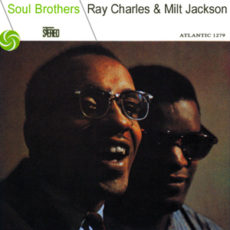
After the war, he played with Bill Johnson, toured East Asia with Oscar Pettiford, and formed his own trio in the 1950s. He did a critically acclaimed session with Ray Charles and Milt Jackson in 1957 called Soul Brothers.
In 1958, he recorded with Mercer Ellington and taught in New York City. He also recorded with Harry Belafonte, Etta Jones, Nellie Lutcher, Milt Hinton, Osie Johnson, Paul Quinichette, Jimmy Rushing, Sonny Stitt, Charles Thompson, and Lucky Thompson.
Guitarist Skeeter Best passed away on May 27, 1985 in New York City.
More Posts: bandleader,guitar,history,instrumental,jazz,music

Daily Dose Of Jazz…
Tommy Stewart was born November 19, 1939 in Gadsden, Alabama. He attended Industrial High in Birmingham, Alabama where John T. “Fess” Whatley trained him along with Erskine Hawkins, Dud Bascomb, Paul Bascomb, and Sun Ra. Alvin “Stumpy” Robinson, the band director at Washington Jr High School, was also influential in his development.
Enrolling at Alabama State College and having no way to pay tuition, the problem solved itself when he joined the Bama State Collegians, a dance band that made enough money to fund Stewart’s way through four years of college. He attended Alabama State University, where he directed the Bama State Collegians. Later, he studied jazz arranging at the Eastman School of Music and studied arranging under John Duncan, a classical composer and teacher at Alabama State University.
As an educator he began his teaching career at Fayette High School in St. Clair County Alabama, 1961 to 1963. Moving to Atlanta, Georgia in 1969 he taught in Fayetteville, Georgia, worked for Morris Brown College doing band arrangements and taught jazz and arranged for the Morehouse College band. He also taught band classes at West End High School in Birmingham, Alabama from, and taught A Survey of Popular Music at Georgia State University.
During the 1970s, he worked with Gladys Knight & the Pips, The Tams, Johnnie Taylor, Jackie Moore, King Floyd, Z. Z. Hill, and The Stylistics. He toured as musical director for Johnnie Taylor and for Ted Taylor and went on to record disco in the Seventies with Final Approach, Cream De CoCo, Tamiko Jones, Moses Davis, and his own album.
In 1990, he co-founded the African American Philharmonic Orchestra with founder and conductor John Peek. He moved from Atlanta to Birmingham in 1992. He was a member of the Magic City Jazz Orchestra, Cleveland Eaton, the Alabama All-Stars, the Alabama Jazz Hall of Fame All-Stars, and Ray Reach and Friends, continues to be involved in music. In 1988, he was inducted into the Alabama Jazz Hall of Fame. At 81, trumpeter, arranger, composer, and record producer Tommy Stewart remains involved in the music industry.
More Posts: arranger,bandleader,history,instrumental,jazz,music,record producer,trumpet
Daily Dose Of Jazz…
Henry “Boots” Mussulli was born in Milford, Massachusetts on November 18, 1915. His first instrument was clarinet, which he first played at age 12.
By the Forties he was playing with Mal Hallett in Massachusetts and joined Teddy Powell’s group in 1943-44. He played with Stan Kenton from 1944 to 1947, then returned to play with Kenton again on tour in 1952 and 1954.
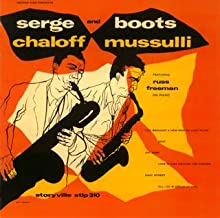
He played with Vido Musso, Gene Krupa, Charlie Ventura, Serge Chaloff, Toshiko Akiyoshi and Herb Pomeroy.
In 1949, Boots opened a jazz club in his hometown, called The Crystal Room and from the mid-1950s, he concentrated more on music education, leading a local youth orchestra, the Milford Youth Band. They performed at the Newport Jazz Festival in 1967.
Saxophonist Boots Mussulli, based chiefly out of Boston, Massachusetts, passed away from cancer on September 23, 1967 in Norfolk, Massachusetts.
More Posts: bandleader,educator,history,instrumental,jazz,music,saxophone
Daily Dose Of Jazz…
Chuck Andrus was born Charles Edmund Andrus Jr. on November 17, 1928 in Holyoke, Massachusetts. Raised in New England, he studied at the Manhattan School of Music.
In the late 1940s he formed his own ensemble in Springfield, Massachusetts which included Sal Salvador and Phil Woods. He played with Charlie Barnet in 1953, then with Claude Thornhill through the middle of the decade. While with Thornhill he met Terry Gibbs, and the two frequently played and recorded together in subsequent years.
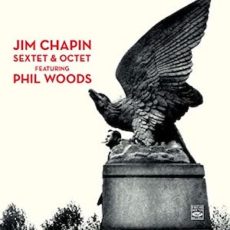
As a freelance musician in New York, Andrus worked with Don Stratton, Bernard Peiffer, and Jim Chapin; he also recorded extensively with Woody Herman. Double bassist Chuck Andrus passed away on June 12, 1997.
More Posts: bass,history,instrumental,jazz,music
Daily Dose Of Jazz…
Albert Bennington Lucas was born on November 16, 1916 in Brantford, Ontario, Canada and took piano lessons as a child from his concert pianist mother, Francis Bradley Lucas. Eventually switching to bass and tuba at age 12, after moving to New York City in 1933 he played with Kaiser Marshall, then joined the Royal Sunset Orchestra, where he played from 1933 to 1942.
During the 1940s, Lucas appeared on record with Hot Lips Page, Coleman Hawkins, Eddie Heywood, Duke Ellington, Mary Lou Williams, James P. Johnson, J.J. Johnson, Ben Webster, Erroll Garner, and Eddie South.
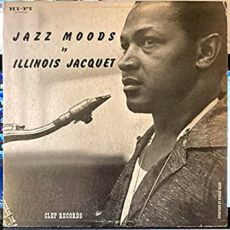
He toured and recorded with Illinois Jacquet from 1947 to 1953, recording in Detroit with Jacquet’s all-star band which included Sonny Stitt, Leo Parker, Sir Charles Thompson, Maurice Simon and Shadow Wilson before returning to play with Heywood again from 1954 to 1956.
He also recorded in the 1950s with Ruby Braff, Charlie Byrd, and Teddy Wilson. In his last two decades he worked primarily as a studio musician backing up groups at Apollo Theater performances, playing jazz only occasionally. Double bassist Al Lucas passed away on June 19, 1983 in New York City.
More Posts: bass,history,instrumental,jazz,music