


Daily Dose Of Jazz…
Paul Desmond was born Paul Emil Breitenfeld on November 25, 1924 in San Francisco, California. His father was a pianist, organist, arranger, and composer who accompanied silent films in movie theaters and produced musical arrangements for printed publication and for live theatrical productions. He started his study of clarinet at the age of twelve and continued while at San Francisco Polytechnic High School. During high school he developed a talent for writing and became co-editor of his high school newspaper.
As a freshman at San Francisco State College he began playing alto saxophone, however, he was drafted into the U.S. Army, where he spent three years in the Army band stationed in San Francisco. After his discharge in 1946 he legally changed his name to Desmond. Working in the San Francisco Bay Area as a backing musician, occasionally with Dave Brubeck.
Following a breakup and a reunion with Brubeck, the quartet became especially popular with college-age audiences, often performing in college settings like on their ground-breaking 1953 album Jazz at Oberlin at Oberlin College. The group played until 1967, when Brubeck switched his musical focus from performance to composition and broke the unit up. During the 1970s Desmond joined Brubeck for several reunion tours, with Brubeck’s sons Chris, Dan and Darius.
He worked several times during his career with baritone saxophonist Gerry Mulligan, guitarist Jim Hall, Chet Baker, and Ed Bickert. Alto saxophone and composer Paul Desmond, who was one of the most popular musicians to come out of the cool jazz scene, passed on May 30, 1977, not of his heavy alcohol habit but of lung cancer, the result of his longtime heavy smoking.
More Posts: bandleader,history,instrumental,jazz,music,saxophone
Daily Dose Of Jazz…
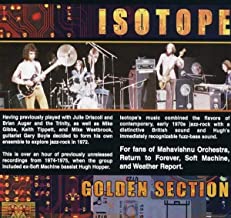
Gary Winston Boyle was born November 24, 1941 in Patna, Bihar, India. He attended the Leeds College of Music in the early 1960s and then joined the folk-rock band Eclection. He also played in The Echoes, Dusty Springfield’s band in the mid-1960s, and recorded with Brian Auger and Julie Driscoll.
In the early 1970s he worked as a session musician with musicians Keith Tippett, Mike Gibbs, Mike Westbrook, Stomu Yamashta, Bert Jansch and Norma Winstone.
In 1973, Boyle founded the jazz fusion band Isotope with bassist Jeff Clyne, keyboardist Brian Miller and drummer Nigel Morris. This line-up gigged around the United Kingdom extensively. Fusion guitarist Gary Boyle continues to perform and record.
More Posts: bandleader,guitar,history,instrumental,jazz,music
Daily Dose Of Jazz…
Alan Lawrence Turnbull was born November 23, 1943 in Melbourne, Australia and after taking drum lessons from Graham Morgan he commenced his professional career at the age of 14. He played with top local jazz musicians such as Graeme Lyall, Keith Hounslow and Brian Brown while filling in for drummer Stewart Speer at Horst Liepolt’s Melbourne jazz venue, Jazz Centre 44.
Moving to Sydney in the late 1960s, Turnbull soon became very active in the jazz scene and worked regularly as a freelance musician, including a number of years with the Don Burrows quartet which worked regularly at various clubs, concerts, festivals and other venues throughout Australia and in the United States.
His partnership of drums/double bass with American double bassist Ed Gaston set a new standard for swing jazz rhythm sections in Australia that would influence Australian rhythm sections for decades.
In the following years he worked with the likes of Milt Jackson, Joe Henderson, Gary Burton, Sonny Stitt, Barney Kessell, Richie Cole, Cleo Laine, Billy Eckstine, Cab Calloway, Billy Field, and Neil Sedaka as well the Sydney Symphony Orchestra and the Australian Pops Orchestra.
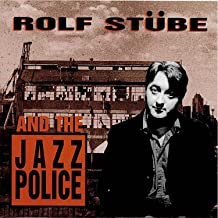
Appearing on numerous recordings, including those of Don Burrows, Rolf Stube’s Jazz Police, Graeme Norris Band, The Jazz Co-op, The Two with Paul Macnamara, Neil Sedaka and Billy Field, drummer Alan Turnbull, who was also a freelance professional musician, passed away on August 28,2014.
More Posts: drums,history,instrumental,jazz,music
Daily Dose Of Jazz…
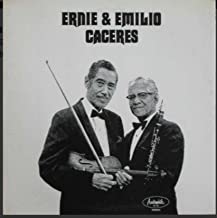
Ernesto Caceres was born on November 22, 1911 in Rockport, Texas and learned to play the clarinet, guitar, alto and baritone saxophone. He first played professionally in 1928 in local Texas ensembles. He and his brother Emilio moved to Detroit, Michigan before moving to New York City, taking work as session musicians. In 1937 they made live nationwide appearances on Benny Goodman’s popular radio series Camel Caravan which created a sensation and made them jazz stars.
In 1938 Ernesto became a member of Bobby Hackett’s band, then worked as a sideman with Jack Teagarden and Glenn Miller’s orchestra from 1940 to 1942. While with Miller, he made an appearance in the films Sun Valley Serenade and Orchestra Wives. Time with Benny Goodman, Woody Herman, and Tommy Dorsey followed later in the 1940s. In 1949 he put together his own quartet, playing at the Hickory Log in New York. He was a frequent performer with the Garry Moore Orchestra on television.
At the beginning of the 1960s he played with the Billy Butterfield Band. In 1964 he moved back to Texas and played in a band with brother Emilio from 1968 until his death. He spent some time in 1965 and 1966 at Mint Hotel in Las Vegas, Nevada and at the Holiday Hotel in Reno, Nevada with the Johnny Long Band. Saxophonist, clarinetist and guitarist Ernesto Caceres passed away from cancer on January 10, 1971.
More Posts: bandleader,clarinet,guitar,history,instrumental,jazz,music,saxophone
Daily Dose Of Jazz…
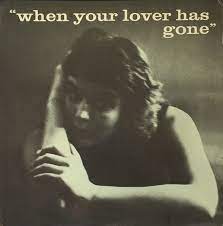
Claire Austin was born Augusta Marie on November 21, 1918 to Swedish-American parents in Yakima, Washington. She played in nightclubs throughout the northwest in the 1930s and toured with the Chuck Austin Band in the 1940s.
Retiring from professional singing by the early 1950s, Claire began working as an accountant in Sacramento, California. After singing with Turk Murphy, she frequently performed in San Francisco, California for two years. She remained active through the 1970s.
Vocalist and pianist Claire Austin, whose singing style has been compared to Peggy Lee, passed away on June 19, 1994.
More Posts: bandleader,history,instrumental,jazz,music,piano,vocal